We’ve been exploring the opening ten minutes of Steven Knight’s brilliant historical crime drama Peaky Blinders, and we’re onto the final scene.
We’ll look briefly at what happens in this scene.
Then, we’ll examine what elements the writer, director and editor have included to present the most effective opening ten minutes in the grasp of their collective talents.
So, onto the scene.
The scene is 4 shots and lasts 20 seconds.
It starts at 09.40.
SHOT 1.
EXT. INDUSTRIAL BACKSTREET, BIRMINGHAM – DAY
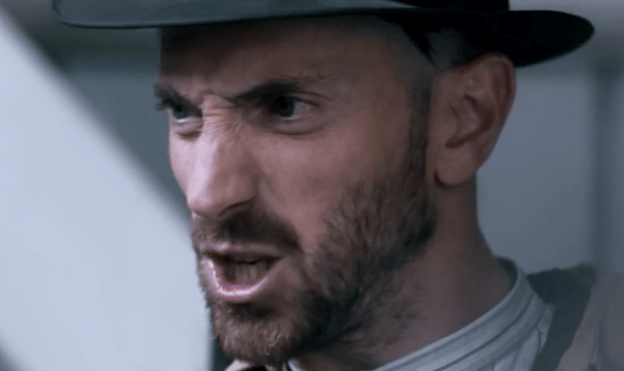
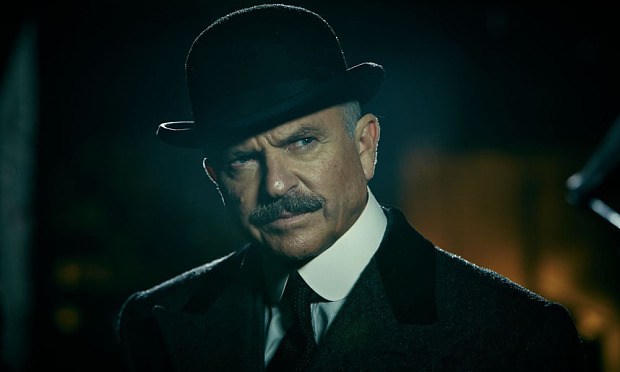
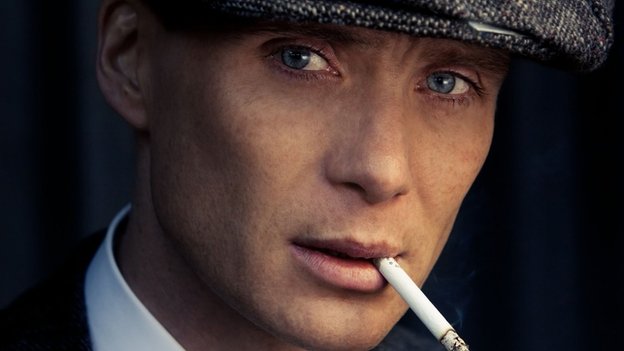
Thomas Shelby, small in the frame of the huge street, walks towards us for 6 seconds.
SHOT 2.
SAME STREET – CONTINUED.
Switch POV as we watch Thomas approach a pub from behind.
In the top corner of the frame we make out part of the sign: The Garrison Tavern.
Three people stand at the entrance: two WOMEN and an OLD MAN.
Seeing Thomas the Old Man cowers and bows.
Shot length: 6 seconds.
SHOT 3.
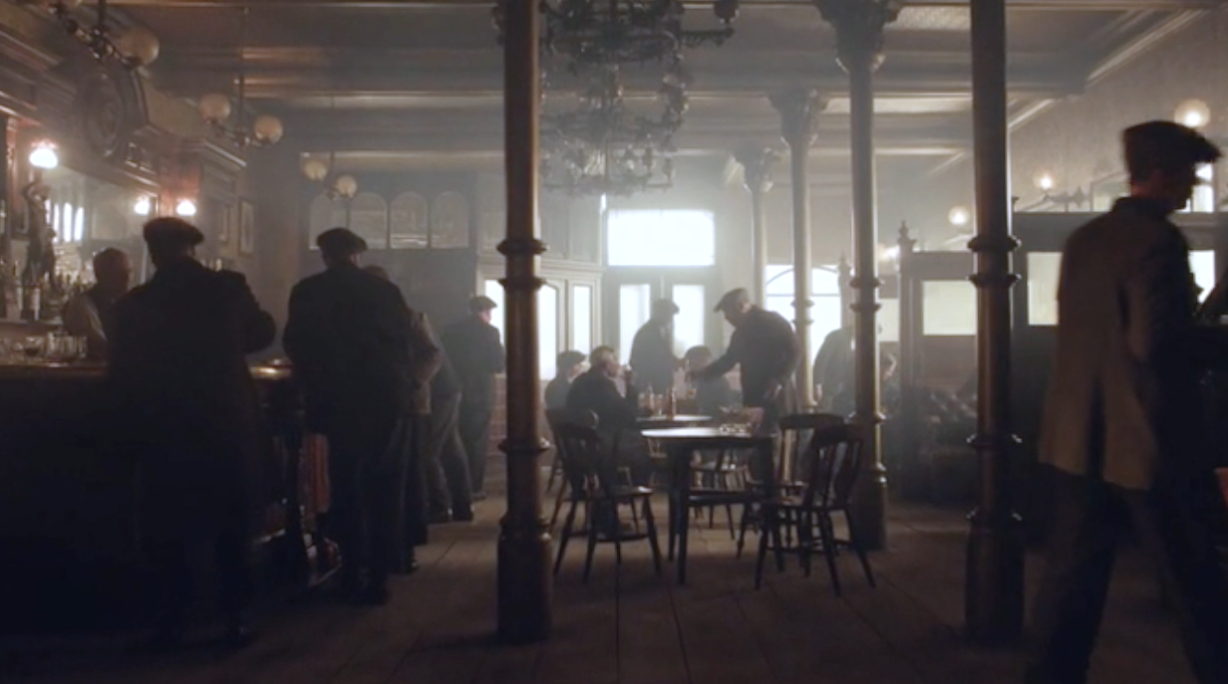
INT. THE GARRISON TAVERN – DAY.
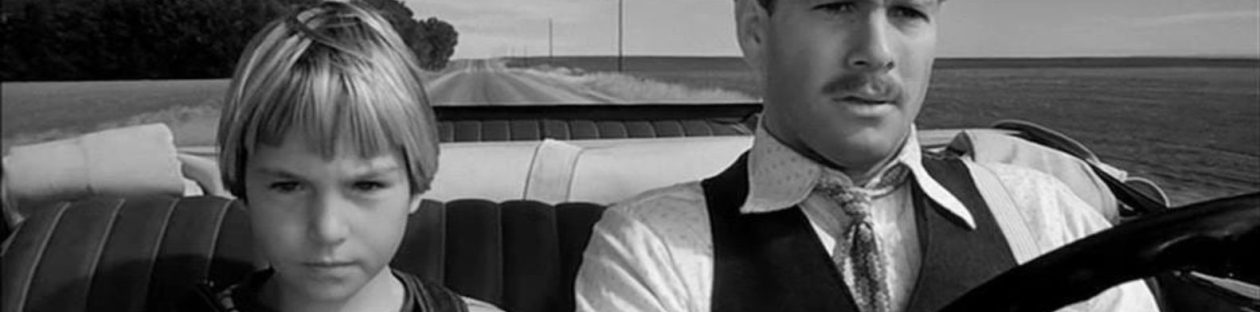
We watch men being men in a pub.
Shot length: 6 seconds.
CUT TO:
SHOT 4.
INT. THE GARRISON TAVERN – DAY.
The doors open, like an old Western saloon, as –
Thomas enters.
That’s the final shot – BANG ON 10 minutes – Thomas Shelby, center frame.
Shot length: 2 seconds.
Total scene length: 20 seconds.
For extra posts on the opening ten minutes of Peaky Blinders click here.
We’re studying the opening ten minutes of Steven Knight’s Peaky Blinders.
We’re 8 minutes in: Scene 10.
In this scene Freddie Thorne rouses workers to strike. Here’s a transcript.
Freddie speaks from the stairs, looking down on a sea of workers:
FREDDIE
Comrades, we are here today to take a vote on strike action. But before we have a show of hands for that, let’s have a show of hands from all of those who fought in France. All those who stood side by side with your comrades and watched your comrades fall. Raise your hands. The blood shed on Flanders fields. The sweat of your brows. Who reaps the rewards? Is it you? Is it your wives? Who then? Do they stand among us? Or do they sit at home, comfortable, with a full belly, while you scrape to find enough to put food on your children’s feet? And what is the reward they offer you for your sacrifices made? A fucking cut in your wages. That is your reward. Raise a hand all those who want to strike.
So, Freddie unleashes a passionate call to strike, delivered with relish by actor Iddo Goldberg.
But what’s it all about?
Flanders Fields was a major ‘Western Front’ in World War 1 and the grave of many soldiers. It became the subject of a famous poem In Flanders Fields.
Wiki says:
Between 1915 and 1917 there were several major offensives along this front. Among the most costly of these was the Battle of the Somme with more than a million casualties.
The first season of Peaky Blinders is set in 1918, one year after the October Revolution in Russia, commonly referred to as Red October, the October Uprising or the Bolshevik Revolution.
It was an armed insurrection to overthrow an autocratic government and gain state power.
During this time, urban workers began to organize into councils (Russian ‘soviets’).
Is Freddie trying to organize workers not only to strike – but to rise up, take control from the government and give the power back to the people?
Who reaps the rewards? Is it you? Is it your wives? Who then? Do they stand among us? Or do they sit at home, comfortable, with a full belly, while you scrape to find enough to put food on your children’s feet?
According to Wiki it was the October Uprising that
initiated the establishment of the world’s first self-proclaimed socialist state.
Also –
Bolsheviks became the Communist Party.
And –
Founded by Vladimir Lenin and Alexander Bogdanov, the Bolsheviks considered themselves the leaders of the revolutionary working class of Russia.
Does Freddie Thorne consider himself leader of the revolutionary working class of Great Britain?
And how how does this connect to Thomas Shelby and his criminal gang The Peaky Blinders?
In the penultimate scene of the opening 10 minutes Steven Knight takes us back to our main Antagonist, and we discover Freddie Thorne is on his wanted list as well.
We’re studying the opening ten minutes of Peaky Blinders.
We’re on scene 11.
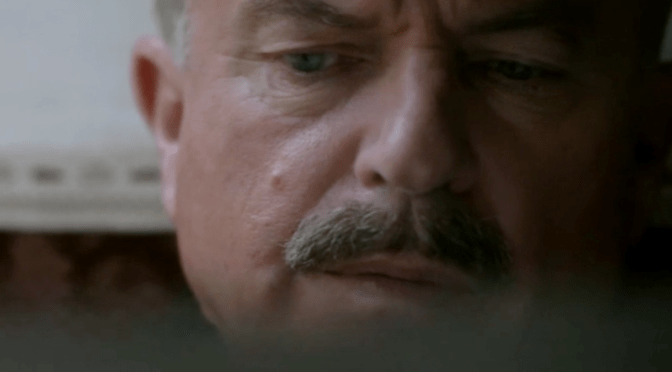
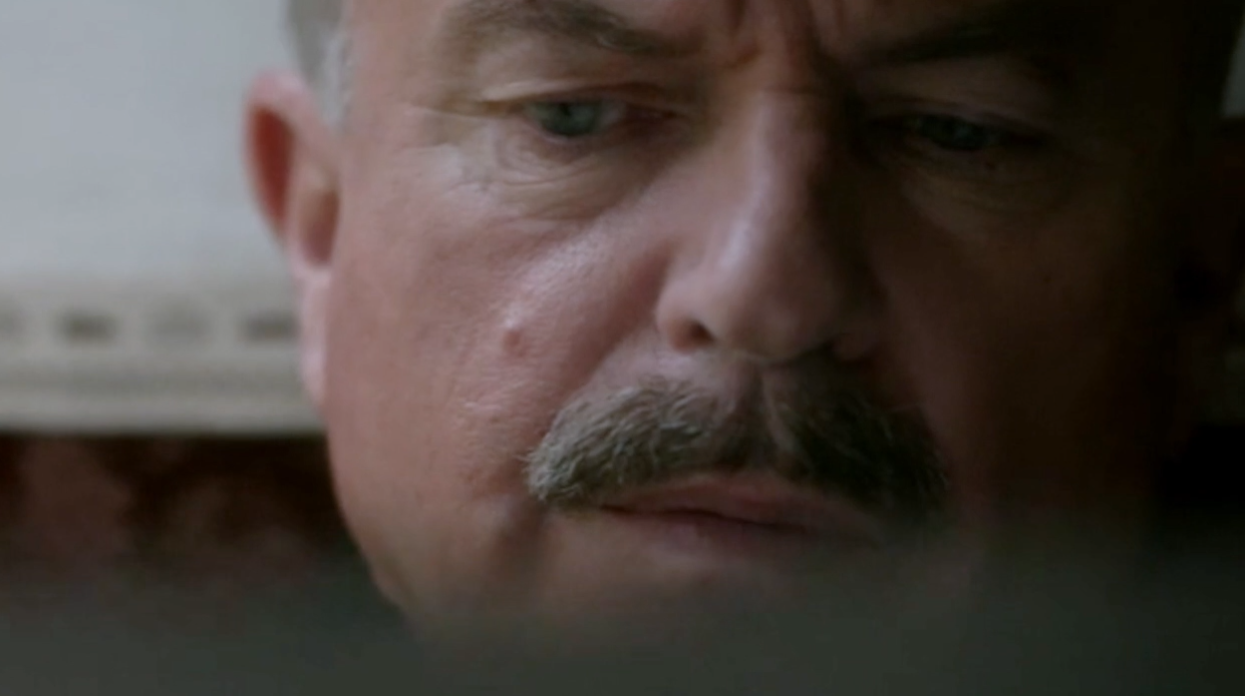
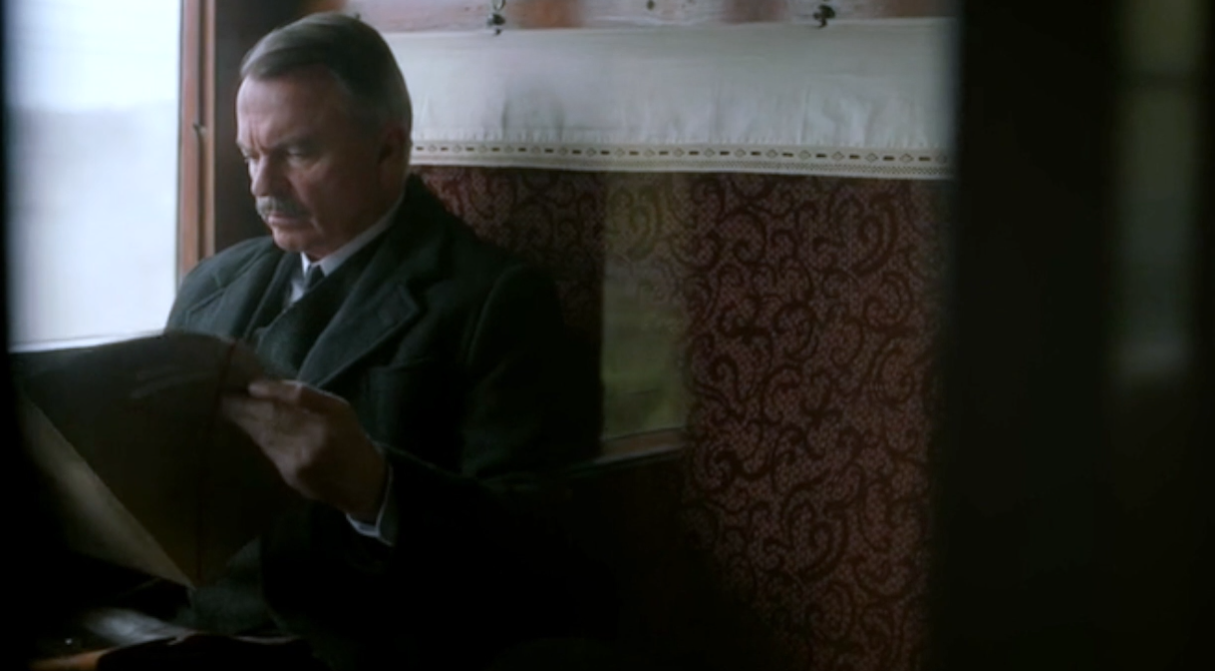
We’re back on the train with C.I Campbell as he studies his ‘Top Secret’ files.
This scene lasts 01.21.
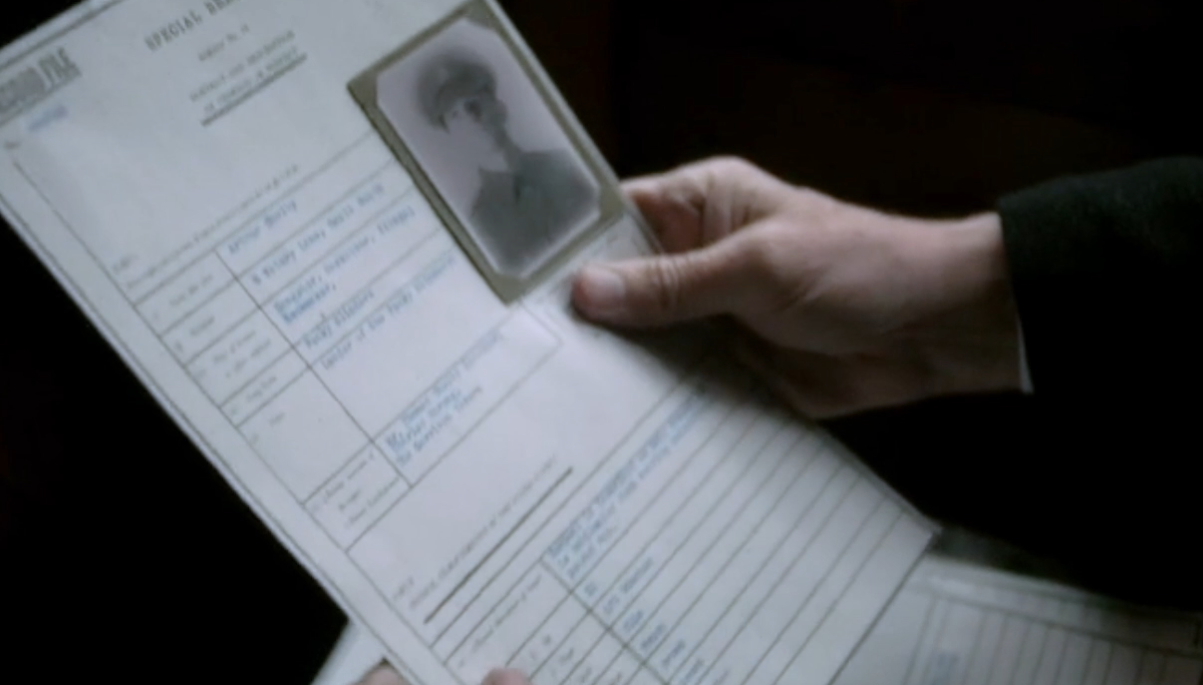
As before in C.I. Campbell’s introductory scene – it’s all visual.
The opening shot is of an image of a man in military uniform.
It’s the man we’ve just been watching rouse his workers to strike in the previous scene.
Campbell turns the page, revealing his name: Freddie Thorne.
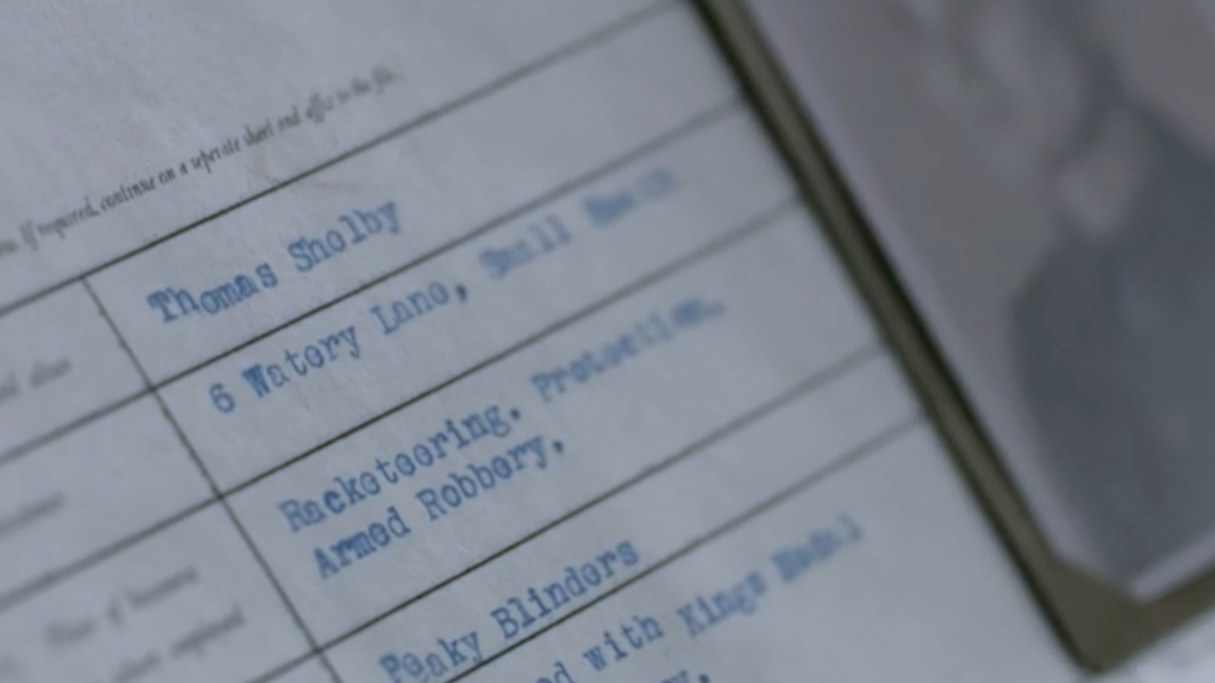
Next, we’re close on:
Special Branch consider Freddie a “Communist Agitator” and a “Bolshevik.”
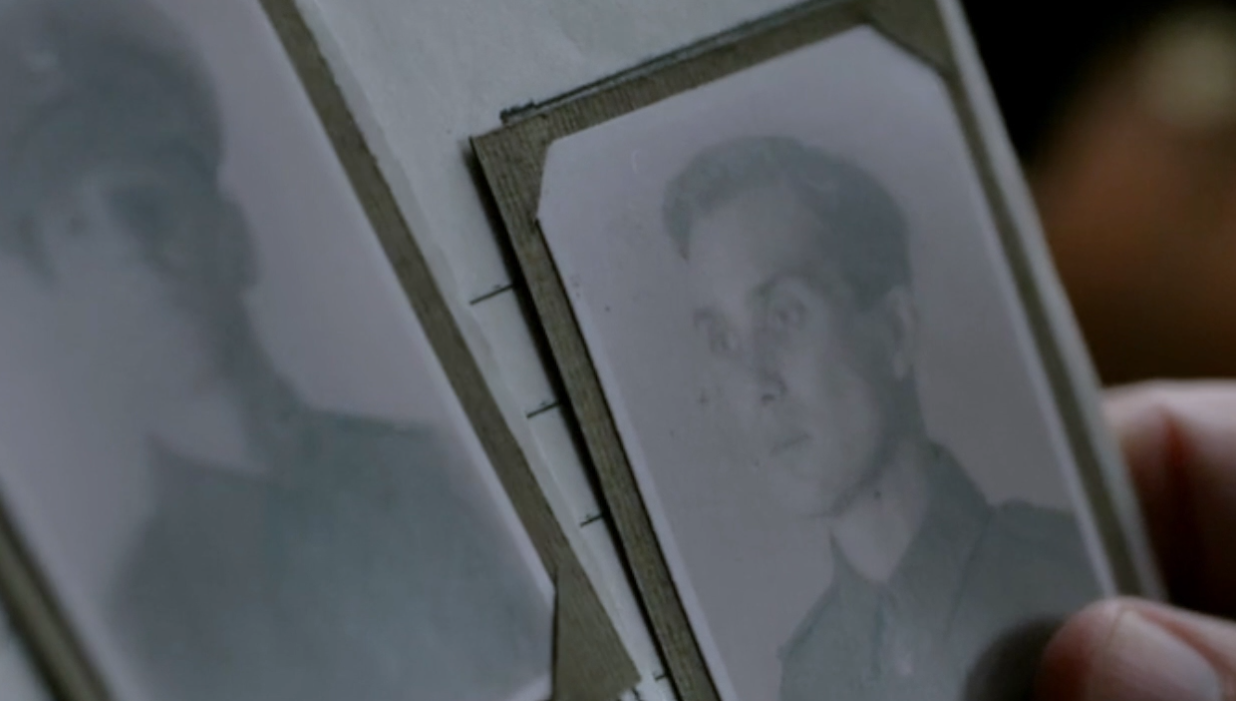
Next, C.I. Campbell holds up Thomas’s photo, so the two are side by side. Comrades, brothers in arms, but also this photo symbolizes one of the series grand themes, and one of societies greatest battles of ideas – communism versus capitalism.
Finally, the Chief Inspector holds his files tightly, takes a deep breath, and closes his eyes, as if relaxing before the battle. The calm before the storm?
Summing up then, what do we learn from this scene?
1. Freddie is on C.I. Campbell’s ‘Top Secret’ target list.
2. Freddie is considered a political threat – a communist agitator.
2. As C.I. Campbell holds the images of Thomas and Freddie side by side it hints at a grand theme: Capitalism versus Communism.
Click here for the final scene in the opening 10 minutes, and see how, at exactly 10 minutes, the writer and director places our hero, Thomas Shelby, centre screen.
This is the first in a series of posts studying subtext.
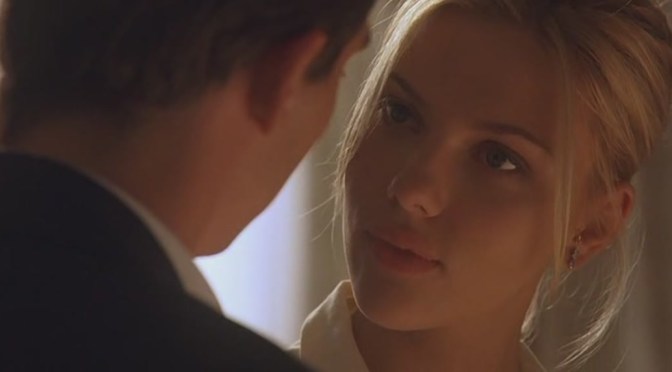
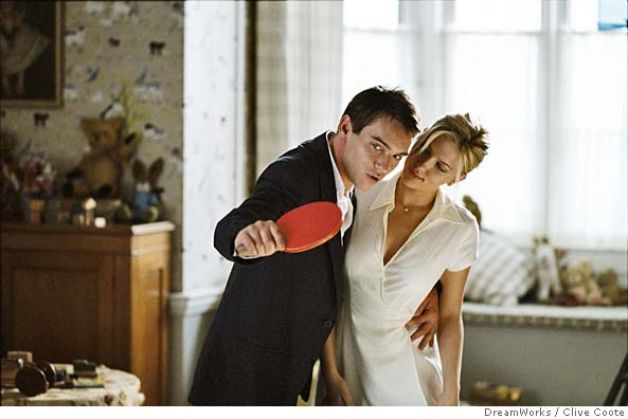
This electrifying scene – between Jonathan Rhys Meyers and Scarlett Johansson in Woody Allen’s Match Point (nominated for an Academy Award for Best Original Screenplay) – sizzles with sexual tension through subtext.
Watch the scene:
Here’s the dialogue:
NOLA
So, who’s my next victim? You?
CHRIS
I haven’t played table tennis in quite a while.
NOLA
Would you like to play for a thousand pounds a game?
CHRIS
What did I walk in to?
Chris plays and smashes the ball violently to win the point.
NOLA
(surprised at his aggression)
What did I walk in to?
Chris moves to Nola’s end of the table.
CHRIS.
It’s like this.
He goes to help her.
May I?
NOLA
Please.
Chris puts his arm around her and pulls her close.
CHRIS
You have to lean in and hit through the ball.
NOLA
I was doing just fine until you showed up.
CHRIS
Ah…story of my life.
So tell me…what’s a beautiful young American ping-pong player
doing mingling among the British upper class?
NOLA
Did anyone ever tell you you play a very aggressive game?
CHRIS
Did anyone ever tell you you have very sensual lips?
NOLA
Extremely aggressive.
CHRIS
I’m naturally competitive. Is it off-putting?
NOLA
I’ll have to think about that for a while.
Tom enters (played by Matthew Goode).
TOM
Ah! There you are. I wanted to introduce you to Chris Wilton.
Chris Wilton this is Nola Rice, my fiance.
NOLA
The tennis pro.
They shake hands.
CHRIS
My pleasure.
NOLA
(to Tom, but eyes fixed on Chris)
He was trying to have his way with me over the table.
TOM
(laughing)
Oh really? Well you’d better watch out for this one.
He’s made a living out of hustling.
NOLA
(to Chris)
I’ll be ready for you next time.
So, let’s study it line by line:
NOLA
So, who’s my next victim? You?
This is brilliant foreshadowing by Woody Allen. If you haven’t seen the film yet, I won’t spoil it for you.
CHRIS
I haven’t played table tennis in quite a while.
NOLA
Would you like to play for a thousand pounds a game?
CHRIS
What did I walk in to?
Chris plays and smashes the ball violently to win the point.
NOLA
What did I walk in to?
Chris moves to Nola’s end of the table.
CHRIS.
It’s like this.
He goes to help her with her posture.
May I?
NOLA
Please.
Chris puts his arm around her and pulls her close.
CHRIS
You have to lean in and hit through the ball.
NOLA
I was doing just fine until you showed up.
Nola isn’t just talking about the table tennis game. She’s talking about the game of life. Nola is a hustler, an out-of-work actress using her beauty to work her way up in society. She was doing fine. But now Chris has walked in to her life…
CHRIS
Ah…story of my life.
So tell me…what’s a beautiful young American ping-pong player
doing mingling among the British upper class?
NOLA
Did anyone ever tell you you play a very aggressive game?
This aggressive game, again, is not just about the ping-pong. More superb foreshadowing by Woody Allen, pointing towards the climax.
CHRIS
Did anyone ever tell you you have very sensual lips?
NOLA
Extremely aggressive.
By using the adverb of intensity ‘extremely’ Woody Allen pushes the foreshadowing at us even harder.It’s a warning. There is ‘extreme aggression’ to come.
CHRIS
I’m naturally competitive. Is it off-putting?
NOLA
I’ll have to think about that for a while.
Tom enters (played by Matthew Goode).
TOM
Ah! There you are. I wanted to introduce you to Chris Wilton.
Chris Wilton this is Nola Rice, my fiance.
NOLA
The tennis pro.
Chris and Nola shake hands.
CHRIS
My pleasure.
NOLA
(to Tom, but eyes fixed on Chris)
He was trying to have his way with me over the table.
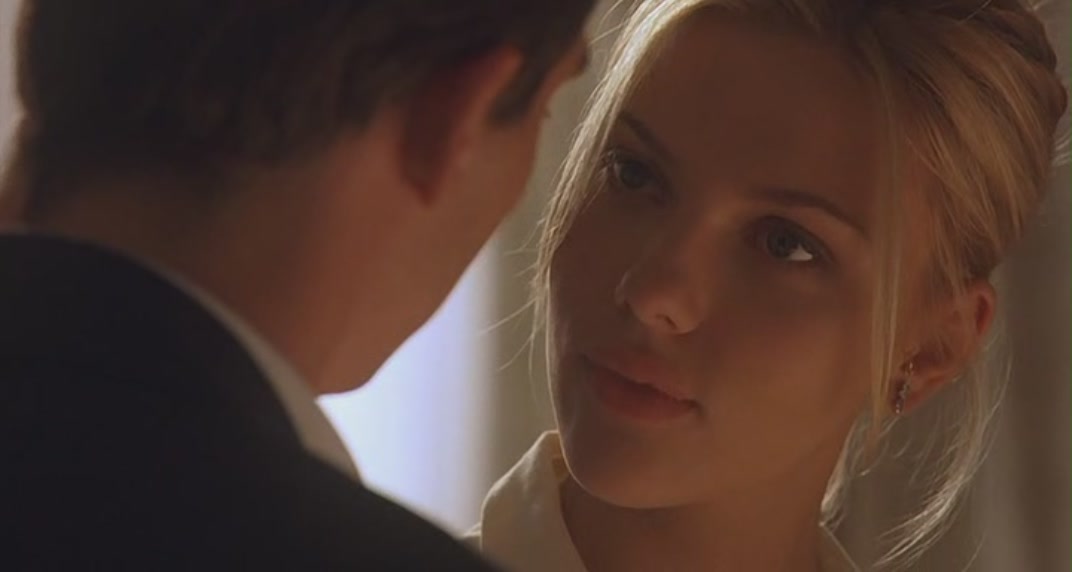
I love this line. Throughout the scene the body language subtext has been electric sexual tension. Until now its been unspoken. We’ve seen it. We’ve watched it. We’ve felt it. But Nola speaks it. It’s no longer subtext. The subtext has come to the surface. It’s the truth. But heedless Tom, lacking all awareness of the sexual chemistry that we’ve just witnessed between Chris and Nola, laughs it off.
TOM
(laughing)
Oh really? Well you’d better watch out for this one.
He’s made a living out of hustling.
NOLA
(to Chris)
I’ll be ready for you next time.
This ingeniously crafted line works on two levels.
i. She’ll be ready next time he wants to ‘take her’.
ii. It foreshadows the climax when being ready for him has life or death stakes.
Summing up then, this scene is a superb example of subtext working to both foreshadow and to create sexual tension.
We also experience sexual tension ‘subtext’ through the actors’ physical interaction and body language.
What a pleasure to see these two actors working together to create so much sexual tension with such a clever script.
I’ll finish with 3 questions:
1. What tension is your dialogue creating?
2. What is your dialogue/subtext foreshadowing?
3. Does your dialogue give room to the actors to allow them to create tension in their physical space?
We’re studying the opening ten minutes of Steven Knight’s historical crime drama Peaky Blinders.
In the previous post we saw how this scene introduces the main antagonist – Chief Inspector Campbell – and the main plot, visually, with no dialogue, in 39 seconds.
But what does this scene reveal regarding character?
Let’s take the three characters referenced in this scene one by one, in order of appearance.
What 3 characteristics do we learn about each of them?
Chief Inspector Campbell
1. He is “a thinker”.
2. He is determined.
3. He is fiercely focused.
Arthur
1. He is ex-military.
2. He’s a gangster, a racketeer, and a bookmaker.
3. Police consider him “leader” of the Peaky Blinders.
Thomas
1. He is ex-military.
2. He is an armed robber i.e. a violent criminal.
3. He was ‘honored for gallantry’ and therefore a war hero.
So, a great deal revealed in this short scene with no dialogue.
Stay tuned for the next sneaky peak at Peaky Blinders!
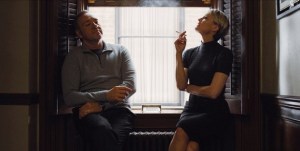
Everyone is doing something. Take Frank and Clare Underwood in House of Cards. They don’t just sit and talk. They share a cigarette. Their ‘secret’ habit. In a later season Frank takes up a new hobby of painting his little soldiers. What secret habits or little hobbies do your characters have?
2. Desire.
Everyone wants something. We want something in life and we want something now. What do your characters want?
a) In any specific moment.
b) In a specific scene.
c) In this story.
2. Power Play.
In this scene between Hannah and Dexter there is a constant battle for power.
Mamet believes we speak to conceal ourselves, not reveal ourselves.
In her book To Be a PlaywrightJanet Nepris says it’s when characters can no longer keep inside what they truly feel that we reach the highest point of drama in a scene.
Until that point we speak to conceal the truth.
We conceal our secrets. We conceal our true desire.
Check out this post exploring how Woody Allen uses subtext to foreshadow the violent climax in the clever, Oscar nominated Match Point.
So, four things to remember as we work on our scenes: action, desire, power play and subtext.
We’re studying the opening 10 minutes of Steven Knight’s superb historical crime drama Peaky Blinders.
We’re up to scene 7.
In this scene Thomas has just entered the family home, had the short exchange with younger brother Finn, and now walks through the doors of the pantry which opens us up to his illegal gambling den.
First, let’s see how Steven Knight describes the scene in his screenplay:
INT. BETTING SHOP – CONTINUOUS – DAY
…To our surprise the pantry gives out onto a secret world.
We find two hole terraced houses have been knocked through to form a single open plan space with the windows boarded. It is a fully functioning (illegal) betting shop and it is buzzing with activity.
The large room is dominated by a huge blackboard on which bets and odds are being chalked by two RUNNERS in shirt sleeves. They stand on stepladders to reach the top of the board. The room swirls with cigarette and cigar smoke and there are half a dozen men queuing silently at a desk to lay bets. A heavy looking man (a gang enforcer known as SCUD-BOAT) is taking the bets in the form of coins wrapped in scraps of paper.
Scud-boat unwraps the pieces of paper and drops coins into a hat as he unrolls the next bet. Thomas pauses and peers up at the blackboard. We see twenty bets, all for Monaghan Boy. The sight doesn’t please or displease him.
One of the men at the blackboard is young and pretty and immaculately groomed. This is JOHN Shelby (Thomas’s 24 year old brother). When he sees Thomas, he looks up from his ledger and hisses with delight…
JOHN Tommy, will you just look at the board. Will you just look.
At that moment, at the far end of the room, a door opens from a small office, partitioned by glass and curtains. A man in his late thirties puts his head around the door. We will learn that this is ARTHUR. He calls out angrily.
ARTHUR
Tommy! Get in here!
Arthur slams the door. John smiles as Thomas sets off towards the partitioned office (we sense Thomas is in trouble he can handle). Through reflections in the glass of the partitioned office, we see Arthur’s angry, anxious face, waiting.
Firstly, we have to again note the incredibly close detail Steven Knight employs.
On screen is almost identical to the script with minor changes in dialogue:
John says “Look at the book” instead of “look at the board” and Thomas commends his younger brother with a “Good work, John.”
Arthur says “Tommy! Get in here! Now!” for emphasis.
Apart from these minor changes the scene is almost exactly the same as the screenplay.
But what is revealed in this scene?
I see 3 revelations regarding character:
1. Thomas is admired by John, his younger brother.
2. Thomas shows leadership skills, positively reinforcing his younger brother with a pat-on-the-back “Good work, John.”
3. Arthur barks an order at Thomas, displaying superiority.
In the next scene we’ll see how the two older brothers – Arthur and Thomas – battle for that superiority.
At drama school we were taught that the role of the clown is, every time he falls down, to get up and try again.
That’s the role of the clown.
And that’s our role, as well, isn’t it?
When we fall, or fail, we are to get up, and try again.
Applies to our writing, too, right? Short story rejected by a magazine? Try again. Don’t get placed in a competition when you worked hard on your story? Try again. Not quite the feedback you were expecting? Still things to work on? Try again.
If at first you don’t succeed, try, try again.
That’s the thing with our heroes and heroines, too
When Carry holds down her stressful job while living with bipolar, because she can do it, may be I can cope with the stresses of my job, too.
If Billy Elliot can become a ballet dancer, he can achieve his dream with all of the social forces fighting against him, then surely I can achieve mine.
If they can do it, so can I.
I can win that place at art school.
I can learn the piano.
I can pass my exams.
If Rocky can make a comeback aged 60, then I can make a comeback, too.
Whatever the story world, every hero exudes the same quality: resilience.
resilience
the capacity to recover quickly from difficulties; toughness.
Whether it’s Billy Elliot or Rocky Balboa, the quality is the same:
Resilience.
Resilience is the characteristic we must ingrain in our characters.
And resilience is the quality we must ingrain in ourselves.
ingrain
verb
firmly fix or establish (a habit, belief, or attitude) in a person.


 We watch men being men in a pub.