This week’s lecture, The History of Screenwriting focused on how screenwriting has developed and gave two examples from screenplays written in the 1950’s – On the Waterfront (1954 – dir. Elia Kazan, screenplay Budd Schulberg) and Sunset Boulevard (1950 – dir. Billy Wilder, screenplay Charles Brackett, Billy Wilder, D.M Marshman). Finnegan noted “There are noticeable differences in terms of their formatting, despite only being made four years apart.” – At the Crossing: Changing Perceptions, Technologies and Screenplay Functions in Contemporary Cinema (Finnegan, J. 2017).
Furthermore, we were asked to read the scenario of Le Voyage Dans La Lune (directed and written by Georges Méliès) and instructed to “Think about the logistics of film production in this period, and how the documentation reflects this. Compare this scenario to the documentation used by practitioners today. How has the shift in production practices affected our approaches to the craft of writing for the screen?”
I noted that some of the scene headings used only nouns and others used verbs. Where verbs were used, this gave instruction to the crew and actors what would happen on set through improvisation. Where nouns, the function of the scene heading was to describe the set. Indeed, Melies would have taken the word scenario from its Latin meaning, meaning “that which is represented on stage.” In this sense, the scene headings serve the same function as modern format of screenplays i.e the NIGHT / DAY and INT / EXT simply serve to give instruction to the technical crew and logistics personnel on a film project for planning purposes. Finnegan notes “The scenario was, as the name suggests, a brief description given to the minimal crew of the time, but also a marketing tool used to attract audiences.” These readings certainly wet my appetite for further study in the history of the screenplay.
Finally, creative work was to develop the treatment for our short film and give peer feedback. My intention through feedback was to encourage and to steer my peers towards knowledge I have recently enjoyed gaining through reading John Yorke’s Into the Woods. By referring to Yorke’s work in feedback I was able to cement ideas I am attempting to assimilate and apply to my own work.
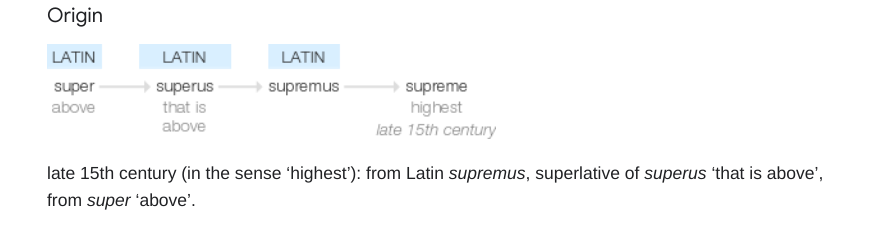
A question I have for Christopher Vogler (The Writer’s Journey) is how can the Midpointbe the Supreme Ordeal, when the ordeal in the final battle is supremer. There is no such adjective as supremer.
Supreme reigns supreme.
The Supreme Ordeal, by very definition, is the most powerful ordeal of the story. It is the ordeal which causes the hero to change, to have a moral revelation (John Truby, Anatomy of Story – 22 Steps of a Master Storyteller) at which point the hero’s unconscious need is made conscious and the outward goal is achieved, or not, depending on the character arc of the hero.
I have always seen the outward goal being achieved in the Final Battle / Climax / Crisis in Act 3, where, according to John Truby, the hero has a moral revelation, the ‘need’ is made conscious, and the outward goal is achieved, or not.
I am still unconvinced that Hague’s 3 Act structure and Vogler’s 12 Step Hero’s Journey are concordant. Perhaps The Hero’s Journey only suits a certain kind of story – the mythic tale – and cannot / should not be forced into the 3 Act structure of other genres.
However, if we must cram it into 3 acts, I prefer to see the Hero’s Journey like this:
ACT 1:
Ordinary World
Call to Adventure
Refusal of the Call
Meeting the Mentor
Crossing the Threshold
ACT 2:
Tests, Allies and Enemies.
ACT 3:
Approach to the Inmost Cave
Supreme Ordeal
Reward
Road Back
Resurrection
Return with the Elixir
The 4 R’s of the last phase of The Hero’s Journey: Reward / Road Back / Resurrection / Return are interconnected, almost flowing into one scene / experience for the hero.
The Reward is the elixir, the Road Back is literally, the road back home, the Resurrection is arrival in the ordinary world, and Return with the Elixir is making lessons learned known to loved ones, society and the wider world. A good example of this is 127 Hours (screenplay by Danny Boyle & Simon Beaufoy).
(spoiler alert)
In 127 Hours, Aaron Ralston has his Supreme Ordeal, where he cuts his arm off, 15 minutes before the end of the film. See 3 Act Structure in 127 Hours. The final 15 minutes (Act 3) are the Reward (he is alive) The Road Back (receiving help from passers by) Resurrection (moral revelation / need made conscious – he needs other people) and finally Return with the Elixir (he writes his book ‘Between a Rock and a Hard Place’ and helps Simon Beaufoy and Danny Boyle write the screenplay for the movie of his life.)
In the audio book by Hague and Vogler Hero’s Two Journeys Vogler sees the Resurrection phase of the hero’s journey as the Final Battle / Climax – an even more supreme ordeal than The Supreme Ordeal.
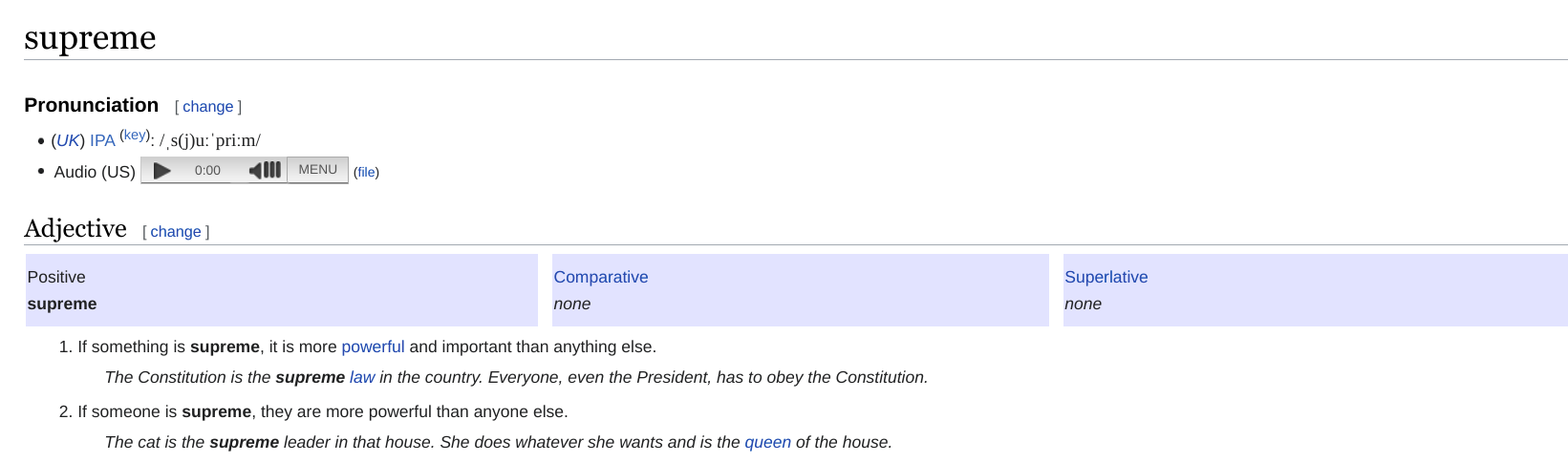
But this is impossible. There is no such word as supremer. There is no superlative. Supreme is the superlative.
“If something is supreme, it is more powerful than anything else.”
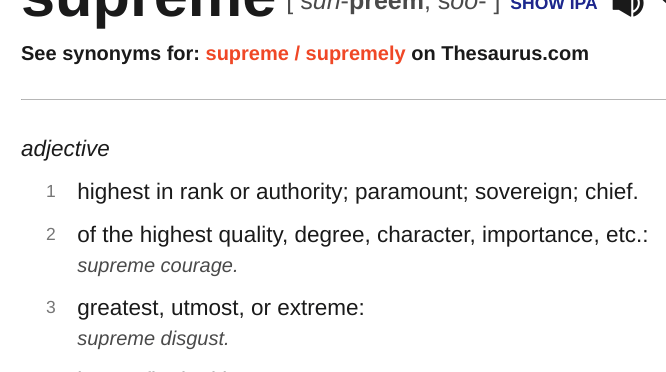
Supreme is superlative. There is not a stronger adjective. It is already the strongest it can be. Words are all we have as writers. So why call the midpoint the ‘supreme’ ordeal when there is an even stronger ordeal ahead in the Climax?
The Supreme Ordeal, is not only the greatest, utmost, extreme ordeal, it is the last, final and ultimate. There is no more powerful ordeal than The Supreme Ordeal. Therefore, if The Supreme Ordeal is the most powerful ordeal for the hero, it must occur in the Climax, in the Final Battle – and not at the midpoint. It must occur where it has the power to affect the most change in the hero. In 127 Hours, it’s where Aaron cuts his arm off. In Gladiator, it is in the arena fighting the tigers. In Thelma and Louise, (interestingly, both Hague and Yorke use Thelma and Louise as an example) The Supreme Ordeal is surely the decision they make to drive over the cliff. Sure, the midpoint was an ordeal, they held up the gas station, and as Hague says, it is the Point Of No Return – there is no going back from that, they cannot undo what they did – but doesn’t deciding to take their own lives have more of an effect on their lives? Of course it does, it takes their lives. Holding up the gas station makes them felons. They can go to prison for a very long time. But their decision to take their own lives kills them. It has a more powerful effect on them. It kills them. So it must be the Supreme Ordeal. If so, the Supreme Ordeal, in Thelma and Louise, is not the midpoint, it is the Climax.
In conclusion, I would argue that every story / movie / TV drama has a stronger Climax than the Midpoint. Therefore, I see the Supreme Ordeal as in Act 3 and not at the midpoint.
However, I am wrong 99% of the time. So I’ll leave it with you to decide.



 screenwrite.org