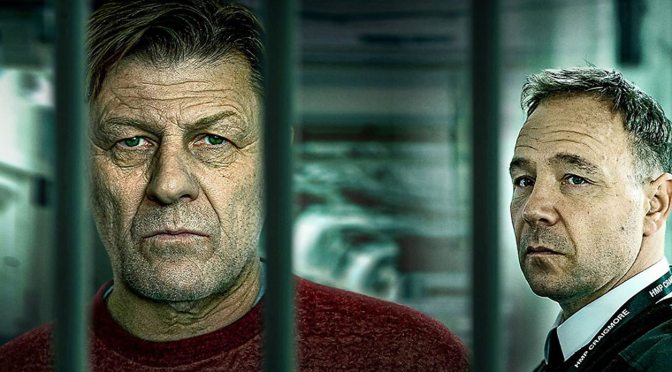
I asked chatgpt how does Jimmy McGovern structure episode 1 of Time. This was the response.
In Episode 1 of Time, Jimmy McGovern skillfully structures the episode to immerse viewers in the harsh, tense environment of a British prison while introducing the complex inner lives of the main characters. McGovern, known for his gritty, character-driven storytelling, uses a dual narrative approach to introduce the two main characters, Mark Cobden (played by Sean Bean) and Eric McNally (played by Stephen Graham), and to establish the emotional stakes that drive the story forward.
Establishing Characters and Context: The episode opens with Mark, a former teacher, who is sentenced to four years for causing a fatal car accident. The narrative dives directly into his vulnerability and isolation as he enters prison, giving viewers a raw look at the fear and guilt he feels. In parallel, we meet Eric, a seasoned prison officer, whose moral integrity and deep care for the inmates contrasts sharply with the brutality of the prison environment.
Conflict and High Stakes: McGovern quickly escalates tension by throwing Mark into confrontations with fellow inmates, exposing the brutal reality of prison life. He also creates immediate tension for Eric, who is forced into a moral dilemma when a gang threatens his family. This dual conflict (Mark’s survival and Eric’s integrity) drives the episode’s structure, balancing empathy and suspense.
Developing Themes of Guilt and Redemption: Throughout the episode, McGovern interweaves themes of guilt, redemption, and justice, exploring these through the contrasting lives of Mark and Eric. Flashbacks and dialogue subtly reveal Mark’s remorse, highlighting his emotional journey, while Eric’s ethical struggles reveal his vulnerability, adding depth to the narrative.
By ending the episode on cliffhangers for both characters, McGovern effectively hooks viewers, leaving them invested in the fate of these two men whose lives are irrevocably intertwined within the brutal confines of prison.
So week 4 was 1:1 tutorials. I was privileged to pitch my 15 minute short film Piano to the course leader.
I had already decided to rewrite my female character as a law student without being an escort. The story itself is already a metaphor for consent. Nuff said.
I pitched it as a romantic comedy, even though in my short, as in Notting Hill, rather than the two central characters sharing equal screen, time narrative weight seemed to favor the boy.
So it was suggested to perhaps pitch it as a personal drama with a comedic tone. That way I won’t have to worry about giving the two central characters equal screen time, but can focus on the learning curve of the male character – learning his lesson at the feet of the woman he loves – following his journey.
I checked the defining qualities of the personal inner drama genre as per Philip Parker‘s breakdown and decided that my story fits.
The reading this week was Alternative Screenwriting, one of the chapters is called ‘Working against Genre.’
So, my task this week is to pitch this story as a personal inner drama with elements of the rom com, and, importantly, to be specific about which elements of each genre.
And then, record and upload it for grading.
After that, my task will be to ensure the want and need of my hero is in place. Not only that, but to ensure that the climax happens like this:
The Hero has a moral revelation of his ‘need’. The revelation causes him to take new moral action. As a result of this change my hero is able to achieve his goal.
So, my second task this week is to ensure my hero’s outward physical goal and inner need is set in stone in my mind.
A question I have for Christopher Vogler (The Writer’s Journey) is how can the Midpointbe the Supreme Ordeal, when the ordeal in the final battle is supremer. There is no such adjective as supremer.
Supreme reigns supreme.
The Supreme Ordeal, by very definition, is the most powerful ordeal of the story. It is the ordeal which causes the hero to change, to have a moral revelation (John Truby, Anatomy of Story – 22 Steps of a Master Storyteller) at which point the hero’s unconscious need is made conscious and the outward goal is achieved, or not, depending on the character arc of the hero.
I have always seen the outward goal being achieved in the Final Battle / Climax / Crisis in Act 3, where, according to John Truby, the hero has a moral revelation, the ‘need’ is made conscious, and the outward goal is achieved, or not.
I am still unconvinced that Hague’s 3 Act structure and Vogler’s 12 Step Hero’s Journey are concordant. Perhaps The Hero’s Journey only suits a certain kind of story – the mythic tale – and cannot / should not be forced into the 3 Act structure of other genres.
However, if we must cram it into 3 acts, I prefer to see the Hero’s Journey like this:
ACT 1:
Ordinary World
Call to Adventure
Refusal of the Call
Meeting the Mentor
Crossing the Threshold
ACT 2:
Tests, Allies and Enemies.
ACT 3:
Approach to the Inmost Cave
Supreme Ordeal
Reward
Road Back
Resurrection
Return with the Elixir
The 4 R’s of the last phase of The Hero’s Journey: Reward / Road Back / Resurrection / Return are interconnected, almost flowing into one scene / experience for the hero.
The Reward is the elixir, the Road Back is literally, the road back home, the Resurrection is arrival in the ordinary world, and Return with the Elixir is making lessons learned known to loved ones, society and the wider world. A good example of this is 127 Hours (screenplay by Danny Boyle & Simon Beaufoy).
(spoiler alert)
In 127 Hours, Aaron Ralston has his Supreme Ordeal, where he cuts his arm off, 15 minutes before the end of the film. See 3 Act Structure in 127 Hours. The final 15 minutes (Act 3) are the Reward (he is alive) The Road Back (receiving help from passers by) Resurrection (moral revelation / need made conscious – he needs other people) and finally Return with the Elixir (he writes his book ‘Between a Rock and a Hard Place’ and helps Simon Beaufoy and Danny Boyle write the screenplay for the movie of his life.)
In the audio book by Hague and Vogler Hero’s Two Journeys Vogler sees the Resurrection phase of the hero’s journey as the Final Battle / Climax – an even more supreme ordeal than The Supreme Ordeal.
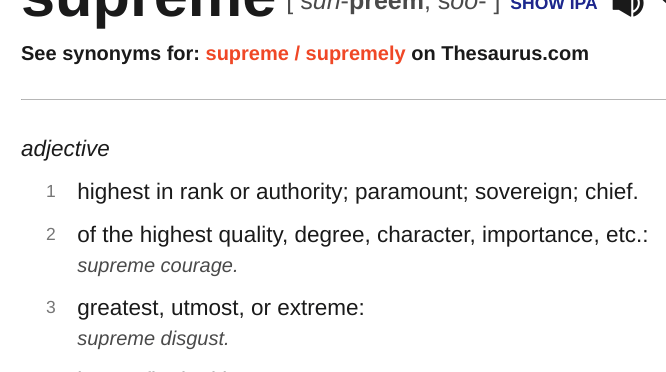
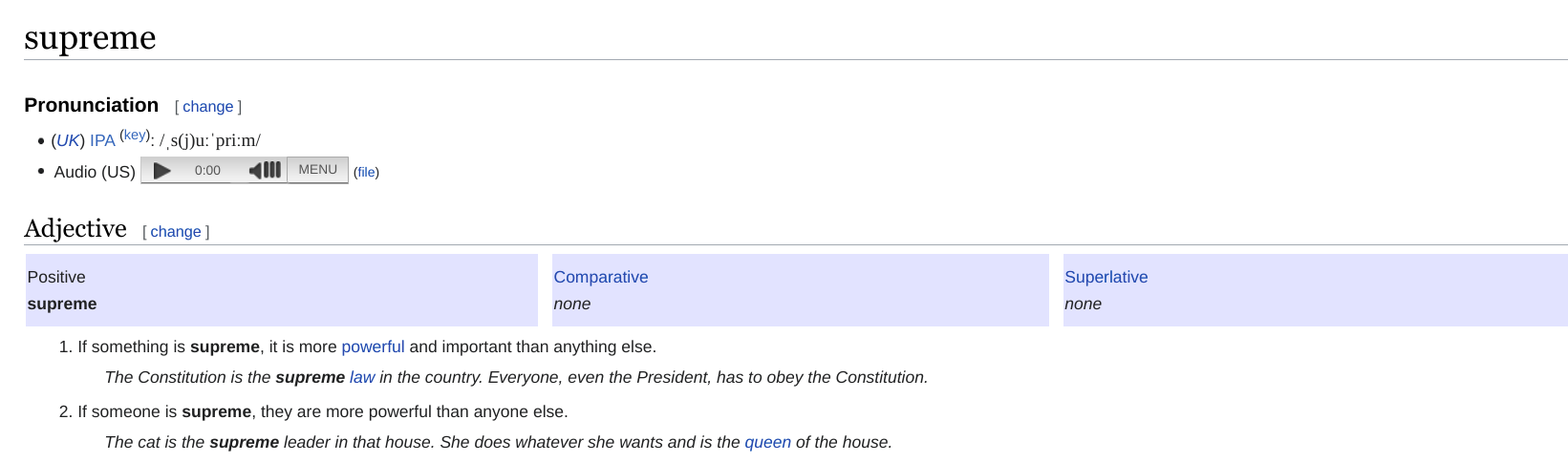
But this is impossible. There is no such word as supremer. There is no superlative. Supreme is the superlative.
“If something is supreme, it is more powerful than anything else.”
Supreme is superlative. There is not a stronger adjective. It is already the strongest it can be. Words are all we have as writers. So why call the midpoint the ‘supreme’ ordeal when there is an even stronger ordeal ahead in the Climax?
The Supreme Ordeal, is not only the greatest, utmost, extreme ordeal, it is the last, final and ultimate. There is no more powerful ordeal than The Supreme Ordeal. Therefore, if The Supreme Ordeal is the most powerful ordeal for the hero, it must occur in the Climax, in the Final Battle – and not at the midpoint. It must occur where it has the power to affect the most change in the hero. In 127 Hours, it’s where Aaron cuts his arm off. In Gladiator, it is in the arena fighting the tigers. In Thelma and Louise, (interestingly, both Hague and Yorke use Thelma and Louise as an example) The Supreme Ordeal is surely the decision they make to drive over the cliff. Sure, the midpoint was an ordeal, they held up the gas station, and as Hague says, it is the Point Of No Return – there is no going back from that, they cannot undo what they did – but doesn’t deciding to take their own lives have more of an effect on their lives? Of course it does, it takes their lives. Holding up the gas station makes them felons. They can go to prison for a very long time. But their decision to take their own lives kills them. It has a more powerful effect on them. It kills them. So it must be the Supreme Ordeal. If so, the Supreme Ordeal, in Thelma and Louise, is not the midpoint, it is the Climax.
In conclusion, I would argue that every story / movie / TV drama has a stronger Climax than the Midpoint. Therefore, I see the Supreme Ordeal as in Act 3 and not at the midpoint.
However, I am wrong 99% of the time. So I’ll leave it with you to decide.
Is anyone else having problems reconciling The Hero’s Journey with Michael Hague’s 3 Act structure?
I have listened to the presentation Chris Vogler does with Michael Hague (Screenwriting for Hollywood) on Audible, where each puts forward their own hypotheses for structure. However, I’m still having problems. My issue is this:
Chris says that The Supreme Ordeal (step 8 of the 12 step hero’s journey) is the same point in a movie as the midpoint in 3 act structure terminology.
Also, that the Resurrection (step 11) is the same as The Final Battle in Act 3 (Hague).
My question is this: why is the ‘supreme ordeal’ called ‘supreme’ if there is a bigger battle to come (The Resurrection).
It should not be called ‘supreme’. Supreme is superlative. You cannot get higher or better or more intense. I suggest that although this is the ‘central’ ordeal of the hero it is not the midpoint.
I suggest The Supreme Ordeal is The Final Battle in Act 3.
Furthermore, the Approach to the Inmost Cave is followed by the Supreme Ordeal. Here we have two superlatives: inmost and supreme.
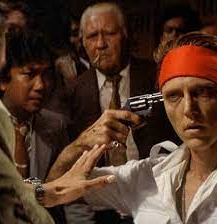
If we can trust that these words hold fast to their true meanings (and as writers all we have are words) then inmost must be inmost and supreme must be supreme: it is the cave where the dragon lives. It is the battlefield where David slays Goliath. It is the gladiator’s final arena. It is the ring where Rocky has his title fight. It is the life or death russian roulette scene in The Deer Hunter.
Inmost must be inmost. Supreme must be supreme. There is no tougher test than the supreme ordeal. Yet Chris Vogler says The Resurrection corresponds to The Final Battle in Act 3.
But the final battle must be the hero’s toughest test. The climax of the movie. The moment where the hero wins or loses, lives or dies (physically or emotionally).
Supreme must be supreme or we disempower the word of its meaning. And if we disempower words before we even start to write our screenplay, what hope do we have?
For this reason, although I pay attention to Vogler’s Hero’s Journey, I cannot reconcile it to correspond to Hague’s 3 act structure in the same way as he teaches. I cannot, in my mind, have a more supreme ordeal than the supreme ordeal.
There is no such word as supremer.
Supreme is supreme.
So, if I stick to my guns and trust my gut, how does the 12 step hero’s journey work?
The 12 steps would look like this:
Act 1:
Ordinary world.
Call to adventure.
Refusal of the call.
Meeting the mentor.
Crossing the threshold.
Act 2:
Tests, Allies, Enemies.
Act 3:
Approach to the Inmost Cave.
Supreme Ordeal.
Reward.
Road Back.
Resurrection.
Sharing the Elixir.
Let’s take 127 Hours as a paradigm. Simon Beaufoy and Danny Boyle adhere to perfect 3 act structure. The movie is exactly 90 minutes and is structured like this:
Act 1: 15 minutes.
Act 2: 60 minutes.
Act 3: 15 minutes.
According to my theory, this would mean the two shortest acts have the majority of the hero’s steps. Act 2 has only Tests, Allies and Enemies. But aren’t these three words enough to fill the 60 minutes of Act 2?
John Truby’s book The Anatomy of Story details how to write a story about a hero with a moral flaw. He teaches storytelling with moral argument, moral needs and moral vision.
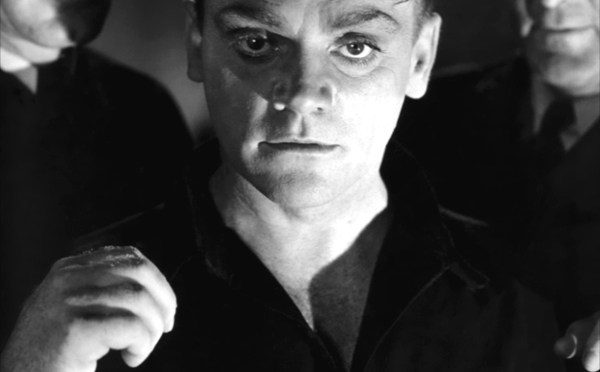
In one of my favorite films, Angels with Dirty Faces (1938), James Cagney’s character Rocky is a tough gangster admired by all the street kids in his neighborhood.
When Rocky is sentenced to death the priest, Father Connolly, Rocky’s childhood friend, wants him to feign fear as he goes to the electric chair.
Connolly believes this will act as a deterrent to the street kids who admire him and want to be like him. They will see that gangsters aren’t cool, but cowards.
Rocky immediately refuses, but is faced with a moral dilemma: does he maintain his tough guy image and die a hero to the kids who idolize him? Or sacrifice his hero status to save them from a life of crime and perhaps the same fate?
Watch this powerful scene to see what happens:
In a stroke of genius by the filmmakers we the audience are not let into the secret if Rocky’s screams of fear are feigned or not. Perhaps they are real.
I choose to believe Rocky had a moral revelation and acted upon it, feigning fear and appearing ‘yellow’ as he went to the chair.
“In For Whom the Bell Tolls, the single image of the tolling bell signifies death. But the phrase ‘for whom the bell tolls’ refers to another line that is the real key to the designing principle of the story and the theme that comes out of it. That line, from John Donne’s Devotions Upon Emergent Occasions, is:
‘No man is an island entire of itself…Any man’s death diminishes me, because I am involved in Mankind. And therefore never send to know for whom the bell tolls. It tolls for thee.’
The symbol of man, not as an island but as an individual in a community, organizes this story under one image, and it implies the probable theme line: in the face of death, the only thing that gives life meaning is sacrificing for the individuals you love.”
“This advanced and difficult form of storytelling is designed to show that destruction is the result not so much of individual choice (like tragedy) but of individuals caught in a system that is innately destructive.”
“The best opponent is the necessary one: the character best able to attack the great weakness of your hero. Your hero will be forced either to overcome that weakness and grow or else be destroyed.”