Category Archives: Character

Happy Valley – a deep dive into structure

This exploration of the opening episode of Sally Wainwright’s award-winning crime drama trilogy Happy Valley reveals 4 story threads, a 5 act structure, multiple antagonists, blurred boundaries and how the structure follows the journey not of trilogy protagonist Catherine but of the season antagonist Kevin. Dive in and discover.

From this article:

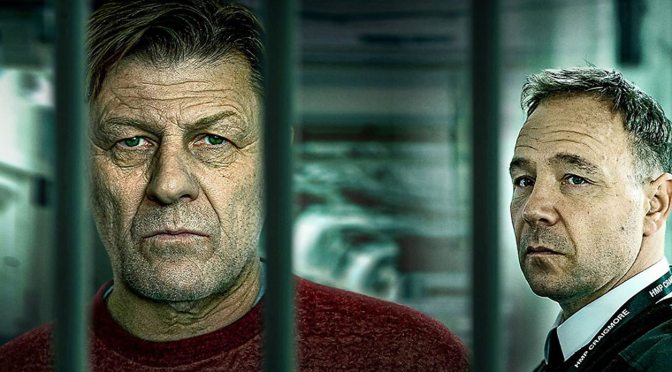
“Time” by Jimmy McGovern – episode 1 structure

I asked chatgpt how does Jimmy McGovern structure episode 1 of Time. This was the response.

In Episode 1 of Time, Jimmy McGovern skillfully structures the episode to immerse viewers in the harsh, tense environment of a British prison while introducing the complex inner lives of the main characters. McGovern, known for his gritty, character-driven storytelling, uses a dual narrative approach to introduce the two main characters, Mark Cobden (played by Sean Bean) and Eric McNally (played by Stephen Graham), and to establish the emotional stakes that drive the story forward.

  1. Establishing Characters and Context: The episode opens with Mark, a former teacher, who is sentenced to four years for causing a fatal car accident. The narrative dives directly into his vulnerability and isolation as he enters prison, giving viewers a raw look at the fear and guilt he feels. In parallel, we meet Eric, a seasoned prison officer, whose moral integrity and deep care for the inmates contrasts sharply with the brutality of the prison environment.
  2. Conflict and High Stakes: McGovern quickly escalates tension by throwing Mark into confrontations with fellow inmates, exposing the brutal reality of prison life. He also creates immediate tension for Eric, who is forced into a moral dilemma when a gang threatens his family. This dual conflict (Mark’s survival and Eric’s integrity) drives the episode’s structure, balancing empathy and suspense.
  3. Developing Themes of Guilt and Redemption: Throughout the episode, McGovern interweaves themes of guilt, redemption, and justice, exploring these through the contrasting lives of Mark and Eric. Flashbacks and dialogue subtly reveal Mark’s remorse, highlighting his emotional journey, while Eric’s ethical struggles reveal his vulnerability, adding depth to the narrative.

By ending the episode on cliffhangers for both characters, McGovern effectively hooks viewers, leaving them invested in the fate of these two men whose lives are irrevocably intertwined within the brutal confines of prison.

Introducing characters in The Serpent

Welcome to this series of posts looking at how different writers introduce their lead characters.

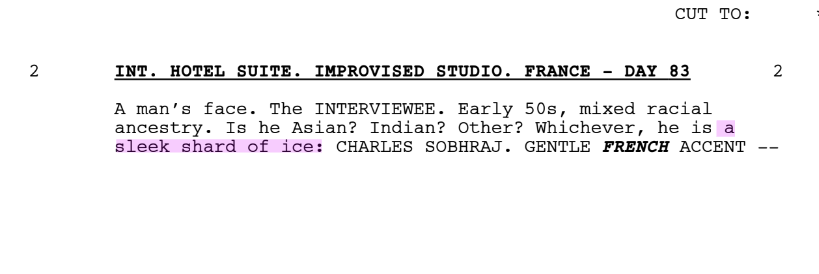
Let’s start with episode 1 of The Serpent written by Richard Warlow, produced by Mammoth Screen. The screenplay is available on the BBC Writers’ Room website.

Let’s take a look.

I love this. Charles Sobhraj is a sleek shard of ice. Richard Warlow chooses to describe him with a metaphor. Doesn’t it work well? Doesn’t it tell us everything we need to know about him?

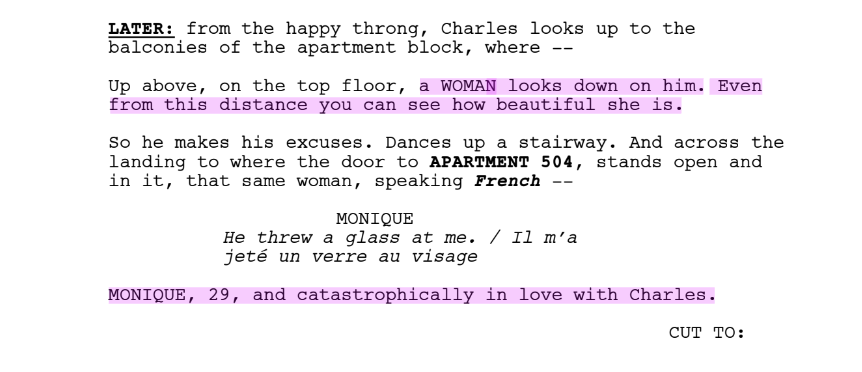
Next, we meet the other protagonist, Monique. Let’s see how Richard Warlow introduces her.

So, first, we simply see a WOMAN looking down on him. Before we know her name, from a distance, we can see how beautiful she is. Then, when Charles enters, and we can hear her as well as see her, the writer describes her as being ‘catastrophically in love with Charles.‘ And that’s all we need to know.

So, all in all, Charles is a sleek shard of ice and Monique is catastrophically in love with him.

And that’s all we need to know.

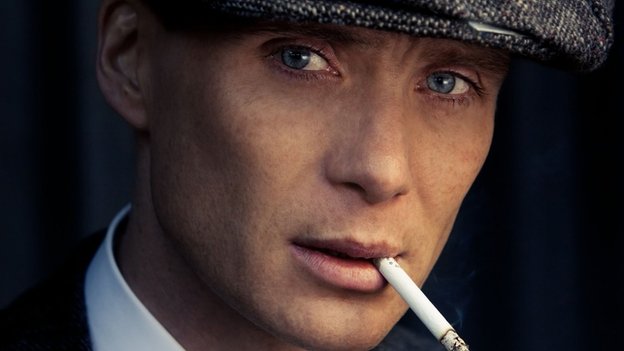
A Sneaky Peak at Peaky Blinders – Scene 6.

In Scene 6 Thomas enters the Shelby house and has a quick interchange with Finn, his youngest brother.

In the screenplay Steven Knight describes this short, 30 second scene in detail:

Thomas breezes through a hallway decorated with brass and fancy floral crockery. The Shelby home is compact, a typical terrace, but we might notice a surfeit of brass and flowery ornamentation around the place. The Shelbys are cash rich but without conventional good taste. The home is decorated like a gypsy caravan, or a boatman’s barge with lots of roses, elephants and castles.

We might glance a photograph of three brothers in military uniform, smiling (this is Arthur, Tommy, and John – all in Warwickshire Yeomanry uniform, with a freshly dug trench behind them).

Thomas tosses his coat aside and passes through a small kitchen, where a young boy (FINN, 10, Thomas’s youngest brother) is smoking a cigarette into the flames of a coal fire. A rabbit roasts on a spit. Finn hides the cigarette and calls out as Thomas passes…

FINN

Arthur’s mad as hell.

THOMAS

What does a ten year old know about hell?

FINN

I’m eleven Sunday.

Let’s have a quick look at how much of this is realized on screen.

The first paragraph –

Thomas breezes through a hallway decorated with brass and fancy floral crockery.

– is on screen.

However the first thing we notice when Thomas enters is a crucifix on the wall, illuminated by a shaft of sunlight as Thomas opens and closes the front door. This is perhaps a nod to the Shelby’s Irish – Catholic heritage. Aunt Polly is described as “half Romany, half catholic” and the city of Birmingham in the UK in 1919 had “a large Irish Catholic” community. (Sources: Telegraph/Guardian).

From Steven Knight’s description we do notice on screen –

 flowery ornamentation around the place.

– and the home is

decorated like a gypsy caravan.

It’s interesting to note Thomas is referred to several times as being a “gypsy.”

However, the rabbit on the spit, the action of tossing the coat, and specifically the photo of the three brothers in uniform are all absent from the screen.

(Note to self – not everything you write will make it on to the screen – even if you’re at the top of your game!)

So, to answer our two questions:

1. What is revealed in this scene regarding plot?

Nothing per se. However the line of dialogue from Finn prepares us for familial conflict between Thomas and Arthur – itself revealing one of the series’ major themes – the rise of a king – and this theme is itself revealed in plot – the various actions Thomas takes in order to achieve his ambitions.

And why is Arthur ‘mad as hell’ ? Because, as we soon find out, Thomas has been treading on Arthur’s toes. There’s a battle for leadership going on. A battle for kingship. Who is the King of the Shelby clan? Who is The King of Small Heath ? Is it older brother Arthur, or his younger, smarter, brother Thomas?

2. What is revealed in the scene regarding character?

Firstly, through Thomas’s action – a playful bash on Finn’s head with his cap (on screen not in the script – actor’s choice?) – and by his tone of voice – we see that Thomas is friendly to Finn.

He could curse and swear at him for smoking, but he doesn’t.

Thomas is revealed in this scene as friendly, gentle and playful – a stark contrast to the fear and reverence he evokes out on the streets.

Secondly, through dialogue, Knight cleverly and with subtlety reveals that Thomas has experienced ‘hell.’

Thomas asks what Finn, a ten year old, can possibly know about hell.

“Hell” here refers to the horrific war Thomas has just returned from – the blood, the bombs, the death, the injured and dying men screaming – portrayed to us later in his vivid nightmares.

Tommy Shelby is a paradoxical character: ruthless, yet with an almost angelic aura; youthful, but with the air of one who has already seen it all.

– The Guardian.

Stay tuned for the next post analyzing the opening ten minutes of Peaky Blinders!

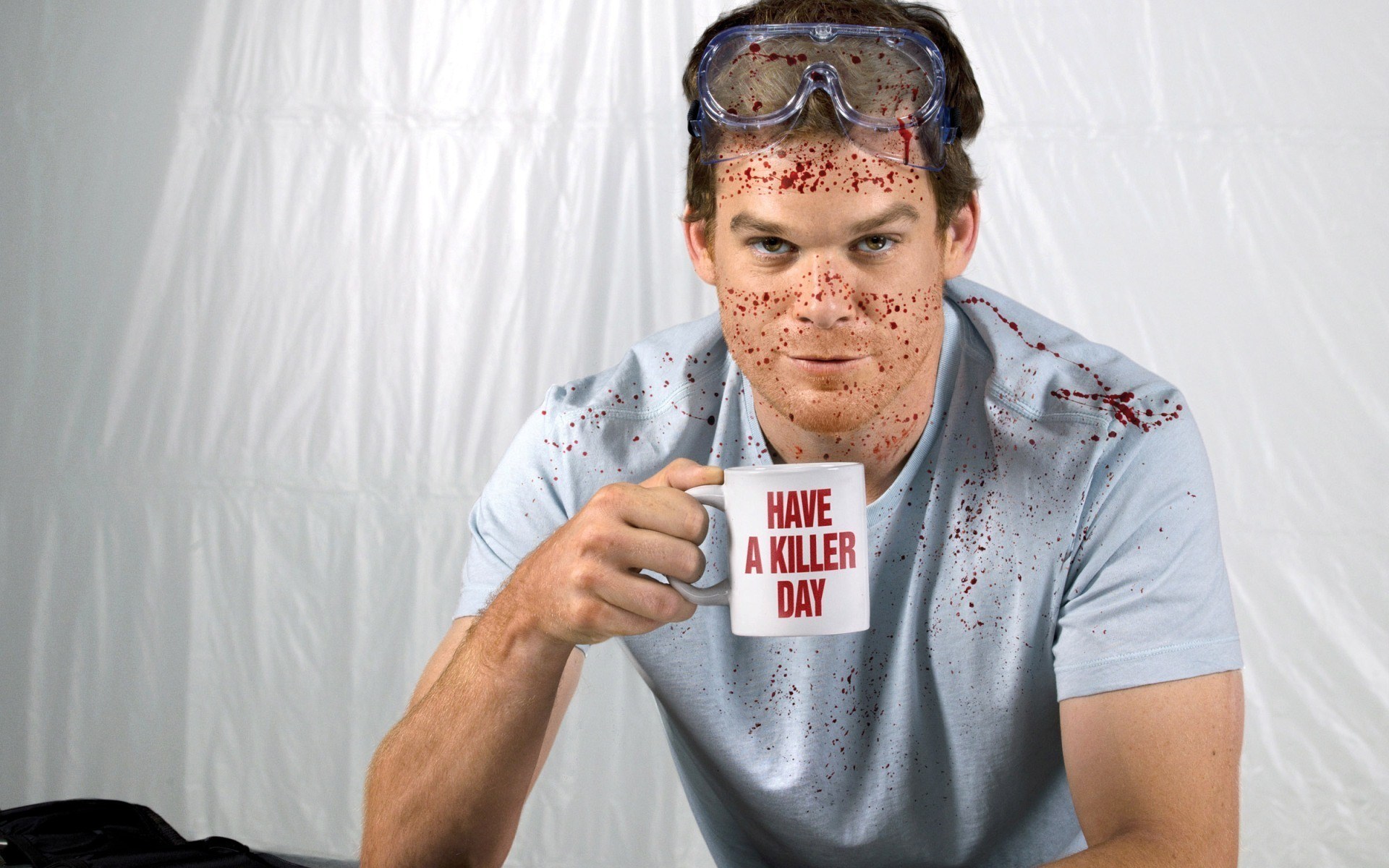
Dissecting Dexter.

For those of you who missed my series of posts on Dexter, here is an easy access list.

The posts dissect one episode to see how theme is represented.

It checks dialogue tricks and techniques.

We see that the Climax is the longest scene, built up to with a series of shorter scenes.

We learn how much screen time Dexter has.

We see how many scenes have 2 characters, 3 characters, how many are ensemble.

We discover a 3 act structure, and much, much more.

Here are the posts. I hope you learn as much from them as I have.

1. Episode Breakdown: Scene by Scene.

2. Structure and Scene Length.

3. Characters in Scenes.

4. Interesting Script Facts.

5. Dexter’s Screen Time.

6. Titles and Meanings.

7. Old Cliches Die Hard.

8.a) Dialogue: Angel Batista.

8.b) Dialogue: Joey Quinn.

8.c) Dialogue: Debra Morgan.

9. Dialogue Technique: Answering Questions with Questions.

10. The Climax


Angels with Truby Faces

John Truby’s book The Anatomy of Story details how to write a story about a hero with a moral flaw. He teaches storytelling with moral argument, moral needs and moral vision.

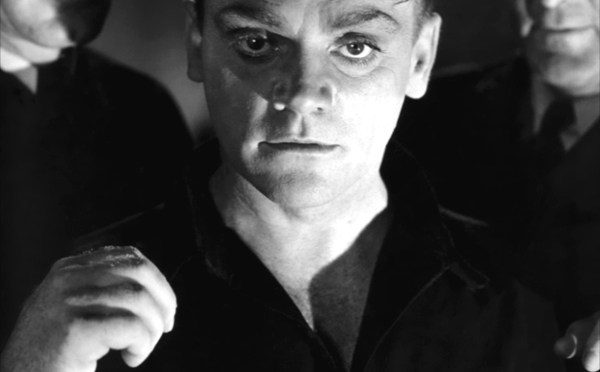
In one of my favorite films, Angels with Dirty Faces (1938), James Cagney’s character Rocky is a tough gangster admired by all the street kids in his neighborhood.

When Rocky is sentenced to death the priest, Father Connolly, Rocky’s childhood friend, wants him to feign fear as he goes to the electric chair.

Connolly believes this will act as a deterrent to the street kids who admire him and want to be like him. They will see that gangsters aren’t cool, but cowards.

Rocky immediately refuses, but is faced with a moral dilemma: does he maintain his tough guy image and die a hero to the kids who idolize him? Or sacrifice his hero status to save them from a life of crime and perhaps the same fate?

Watch this powerful scene to see what happens:

In a stroke of genius by the filmmakers we the audience are not let into the secret if Rocky’s screams of fear are feigned or not. Perhaps they are real.

I choose to believe Rocky had a moral revelation and acted upon it, feigning fear and appearing ‘yellow’ as he went to the chair.

What moral dilemma is your hero facing?


Deconstructing Dialogue in The Town (part 3): exposition & theme

We’re analyzing a scene from The Town.
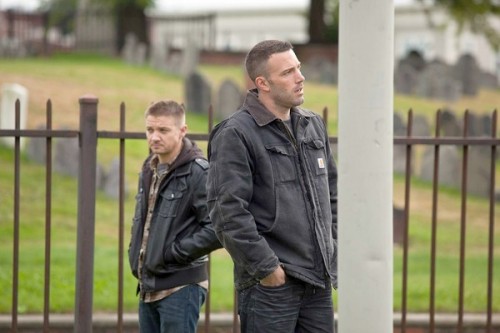
Read the scene.

Watch the scene.

For part 1 of this study, looking at the beats and power play between Doug and Jem, go here.

For part 2, looking at exposition, go here.

In this post we’ll explore how theme emerges from dialogue, thematic subtext from text.

Into the scene:

JEM
There’s people I can’t let you walk
away from.
DOUG
What? Who?
JEM
Come on!
A beat. Doug realizes.
DOUG
Are you serious, Jimmy?
She’s not my kid….
(beat)
Cut it out. All you give a fuck
about is coke and Xbox and now
you’re trying to play it off you
care about Shyne, come on now!
JEM
You know what your fucking problem
is?
DOUG
What?
JEM
You think you’re better than
people.
DOUG
Uh-huh.
JEM
Mister fucking clean, mister
fucking goddamn high and mighty,
right?
DOUG
Yeh, I’m better than all these
people, you’re right. I’m better
than anybody in this fucking
project.
JEM
Yeah, that’s what you think, but
you grew up right here. Same rules
that I did.
DOUG
OK. What else?
Beat.
JEM
Who the fuck’s the father?
DOUG
I know I’m not the father.
JEM
You were the one fucking her.
DOUG
Yeh, and I wasn’t the only one, brother, OK?
She knew I knew I’m not the father
and I have enough respect for her
not to ask her. OK? Because I don’t
think she knows. Alright? Now I
don’t wanna shatter your illusions
here, partner, but there aren’t
enough free clinics here in
Mattapan to find out who the father
of that kid is…
Beat.
DOUG (cont’d)
And I don’t know who the fuck you
think you are, either. You aren’t
letting me or not letting me do
shit. Alright? Here’s a little
fucking cheat sheet for you. Its
never gonna be me and you and your
sister and Shyne fucking playing
house up there. Alright? You got
it? Get that in your fucking head!
I’m tired of your one way fucking
bullshit. If you wanna see me
again, come down and visit me in

Florida.

So, what’s going on here in the way of exposition? What are we being exposed to thematically?

Later, at the end of the scene, we find out that Jem’s family took Doug in when his dad went to prison. Doug obviously started to fuck Krista, Jem’s sister – who isn’t mentioned by name here. Krista got pregnant, had a daughter, and from this we learn that she doesn’t know who the father is. Next, Doug, in quite an eloquent way, basically tells Jem his sister was a slut:

…there aren’t enough free clinics here in Mattapan to find out who the father of that kid is.

But this section of the scene is working subtextually on two more levels – interconnected by theme.

1. Krista & Shyne.

Krista’s motherly love for her daughter Shyne is the  reason she later sacrifices her brother and Doug, giving them up to the FBI.

2. Doug’s mother.

When Doug asks his dad, on a visit to prison, why he didn’t look for his mother when she walked out on them, Doug’s dad says  ‘because there was ‘nothing to find.’

He infers because Doug’s mother was no different to all the other single parent girls he sees on  the projects ‘fucking around’ – was no different, in fact, to Krista.

So, underlying this section of dialogue, ostensibly conflict between Doug and Jem about the identity of Shyne’s father, is one of The Town’s major themes: parenthood and its absence.

 

Character Arc

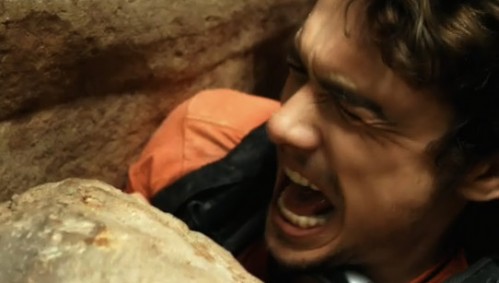
In 127 Hours, immediately after the midpoint, we’re treated to Aron’s video camera antics and the hilarious spoof radio show self-examination. This is a superb blend of comedy and tragedy. Aron reveals the fact he’s always seen himself as a ‘big fucking hard American superhero’ who can do everything ‘on his own’.

This segment is writing of the highest quality. The hero has a moral and a psychological revelation. John Truby describes a psychological revelation as being a self-realization that affects the hero directly, that is, causes him to see how he is destroying himself.

A moral revelation in Truby terms is our hero’s realization that his actions are hurting the world around him: loved ones, friends, society.

Most heroes will have one revelation but in great movies like 127 Hours the hero will have both. Not only does Aron stop blaming his mother and take responsibility for his own actions, admitting he has been living his life with ‘supreme selfishness’ but he tells his parents directly into the camera how he wishes he’d told them how much he appreciates them.

Not only do we see Aron scream for help from strangers in the resolution of the movie illustrating Aron’s character arc, but Danny Boyle points us back to this theme of family love and connectedness with a little insert during the closing credits:

“Now Aron always leaves a note to say where he’s going.”

This pays off the opening dialogue where his sister leaves a message on the answerphone asking him to call his mom back as ‘she worries’.

So Aron’s moral revelation is realized: he has changed the world around him, outside of himself. Due to his harrowing ordeal he has lost his selfishness and now thinks of others ahead of himself.

But the genius of Danny Boyle’s and Simon Beaufoy’s script here is how Aron’s revelation – that his ‘supreme selfishness’ led him to this place of extreme suffering – is delivered with a ‘spoon full of sugar’ gift-wrapped in scathingly funny self-deprecating dialogue.

So what actually should be a tragic moment has us weeping with laughter. But then, as we’re pulled back to the seriousness of the situation, we’re crying again, our tears of laughter mingling nervously with tears of pain.

Perfect writing.

Recommended reading: Anatomy of Story by John Truby

Writing Resilient Characters

Reading the Industrial Scripts newsletter this week (which is brilliant – you should definitely sign up) there was a link to an article by Lyndsay Doran in the New York Times (read it here) where she had researched the emotional components of successful movies and the qualities audiences most value in a character. One such quality was ‘accomplishment’, but not how we might think:

“The accomplishment the audience values most is not when the heroine saves the day or the hero defeats his opponent. Instead the accomplishment the audience values most is resilience.”

This set me thinking about the hero I’m working with in my feature script. I realized that his problem is he doesn’t know who his enemy is until the end of Act 2.

However, in Training Day and The Recruit the enemy is also revealed late in the story, although having been there all along. This is what John Truby in his Anatomy of Story calls the fake-ally opponent

‘…the fake-ally opponent is one of the most complex and fascinating characters in a story because he is usually torn by a dilemma.’

But the problem still remains: if our heroes don’t know who their enemies are how do they fight against them and show that all important empathy-inducing resilience?

Take 127 Hours (screenplay by Danny Boyle and Simon Beaufoy). Here is a hero who shows incredible resilience in the harrowing few minutes of the Climax. The story up to this point is the character figuring out how to battle and overcome his enemy whilst analyzing how he managed to get in such a terrible predicament. Gradually, after attempting to blame his mother, his moral revelation comes and he blames himself (character arc). But all the way from the Act 1 Turning Point until the Climax this hero knows his enemy – the rock.

So, back to my story, how does my character show resilience throughout if he doesn’t know who his enemy is until the end of Act 2 ? For this we have to come back to Truby and his theories on threefold opposition. Truby teaches our heroes should be facing opposition from all three corners of the ring (with our hero in the other corner). So, even if the main antagonist is hidden there are two more antagonistic forces in play.

Take the 2005 movie North Country (screenplay by Michael Seitzman) where the female protagonist is fighting against sexual harassment in the work place. Opposition is flying at her from all angles. First and foremost from her male co-workers; secondly from the patriarchal management system; then from her Father (also one of her co-workers) and lastly (perhaps most surprisingly) from her female workmates. The resilience she shows is immense.

How resilient is your hero?