Category Archives: #screenwriting

Peaky Blinders Opening 10: Scene 4

We’re analyzing the opening 10 minutes of Peaky Blinders.

We’re up to Scene 4 (which is also the Opening Credits scene.)

Let’s get stuck in.

What are we going to discover?

Firstly, that this scene is a brilliant example of showing character through action as we learn 3 characteristics of series protagonist Thomas Shelby.

(You can read the scene in the actual script here.)

There are 4 major actions. I’ve taken the action directly from Steven Knight’s script.

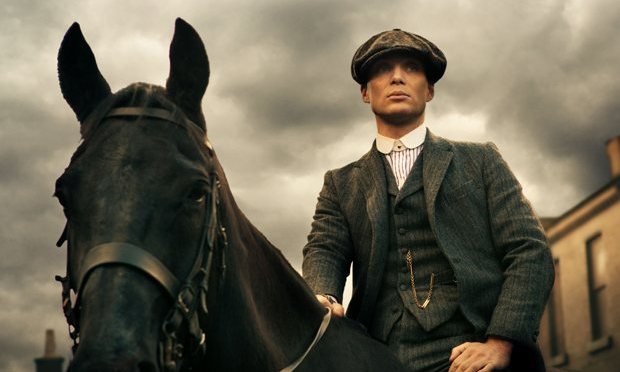
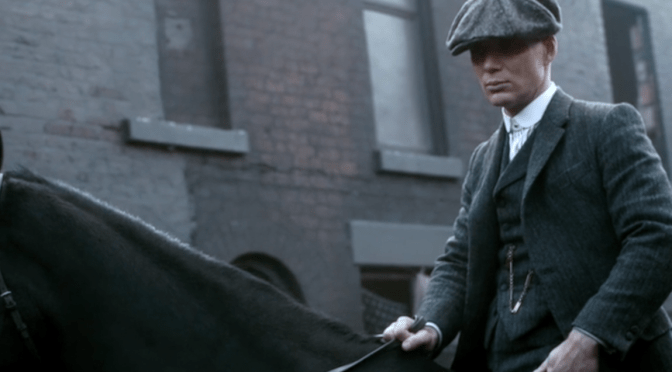
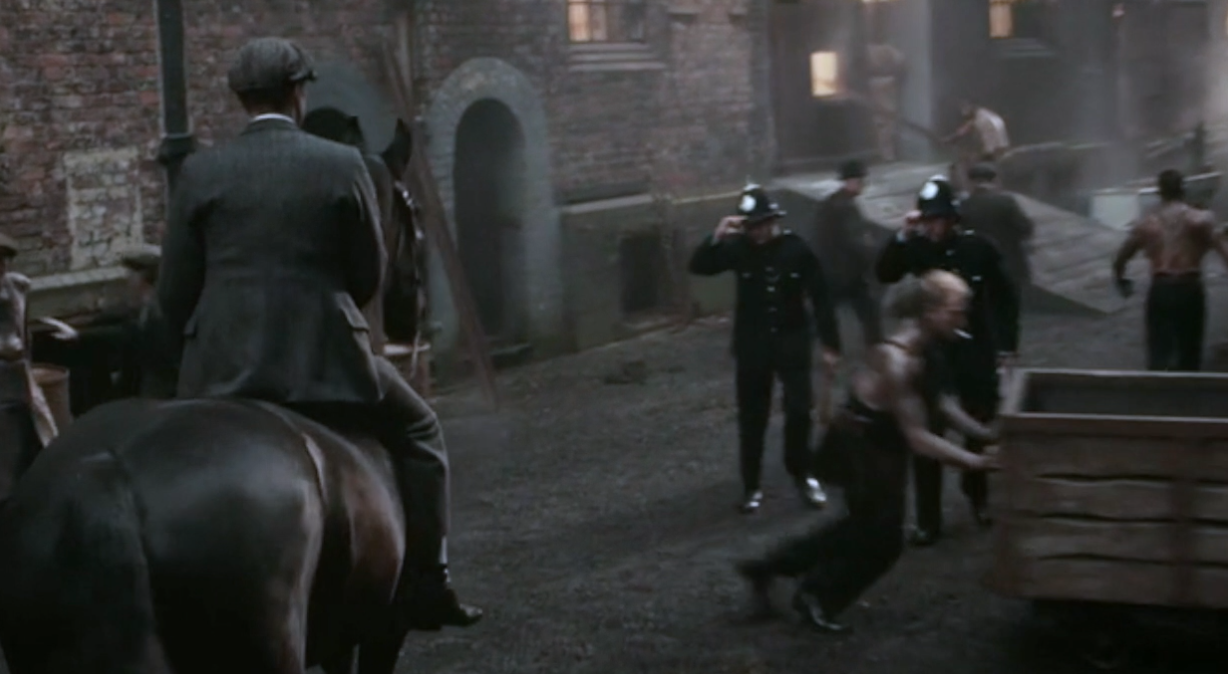
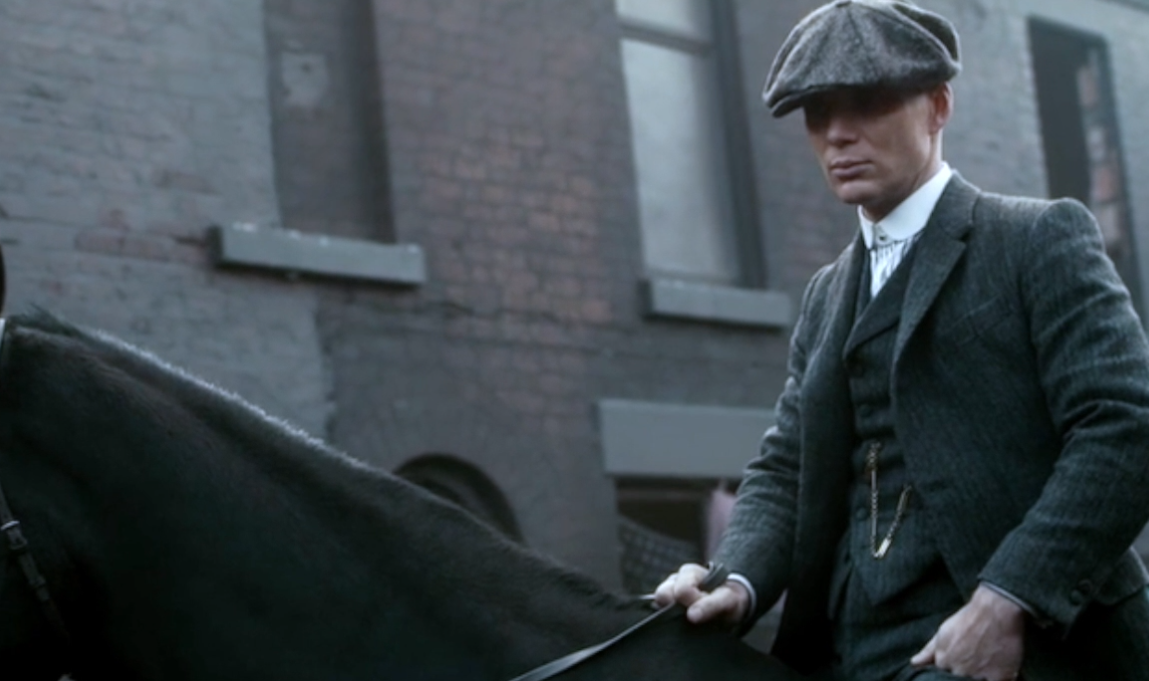
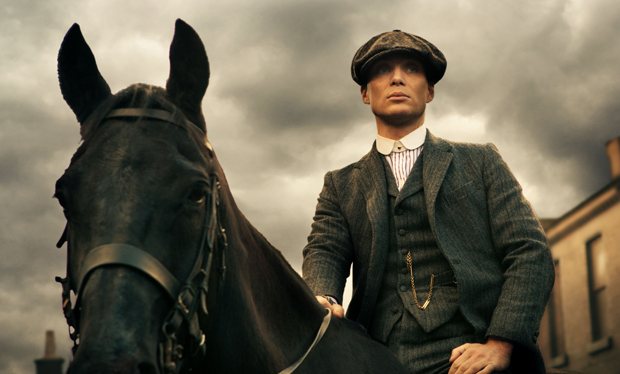
1. Thomas rides through a dark, grimy, industrial street on a beautiful black horse.

Why a black horse rather than a white one?

The website Universe of Symbolism  says a black horse is:

A symbol of mystery and intrigue, power, independence, sexual allure and a strong sense of self.

2. Jimmy Jesus – an Afro-Caribbean street preacher – glances up and nods a greeting.

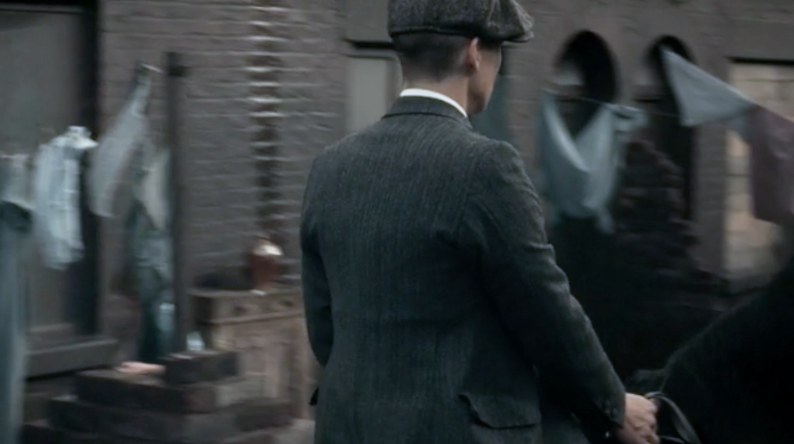
This is from the script. However, on screen he doesn’t nod a greeting, he fully removeshis hat from his head – showing both social distance and reverence (more on this later).

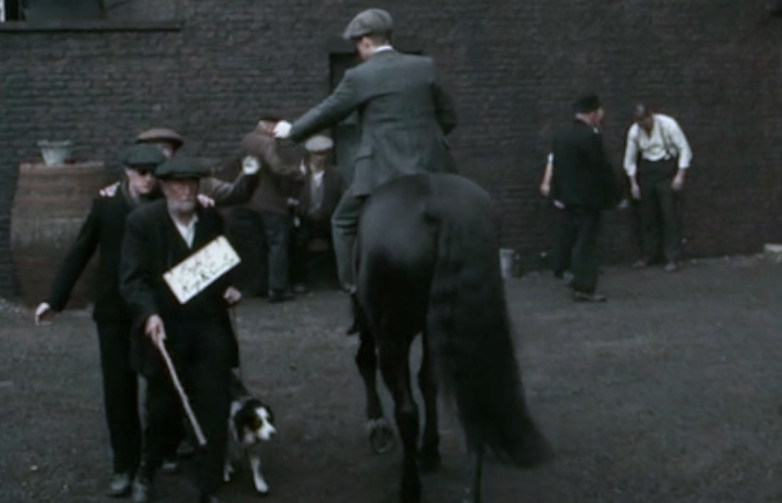
3. Thomas slows to allow a line of men to cross the road. (These are men blinded in the war, now begging for pennies.) Thomas leans down in the saddle to drop a coin into their bowl.

Interesting phrase Steven Knight uses here – leans down. He could have just written ‘he drops a coin in their bowl.’ But he doesn’t. He says he leans down. When Thomas leans down he is equating himself with these beggars, showing humility.

So why show humility to a group of men who were blinded in the war and now begging ‘for pennies’? Does Thomas share an affinity with the beggars?

4. Two policemen see Thomas. They both look nervous and touch their caps. Thomas ignores them and urges his horse on.

This action of touching your hat is called a hat tip.

Check out what Wikipedia has to say about it:

In Western societies of the 19th and early 20th centuries, a hat tip was a common non-verbal greeting between friends or acquaintances. Typically, two men would lift or tip their hats to each other.

But Thomas doesn’t lift or tip his hat. This is not to each other.

Wiki continues:

Where the ritual was used to emphasize social distance the subordinate was obliged to make the more elaborate gesture, for example fully removing his hat while the superior merely touched his.

Who fully removes his hat? Jimmy Jesus – the  street preacher. Jimmy’s full removal of his hat shows social distance. As well as showing reverence he is admitting to Thomas that he is his subordinate. Jimmy’s preaching echoes this social distance:

God does not care if you live in a slum or in a mansion.

Back to the policemen then. Not only does Thomas not tip his hat to them, he doesn’t even respond. Steven Knight makes a point of this:

Thomas ignores them.

So why do the police look nervous? And why do they tip their hats? Isn’t Thomas Shelby a criminal? Why are the police tipping their hats to him? The fact that Thomas doesn’t tip his hat reveals a lot. Wikipedia says:

The subordinate was obliged to make the more elaborate gesture…

But Thomas doesn’t even touch his hat, let alone make a more ‘elaborate gesture.’ He doesn’t make any gesture. As Steven Knight states:

He ignores them.

So Thomas doesn’t see himself as subordinate to the police. And if he’s not subordinate, he must consider himself as above them. Does Thomas consider himself above the police? Above the law?

But isn’t this pride?

Summing up then, in addition to the power, independence and sexual allure symbolized by the black horse, which 3 characteristics of Thomas Shelby are we shown through action?

I suggest respect, humility and pride.

Will his pride be his downfall?

This visual, opening credits scene ends around 3.57 and we get the title credit:

Screen Shot 2015-11-29 at 1.36.23 PM.png
We linger in this for 3 seconds then, at exactly 4 minutes, we cut to:
Scene 5.

A Sneaky Peak at Peaky Blinders: Scene 3.

So, we’re exploring the opening ten minutes of Peaky Blinders.

We’re onto Scene 3.

(Catch up here with Scene 1 and Scene 2).

So, what happens?

Thomas Shelby rides through the street and comes to a standstill.

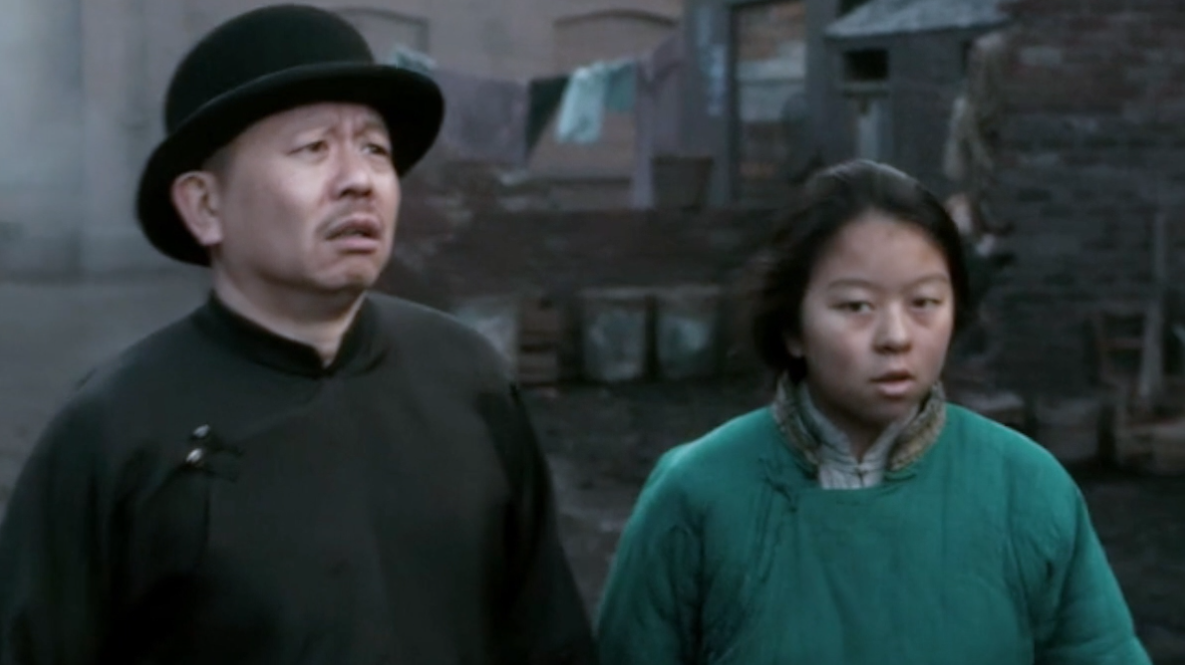
The Chinese Man and Girl from scene 1 come running and stop in front of him.
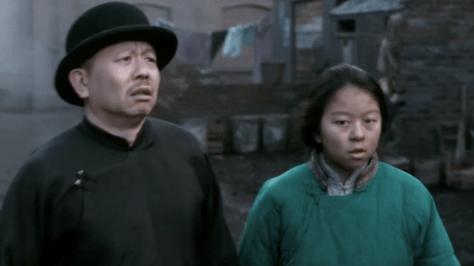
CHINESE MAN

Sir, this is her.

This is the first time we hear Thomas speak.

A shadow  blinds us to his eyes by the peak of his cap.
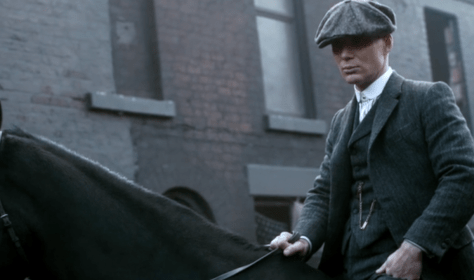
But we hear his deep, warm voice.

THOMAS

The girl who tells fortunes?

He takes money from his pocket and gives it to the Man.

He accepts it.

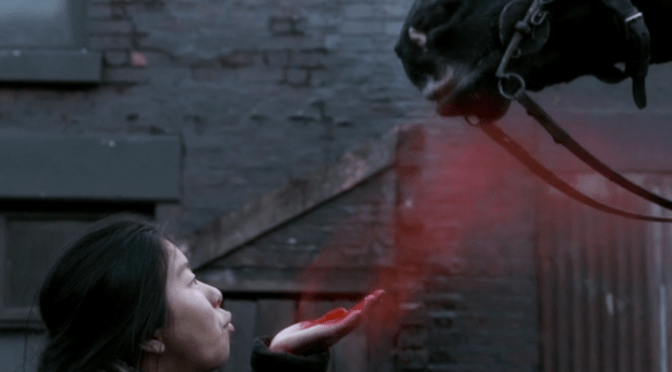
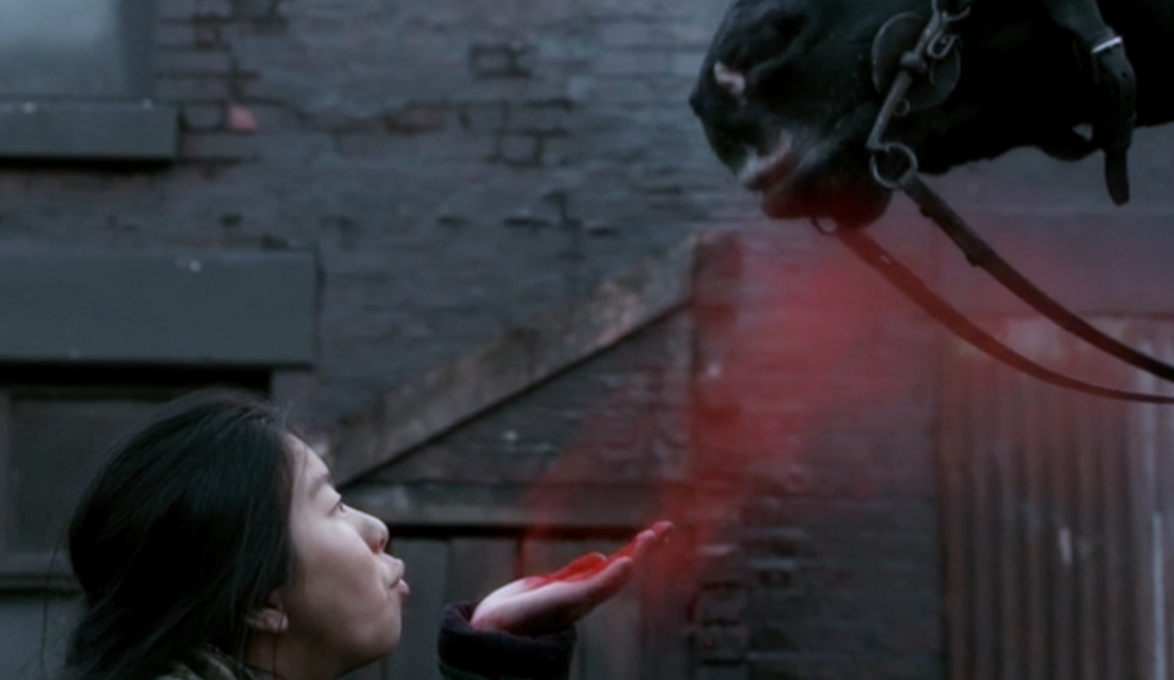
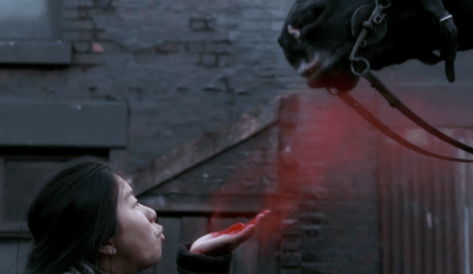
Then, the Girl takes out a small, red, Chinese purse and tips out a handful of red dust.

The director cuts to different villagers watching from their hiding places: grown women, young boys.

We also get our first CLOSE UP of Thomas, almost revealing his eyes, but not quite.
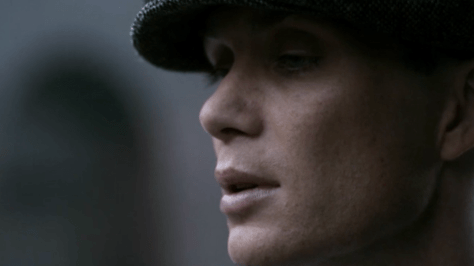
Then, the Chinese Girl blows the red dust into the horse’s nostrils.
Cut to three young boys peeking out from their hiding place. One Boy speaks.

BOY

They’re doing a magic spell to make him win a race.

Then, the Chinese Man and Girl both bow, and, holding hands, turn and run away.

Thomas speaks, loudly, to all of the hiding villagers.

THOMAS

The horse’s name is Monahon Boy. Kempton, 3 o’clock, Monday. You ladies have a bet yourself but don’t tell anyone else.

Thomas rides off.

The women and children come back out to the streets.

Theme music kicks in. And we get a title insert:
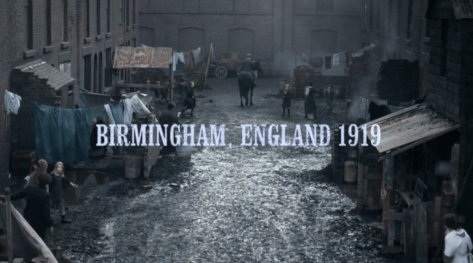
End of scene.

So, how is Thomas Shelby’s character revealed in this scene through action?

1. When the women and children run to hide we see that Thomas is feared.

2. When the Chinese Man calls him ‘Sir’ he seems to be revered. When the Man and Girl bow as they leave we could also say that Thomas is revered (but this of course could also be fear.)

3. We see that Thomas is well dressed: a three piece suit, a waist coat and a gold watch chain. Wealth, or at least the appearance of wealth.

4. When he pays the Chinese Girl we learn that Thomas is not a tyrant, but generous, paying for her service rather than forcing it for free.

5. Thomas gives the locals a racing ‘tip’ – telling them that the horse will win.

But is this generosity or a scam and therefore revealing an unscrupulous man?

We’re not yet sure.

To sum up then, this scene reveals 5 characteristics of Thomas Shelby:

1. He appears wealthy.

2. He sounds warm and friendly.

3. He seems generous.

4. He seems to be revered.

5. He seems to be feared.

Click here for Scene 5.
Peaky Blinders Opening 10: Scene 2.

Peaky Blinders Scene 2.

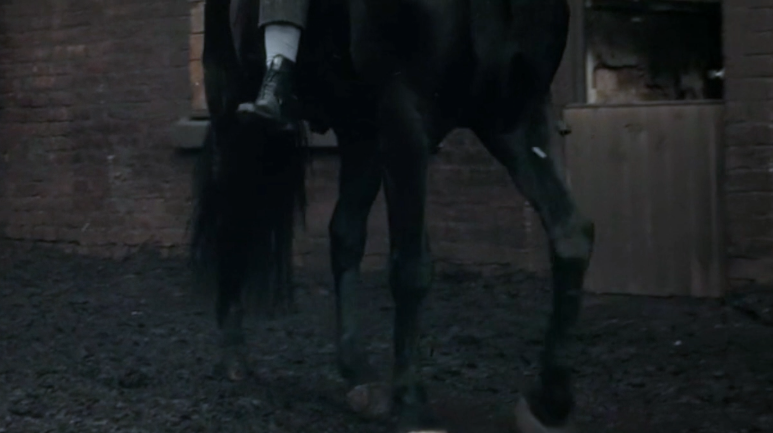
From a blacked out screen we hear the quick clip clop of a horse’s hooves.

Fade in to reveal –

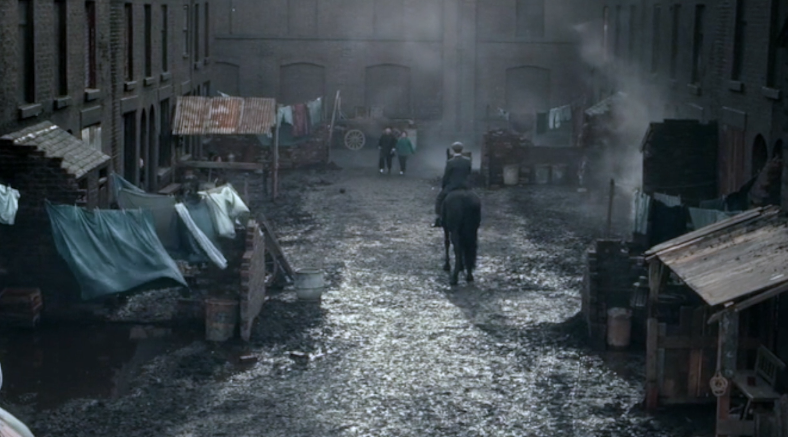
The legs of a shiny black horse, trotting through a grimy inner city backstreet on a gritty, uneven road.

The rider on the horse is revealed only by one shiny black shoe, sock and grey suit trouser leg – the attire a glimpse of an important person?

The camera gradually reveals the rider – but only from behind, wearing a grey suit and peaked cap.

NB. We are yet to see his face.

We follow him he rides along a busy, grimy, poor urban street.

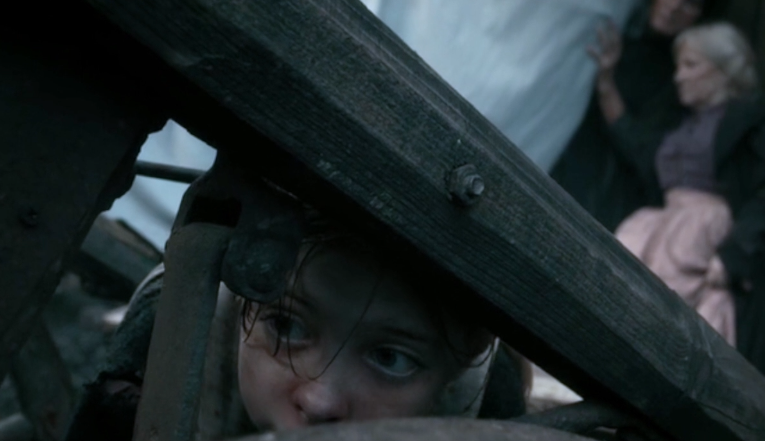
Women and children run to hide.

It reminds me of the Gene Pitney song my dad used to sing, based on the old John Ford western The Man Who Shot Liberty Valance.

The song goes like this:

When Liberty Valance comes to town women folk would hide.

They’d hide.

When Liberty Valance walked around the men would step aside.

Here’s the song with some great scenes from the classic movie:

Scene 2 of Peaky Blinders is completely visual.

There is no dialogue.

The women and children running to hide confirm the fear the Chinese men expressed in the opening scene is shared by the local community.

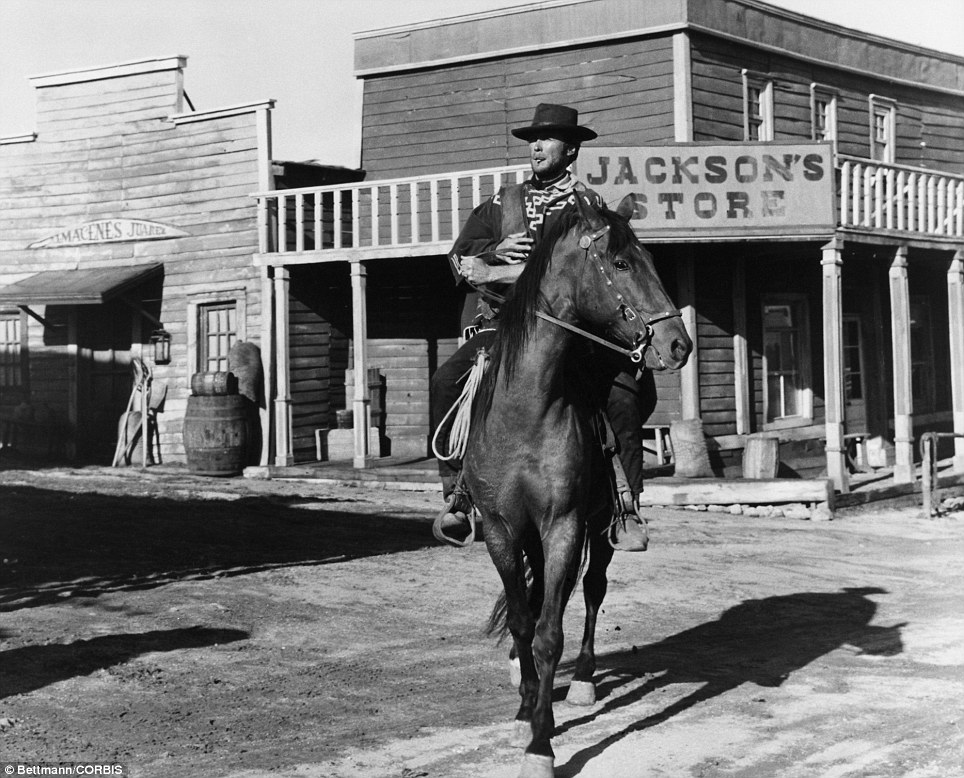
The lonely horseman riding through town gives a definite ‘nod’ to the Western.

It’s got a definite Clint Eastwood feel about it.

The Man with No Name.

For a Few Dollars More

In scene 2 of Peaky Blinders, up to this moment, we are still yet to see the Man on the Horse’s face.

The Man with No Face.

We are blinded by the peak of his cap.

The cinematography here is astounding.

Women still run inside to hide.

Boys hide and peak at the Man on the Horse.

Screen Shot 2015-01-01 at 3.06.41 PMThe Man on the Horse comes to a standstill in the now empty, grimy, Birmingham back street as washing blows in the wind.

Screen shot

The rider is still faceless as –

– the Chinese Man and Girl run as fast as they can towards the Man on the Horse.

And we’re into scene 3.

So, what information is revealed in this scene regarding character?

This man, this Man on the Horse, who we assume to be the leader of the Peaky Blinders, is feared.

But this is not necessarily, of course, who he is, but rather how he is perceived by those around him.

Click here for Scene 3.

Peaky Blinders Opening 10 mins: Scene 1. 中国劳工旅 Chinese Labor Corps

We’re analyzing the opening 10 minutes of Steven Knight’s crime drama Peaky Blinders.

How does Steven Knight grab our attention in the first few moments and draw us in?

Let’s study the action and dialogue:

Scene 1. 

EXT. BUSY MARKET – DAY.

A CHINESE MAN runs through a busy market, followed by a teenage GIRL carrying a baby.

CHINESE MAN

Hurry up, or they will kill us all.

The Man and Girl reach another GIRL. Girl 1 hands the baby to Girl 2 (who looks about 12).

The next line is both shocking and funny.

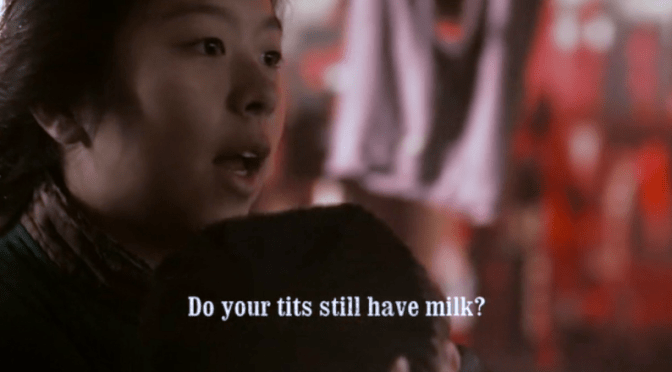
Do your tits still have milk?

Girl 2 nods. Girl 1 hands her the baby.

(What?!! This 12 year old girl has milk in her breasts? She has had a baby?)

The Chinese Man looks desperate and worried at an OLD CHINESE MAN.

OLD CHINESE MAN

Where are you going?

CHINESE MAN

They have asked for her.

Zoom in close to the anxious Old Chinese Man’s face.

So, how does Steven Knight grab us and draw us in in his opening moments?

1. He creates intrigue. Who are they? And why have they asked for a girl?

2. He shocks us.

3. He delivers an unexpected, funny, unusual line of dialogue.

And bang! We’re in.

That’s the opening 18 second scene of Peaky Blinders.

But what are Chinese nationals doing in Birmingham in 1918? It’s a little known fact that during WW1 more than 140,000 Chinese ‘volunteers’ were recruited by the British government.

The Chinese thread continues with Thomas Shelby’s opium trafficking storyline in season 5.

The Chinese Labour Corps  中国劳工旅; traditional Chinese: 中國勞工旅; pinyin: Zhōngguó láogōng lǚ) was a force of workers recruited by the British government in the First World War to free troops for front line duty by performing support work and manual labour.

Click here for Scene 2.

Peaky Blinders Opening 10, dialogue or action?

In the opening 10 minutes of Peaky Blinders, do the 12 scenes contain action, dialogue or both?

Let’s go.

Scene 1. 

A Chinese man runs to find a girl, saying “Hurry, or they will kill us all.”

Scene length: 18 seconds.

Action and dialogue – but mostly action.

Scene 2. 

Thomas rides a horse through the streets. People run to hide.

Scene length: 1 minute.

Action only.

Scene 3.

The Chinese Girl does the ‘powder trick’ on the horse.

Scene length: 1.05

Action and dialogue – but mostly action. Only 4 lines of dialogue in 1.05 minutes of screen time.

Scene 4.

Thomas rides through town.

Scene length: 1.35

Action and dialogue –  but mostly action – only one line of dialogue in 1.35 of screen time.

Scene 5.

Thomas walks across a normal busy street and enters a house.

Scene length: 17 seconds.

Action only.

Scene 6.

Inside, youngest brother Finn warns Thomas that Arthur is angry.

Scene length: 30 seconds.

Action and dialogue.

Scene 7.

Thomas enters and walks through the gambling den and speaks to his younger brother John.

Scene length: 52 seconds.

Action and dialogue.

Scene  8.

Thomas and Arthur have a fiery duologue.

Scene length: 1.28

Dialogue.

(There is basic action: the pouring of a glass of whiskey signifies Arthur’s drinking but mostly this is a dialogue-driven scene displaying the power-struggle between the two oldest Shelby brothers . We’ll study this scene in detail later).

Scene 9.

Introduction to series antagonist C.I Campbell on a moving train studying files on Arthur and Thomas Shelby as well as a document about a ‘munitions robbery.’

Scene length: 54 seconds.

Action only.

Scene 10.

Introduction to ‘communist’ Freddie Thorne.

Scene length: 1.21

Dialogue – a political speech by Freddie rallying workers to strike.

Scene 11.

C.I Campbell studies a file on Freddie Thorne.

Scene length: 22 seconds.

Action only.

Scene 12.

Thomas walks along a street towards a local pub.

Action only.

Summing up then, in the opening 10 minutes, we might notice that out of 12 scenes only 2 scenes are driven by dialogue.

Click here for 1 THING about WOMEN in Peaky Blinders.

Which characters do we meet in the opening 10 minutes of Peaky Blinders?

There are 12 scenes in the opening ten minutes of Peaky Blinders.

But which characters do we meet?

Are they the protagonist, antagonist, main characters, minor characters or extras?

Scene 1. A Chinese man and a Chinese girl. (Extras).

Scene 2. Thomas. (Protagonist)

Scene 3. Thomas + the Chinese Girl and Chinese Man. (Protagonist + Supporting).

Scene 4. Thomas. (Protagonist)

Scene 5. Thomas. (Protagonist)

Scene 6. Thomas + youngest brother Finn. (Protagonist + Supporting)

Scene 7. Thomas + younger brother John. (Protagonist + Supporting)

Scene  8. Thomas + older brother Arthur. (Protagonist + Main)

Scene 9. C.I Campbell alone. (Main Antagonist)

Scene 10. Freddie Thorne + workers. (Main + Extras)

Scene 11. C.I Campbell alone. (Main Antagonist)

Scene 12. Thomas. (Protagonist)

So, an interesting opening with the Chinese characters considering this is Birmingham 1919.

So, considering the Chinese characters are extras in the opening 10 minutes we actually meet the Protagonist, the Antagonist, 2 main characters and 2 supporting characters.

The Protagonist is Thomas Shelby.

The Antagonist is Chief Inspector Campbell.

The 2 main characters are communist agitator Freddie Thorne and Thomas’ oldest brother Arthur Shelby.

The 2 supporting characters are Thomas’ 2 younger brothers John and Finn.

Here they are in order or appearance: (notice we meet the 4 Shelby brothers first.)

  1. Thomas Shelby.
  2. Finn Shelby.
  3. John Shelby.
  4. Arthur Shelby.
  5. Chief Inspector Campbell.
  6. Freddie Thorne.

Summing up then, we can note 3 important things:

  1. We meet The protagonist.
  2. We meet The Antagonist.
  3. We meet the 4 Shelby brothers first.

Click here for another sneaky peak at Peaky Blinders.

CILLIAN-GRADED

A Sneaky Peak at Peaky Blinders – Scene Length.

In the opening 10 minutes of Peaky Blinders there are 12 scenes.

Let’s break them down into scene length:

Scene 1 (0.18)
Scene 2 (1.00)
Scene 3 (1.05)
Scene 4 (1.35)
Scene 5 (0.17)
Scene 6 (0.30)
Scene 7 (0.52)
Scene 8 (1.28)
Scene 9 (0.54)
Scene 10 (1.21)
Scene 11 (0.22)
Scene 12 (0.18).
In the next post post we’ll find out how many characters in each scene.
CILLIAN-GRADED

A sneaky peak at Peaky Blinders – post 1.

In this series of posts we’re going to analyze Steven Knight’s superb historical crime drama Peaky Blinders.

To begin, we’re going to explore the first 10 minutes.

How often do you hear the first 10 pages are the most important?

If you don’t grab ’em in the first 10 pages, you lose ’em.

Well, let’s see how what a master of his craft does with his first 10 minutes.

First question: How many scenes are there?

Answer: 12.

Click here for Question 2. How long are the scenes?

CILLIAN-GRADED

Dude, what’s your secret?!

Mark Sanderson aka ScriptcatMark Sanderson aka @scripcat has had 7 films produced and has written 27 feature screenplays.

I asked him:

Dude, what’s your secret?! What’s the single most important factor you keep in mind when writing your screenplays?

This was his awesome reply:

I think there are many important factors that I keep in mind before I ever go down the pathway of taking an idea to a story and eventually a fully realized spec screenplay. After graduating film school it used to be if I could sell the script or not — that’s a fool’s endeavor trying to play the Hollywood spec, big budget screenplay sale game and trying to figure out if they will buy my genre or not. Chasing a big sale will deliver nothing but frustration and grief.

In addition, it will take years of bouncing the script around town and it may never sell. You’ll need to be working a job to pay your bills during this time and it gets difficult to hang on with the hopes to sell every spec that you create. The reality is that just because you write it doesn’t mean anyone will “love it.” You need to write from your heart and it will show in the work.

My buddy is writing a romantic comedy and it’s not a personal story so he’s obviously trying to make it as commercial as possible to sell it to Hollywood and play in the “big leagues.” And now I read that the romantic comedy is dead in Hollywood. The genre has not done well lately and they are not making them anymore so I ask him, “Why are you writing this movie genre?” Is the spec going to be a writing sample or is it something you actually think you can sell to the studios as an un-produced writer?  I believe it’s the second reason so he’s chasing an illusive ghost and in my opinion not utilizing his limited writing time properly.

I told him he should be writing a spec that is near and dear to his heart as he’s not going to be able to compete with known writers with a script that is a long shot at best. It’s a high concept commercial Hollywood script that will not sell because of the genre. Sure, it may get him meetings…but why waste time on a script that has limited potential? Write something personal and from the heart and it will showcase your writing ability.

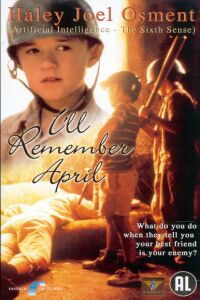
Try writing what you care about and that will come through in the screenplay. Your passion will shine through and attract interest in quality work. Back when I was first pursuing my career, I did this with my original script I’ll Remember April and it placed in the top 20 of all Nicholl Fellowship entries that year and later went on to be optioned, purchased and produced and distributed globally.

I'll Remember AprilI don’t write specs much anymore as my jobs are screenplay assignment work. I just had my seventh film produced and I try to please my boss the producer who is paying me so he can hire me again. It’s the nature of building a career to write films that get produced and to build a great working relationship with producers. Those writers who have lofty ideals about writing something that will compete with top screenwriters who already have credits and relationships with studios and producers — it’s a big dream and a big risk of time. Carve out your own unique brand and sell them on “you.”

I don’t think there is only one important factor, but many.  I think to myself before I start: “Is my idea commercial and can it translate to the most people possible so a producer/director will see the potential and want to make it?”  I recently consulted on a project for a screenwriter who asked for my honest opinion on his script. He recently had been getting a lot of rejections by producers with it and told me, “They just don’t get it.” I shook my head in silence. Maybe when four different producers “just don’t get it” — it could be that the screenwriter just didn’t get it. Repetitive notes from different sources must be considered. I told him that his movie was not big enough or commercial enough to go into 4,000 screens on opening weekend.

That’s the reality of the business. It’s actually a smaller film, maybe indie art house film or a something for TV, but he is aiming for the top of the mountain. And that’s okay, but that comes with a lot of risk, just like writing a spec that can only be produced for $150 million and being an unknown writer with no attachments on the project. Seriously?

Write a kick-ass script that can be produced for about $1.5 million and IT COULD ACTUALLY GET MADE! Find an actor who loves it and will tell you to attach them while you find the money. Go out and do it and make it happen. Stop trying to chase the brass ring of Hollywood studio films and constantly coming up short and rejected. Ah, but who wants a small film, right? We all want the summer blockbuster with the “A-list” career, the home in the hills and the millions in the bank.

Sure, I wanted the same just out of film school and then after about six or seven years of getting knocked around and brutalized, I realized just how fucking hard it was to reach the “A-List.” I have close friends on the “A-list.” They suffer the same trials and tribulations like everyone else just at a bigger level.  Hell, since I was a kid I just wanted to just make a living anyway from what I loved to do — making movies. My dream has been realized over a dozen times with getting paid for assignment jobs and one spec sale. Seven of those dozen scripts were produced and made it to little and big screens around the world. I’m living my dream.

So, there are many factors that I ask myself before writing a spec screenplay:

WHY AM I WRITING THIS PARTICULAR STORY?
IS IT FOR ME? MY PASSION PROJECT?
IS IT FOR THEM? AM I CHASING A BIG SALE?
IS IT TO SHOWCASE MY ABILITY AS A TALENTED WRITER?
IS IT TO ACTUALLY PRODUCE MYSELF OR DIRECT?
OR IS IT BECAUSE I AM DRIVEN AND MUST TELL THIS STORY?

Honestly consider why you are screenwriting and why you are writing your particular story. How you write it is as important as what you write. Keep the faith and filling your blank pages.

Mark Sanderson aka ScriptcatMark Sanderson (aka @scriptcat) is a veteran of the screenwriting game with over fifteen years of experience and has worked with Academy Award® winning producers, veteran directors, and Academy Award®, Emmy® and Golden Globe® acting nominees. Mark’s indie and TV films have been distributed globally and have opened and premiered at major festivals. His seventh produced film “Sara’s Choice” is in post production and stars Franchesca Eastwood. Check out his popular screenwriting blog MY BLANK PAGE and look for his new book “A Screenwriter’s Journey to Success” coming in November on Amazon. 

Twin Peaks Muses and their Secrets.

Twin PeaksTwin Peaks: The Entire Mystery‘ is now out on Blu-ray DVD (including deleted David Bowie scenes.) To celebrate its release yesterday, I’m very excited to welcome UK film maker & screenwriter Zennis to my blog with his superb article.

WARNING: Some minor spoilers may affect your enjoyment of Twin Peaks.

Prior to its debut airing on 8 April, 1990, Television had never before known anything remotely like the show that co-creator David Lynch chose to set in the northwest logging town of Twin Peaks. Nearly quarter of a century on, Television hasn’t known anything like it since.

The inhabitants of Twin Peaks are rarely what they seem. For the most part they are, in themselves, manifestations of the secrecy that engulfs them like the town’s surrounding forest, itself darkly cloaking their illicit desires and fantasies played out in the local bordello, ‘One-eyed Jacks’ – reached only by a murky water crossing, as if to symbolize the elusive ‘truth’ lurking deep beneath the surface of all that is visible.

Washed up on the shore of this truth, the most mysterious Twin Peaks resident appears in the opening minutes: a beauty queen ‘filled with secrets’ and delivered to us plastic-wrapped (as opposed to the tight-sweater wrapping usually preferred by Lynch for his female twin-peakers).

laura-palmer

Thus the series is furnished with its first and most compelling dramatic question: Exactly who – or what – killed Laura Palmer? Indeed it is this burning unknown that must be made known by the show’s seeker-protagonist detective, Dale Cooper, an FBI Special Agent with powers of perception to rival Sherlock Holmes. Simply put, ‘Cooper is able to sees things that other people can’t,’ according to one of the series episode directors, Lesli Linka Glatter.

Naturally our detective has his very own Doctor Watson sidekick – here in the form of the local Sheriff and all-round-stand-up guy, Harry Truman – but Cooper seems more ably aided (although as often hindered) by his three muses, all of whom are as intriguing as each other in the secrets stakes. If ever there were riddles truly wrapped in mysteries inside enigmas, they are these young women conceived inside Lynch’s Jungian mind.

stonefennFirstly, there is Audrey Horne (played by the circumflex-eyebrowed Sherilyn Fenn), who can knot a cherry stalk with her tongue and scare off a smörgåsbord of her wealthy father’s business partners with a one-minute performance of feigned grief for her brutally murdered friend – quickly prompting the audience to ponder on the deeper cause of such provocative behavior by this saddle-shoed minx.

As for the chemistry we feel instantly bubbling beneath the surface between Agent Cooper and Audrey (at their first meeting, she serves his breakfast table in her tight-form cardigan, prompting him to ask if the grapefruits are freshly squeezed), Glatter states: ‘Audrey knows what she wants and how to get it … There was definitely a kind of unspoken sensuality there.’

Later, when she turns up naked between Cooper’s sheets, he declines her offer, stating: “Secrets are dangerous things, Audrey”. But exactly what is Audrey’s mysterious secret?

According to Fenn it’s her virginity. For despite all indicators to the contrary it is intact: ‘She absolutely hasn’t been with anybody,’ Fenn has said of her character in interview. ‘She acts like she has. She wants to. That is her secret.’

Indeed, when Cooper asks Audrey how old she is at their very first meeting she stares him straight in the eye when replying, “eighteen”. Clearly no more blind than we are to the ‘old enough’ subtext here, Cooper replies without blinking, “I’ll see you later Audrey,” then exits with his heroic code of conduct established.

Of Fenn’s character, David Lynch, hints at what may be rooted in Audrey’s psyche: ‘Uh, well, she has trouble at home,’ whilst Glatter plumbs these depths further, commenting on Audrey’s decision to turn detective herself: ‘Audrey wants to know all the secrets. Because of her lack of relationship with her father, she lives in that darker world. If she has the secret she has the power.’

unnamedAnd then there is Agent Cooper’s second muse, Shelly Johnson (played by Mädchen Amick), a bad-boy magnet who does for her waitress uniform what Barbarella did for, well, every costume she ever wore, and who clearly knows how to do more than just pour a damn fine cup of coffee because she quickly teams up with Laura Palmer’s former boyfriend, Bobby Briggs, to shoot Shelly’s husband, Leo, who has a penchant for abusive behavior and an abundance of plastic sheeting in his unfinished house…

Summing up Shelley, episode director Tim Hunter says, ‘Mudchen’s character always knows what’s going on. She’s very manipulative in a very subtle way.’

unnamed-1Finally comes Cooper’s third muse in the form of Donna Hayward (played by Lara Flynn Boyle), the butter-wouldn’t-melt-in-my-mouth Miss goodie-two-shoes, set up early on when a policeman enters her class during morning registration. We effectively see the rest of the scene as if through Donna’s empathic eyes: first as she looks at the policeman whispering in her teacher’s ear, then at another female student screaming as she runs past the window outside, and then to an empty chair that we immediately understand to be Laura Palmer’s.

Donna shares this establishing ‘non-dit’ moment by exchanging a look with Laura’s former secret lover, James Hurley, and then clasping her hand to her heart, mumbling Laura’s name before breaking down in tears. When the teacher tells the class there will shortly be an announcement from the principal, the scene’s end is punctuated by James’ pencil snapping in his hand. This is a sequence with all the power of an iceberg, revealing only its shining tip yet making us feel much, much more. Hemingway would be proud.

So here we are, not half way into the first episode and we could already be forgiven for wondering of Donna: surely nobody can be this sensitive and good in Twin Peaks? Indeed, only a few hours after this unspoken announcement of her best friend’s death, Donna promptly falls into the arms of the grieving James.

In narrative terms, if the ellipsis is about the gap (or the parts of the story withheld from us by the story-teller), then it is effectively about secrets – and Agent Cooper’s muses are nothing if not bundles of secrets; each one a key-keeper to doors that loath to be unlocked; each a majestic vessel positively brimming with the unknown.

If you haven’t watched Twin Peaks yet then you’re not just missing out on one of the best TV shows ever, you’re also missing out on one of the best examples of storytelling, fullstop.

Check out this interview with co-creator David Lynch. And for Zennis’ complete take on Twin Peaks, check out his essay here.

Formerly a Hollywood-based product placement specialist, in addition to all the major studios Zennis has worked closely with the producer partners of Tom Cruise, Steven Spielberg, and Michael Bay. Currently evolving from film marketer into film-maker, he is now on the last furlong of his Master’s at Newport Film School. Of his first award-winning short, ‘Drink?’, BBC programming chief, Sian Thomas, said: “This winning film had impact and style from the outset … It was targeted and hard hitting.” More recently, after 50,000+ online film viewings and giant screenings across the UK, the judging panel of the British Big Voice Festival (headed by Lord David Puttnam) awarded its 2012 Silver Prize to the first-cut of his most recent short, ‘Shine’. His film-making is now focused on a pilot adapted from the novel he has been writing for more moons than he can remember. All other things Zen can be found on his website at Ze-Hub.com

on ze zen couch