This week’s lecture, The History of Screenwriting focused on how screenwriting has developed and gave two examples from screenplays written in the 1950’s – On the Waterfront (1954 – dir. Elia Kazan, screenplay Budd Schulberg) and Sunset Boulevard (1950 – dir. Billy Wilder, screenplay Charles Brackett, Billy Wilder, D.M Marshman). Finnegan noted “There are noticeable differences in terms of their formatting, despite only being made four years apart.” – At the Crossing: Changing Perceptions, Technologies and Screenplay Functions in Contemporary Cinema (Finnegan, J. 2017).
Furthermore, we were asked to read the scenario of Le Voyage Dans La Lune (directed and written by Georges Méliès) and instructed to “Think about the logistics of film production in this period, and how the documentation reflects this. Compare this scenario to the documentation used by practitioners today. How has the shift in production practices affected our approaches to the craft of writing for the screen?”
I noted that some of the scene headings used only nouns and others used verbs. Where verbs were used, this gave instruction to the crew and actors what would happen on set through improvisation. Where nouns, the function of the scene heading was to describe the set. Indeed, Melies would have taken the word scenario from its Latin meaning, meaning “that which is represented on stage.” In this sense, the scene headings serve the same function as modern format of screenplays i.e the NIGHT / DAY and INT / EXT simply serve to give instruction to the technical crew and logistics personnel on a film project for planning purposes. Finnegan notes “The scenario was, as the name suggests, a brief description given to the minimal crew of the time, but also a marketing tool used to attract audiences.” These readings certainly wet my appetite for further study in the history of the screenplay.
Finally, creative work was to develop the treatment for our short film and give peer feedback. My intention through feedback was to encourage and to steer my peers towards knowledge I have recently enjoyed gaining through reading John Yorke’s Into the Woods. By referring to Yorke’s work in feedback I was able to cement ideas I am attempting to assimilate and apply to my own work.
A fascinating week where the task was to expand a synopsis into a treatment and post it for feedback. The optional task was to watch God’s Pocket and comment on how the environment acts as an obstacle, or antagonist.
I am beginning to find some sort of structure with allocation of time. I spent the first four days working on my treatment, and then gave myself the next 3 days to read others work and give feedback (one of the course requirements). I then decided to not look at the emails for the next weeks readings, lectures and tasks until I have written the reflective blog post (this). I’m currently a bit behind. But I blame John Yorke.
Introduced to his book on screenwriting Into the Woodsand given chapter 22 to read, I ordered the book and have been getting stuck in over my morning expresso, managing a few pages at the start of each day. Yorke advocates a 5 Act Structure. However, having spent the last few months trying to marry Michael Hague’s 3 Act structure to Chris Vogler’s The Hero’s Journey, without success, John Yorke has thrown another spanner into the works.
Making the decision has, as the article states, made me think about how to convey backstory in a creative way in the present, in the moment. I’m not ruling it out, but I’m enjoying racking my brains and assimilating the ideas of my peers into using interesting and creative ways to tell the story.
The task of reading a few pages from The Art of Screenplays – A Writers Guide – was most welcome. After Maras on Auteur Theory, reading Robin Mukherjee’s book was like eating tiramisu after anchovies. Brilliantly refreshing, written in a lively, casual style. Robin Mukherjee’s book is full of tips and examples of real life experiences from someone who has worked as a jobbing writer, cutting his teeth on British TV shows such as Casualty. The book is high up on my reading list.
Finally, a word about God’s Pocket directed by John Slattery, his feature film directorial debut. Slattery co-wrote the screenplay with Alex Metcalf, based on the 1983 novel of the same name by Pete Dexter.
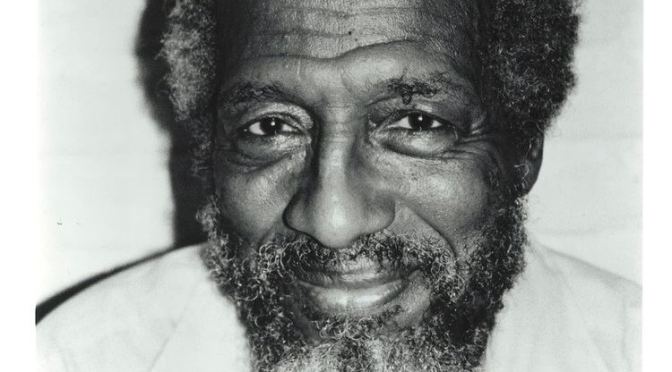
The only black character Lucien ‘Old Lucy’ Edwards – the catalyst for all the events that spiral out of control – was played by actor / producer Arthur French, who died this year – 24 July 2021, aged 89. He was best known for his stage work in New York.
A question I have for Christopher Vogler (The Writer’s Journey) is how can the Midpointbe the Supreme Ordeal, when the ordeal in the final battle is supremer. There is no such adjective as supremer.
Supreme reigns supreme.
The Supreme Ordeal, by very definition, is the most powerful ordeal of the story. It is the ordeal which causes the hero to change, to have a moral revelation (John Truby, Anatomy of Story – 22 Steps of a Master Storyteller) at which point the hero’s unconscious need is made conscious and the outward goal is achieved, or not, depending on the character arc of the hero.
I have always seen the outward goal being achieved in the Final Battle / Climax / Crisis in Act 3, where, according to John Truby, the hero has a moral revelation, the ‘need’ is made conscious, and the outward goal is achieved, or not.
I am still unconvinced that Hague’s 3 Act structure and Vogler’s 12 Step Hero’s Journey are concordant. Perhaps The Hero’s Journey only suits a certain kind of story – the mythic tale – and cannot / should not be forced into the 3 Act structure of other genres.
However, if we must cram it into 3 acts, I prefer to see the Hero’s Journey like this:
ACT 1:
Ordinary World
Call to Adventure
Refusal of the Call
Meeting the Mentor
Crossing the Threshold
ACT 2:
Tests, Allies and Enemies.
ACT 3:
Approach to the Inmost Cave
Supreme Ordeal
Reward
Road Back
Resurrection
Return with the Elixir
The 4 R’s of the last phase of The Hero’s Journey: Reward / Road Back / Resurrection / Return are interconnected, almost flowing into one scene / experience for the hero.
The Reward is the elixir, the Road Back is literally, the road back home, the Resurrection is arrival in the ordinary world, and Return with the Elixir is making lessons learned known to loved ones, society and the wider world. A good example of this is 127 Hours (screenplay by Danny Boyle & Simon Beaufoy).
(spoiler alert)
In 127 Hours, Aaron Ralston has his Supreme Ordeal, where he cuts his arm off, 15 minutes before the end of the film. See 3 Act Structure in 127 Hours. The final 15 minutes (Act 3) are the Reward (he is alive) The Road Back (receiving help from passers by) Resurrection (moral revelation / need made conscious – he needs other people) and finally Return with the Elixir (he writes his book ‘Between a Rock and a Hard Place’ and helps Simon Beaufoy and Danny Boyle write the screenplay for the movie of his life.)
In the audio book by Hague and Vogler Hero’s Two Journeys Vogler sees the Resurrection phase of the hero’s journey as the Final Battle / Climax – an even more supreme ordeal than The Supreme Ordeal.
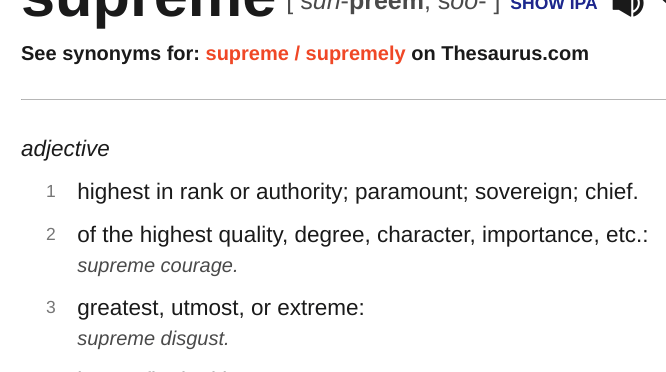
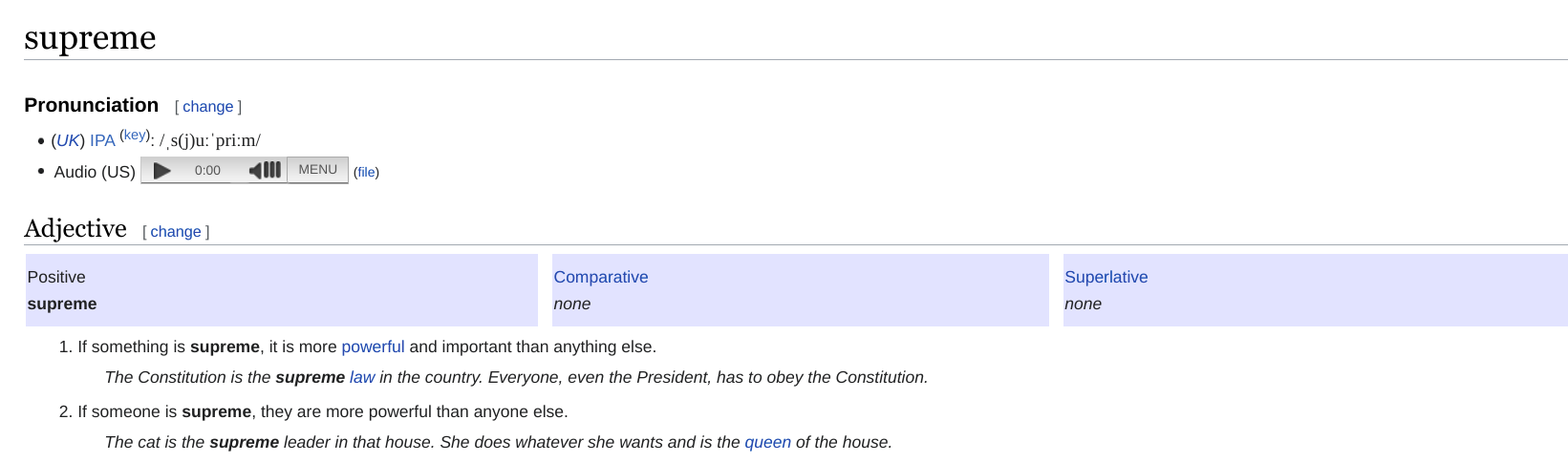
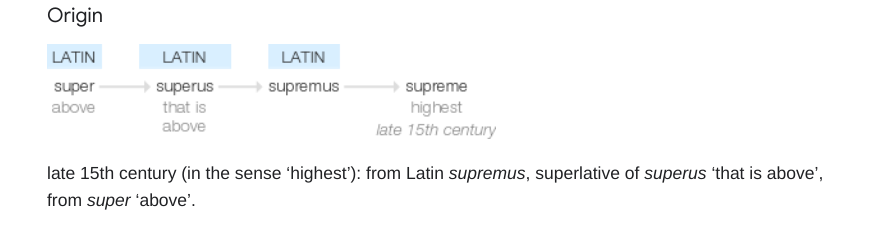
But this is impossible. There is no such word as supremer. There is no superlative. Supreme is the superlative.
“If something is supreme, it is more powerful than anything else.”
Supreme is superlative. There is not a stronger adjective. It is already the strongest it can be. Words are all we have as writers. So why call the midpoint the ‘supreme’ ordeal when there is an even stronger ordeal ahead in the Climax?
The Supreme Ordeal, is not only the greatest, utmost, extreme ordeal, it is the last, final and ultimate. There is no more powerful ordeal than The Supreme Ordeal. Therefore, if The Supreme Ordeal is the most powerful ordeal for the hero, it must occur in the Climax, in the Final Battle – and not at the midpoint. It must occur where it has the power to affect the most change in the hero. In 127 Hours, it’s where Aaron cuts his arm off. In Gladiator, it is in the arena fighting the tigers. In Thelma and Louise, (interestingly, both Hague and Yorke use Thelma and Louise as an example) The Supreme Ordeal is surely the decision they make to drive over the cliff. Sure, the midpoint was an ordeal, they held up the gas station, and as Hague says, it is the Point Of No Return – there is no going back from that, they cannot undo what they did – but doesn’t deciding to take their own lives have more of an effect on their lives? Of course it does, it takes their lives. Holding up the gas station makes them felons. They can go to prison for a very long time. But their decision to take their own lives kills them. It has a more powerful effect on them. It kills them. So it must be the Supreme Ordeal. If so, the Supreme Ordeal, in Thelma and Louise, is not the midpoint, it is the Climax.
In conclusion, I would argue that every story / movie / TV drama has a stronger Climax than the Midpoint. Therefore, I see the Supreme Ordeal as in Act 3 and not at the midpoint.
However, I am wrong 99% of the time. So I’ll leave it with you to decide.
This week involved posting a synopsis for a short film. I posted Isaac. I have been working on this concept in a novel and feature film with a female lead. However, I posted it in short film format with a male lead. It tells the story of a young Eritrean footballer who, after being press-ganged into joining the Tigrayan conflict, is lured into a trafficking ring and who winds up in the UK, exploited, and his human rights violated. I have been torn between writing it as a male or female lead. However, for the short I’ve opted for a male lead because, whereas trafficking usually revolves around women’s rights, I want to highlight the fact that men are trafficked and exploited as well. While in Bahrain I heard the story of young African men being trafficked there with dreams of playing professional soccer, but on arrival, after having had their passports stolen from them they are then coerced into cheap labour.
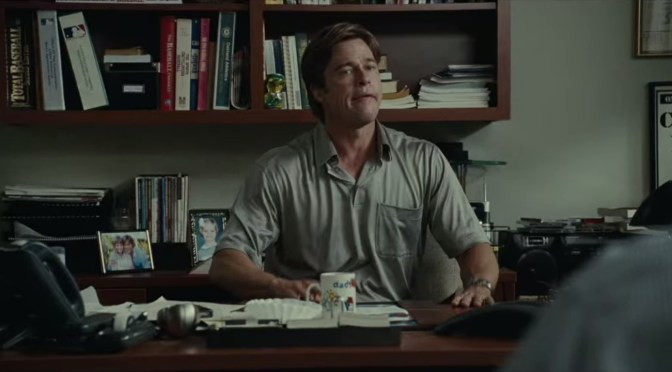
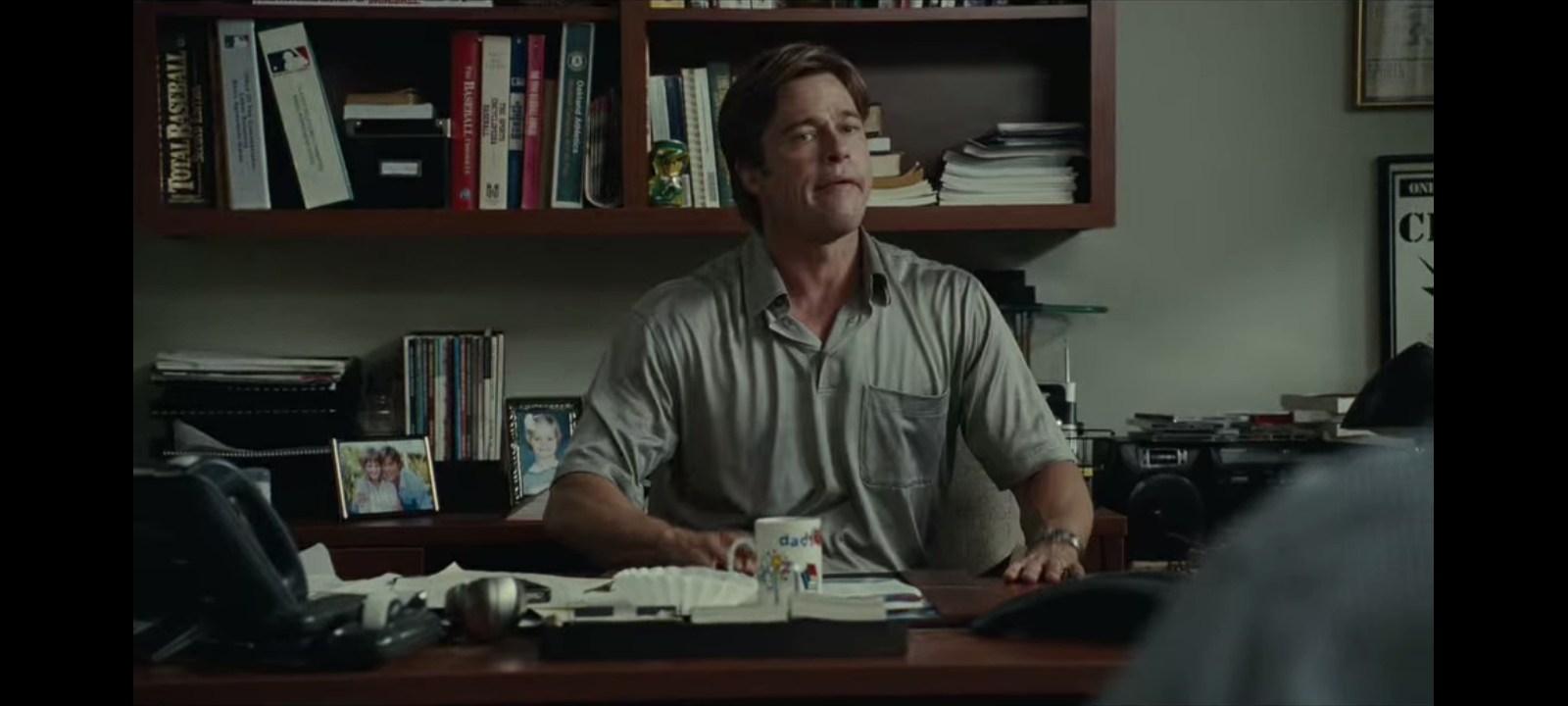
I also decided to embark on an optional project to study the work of Aaron Sorkin. When I began I had no idea what I would find. I intended studying his dialogue techniques. However, after viewing four films, A Few Good Men, Moneyball, Molly’s Game and Steve Jobs I realized there is more going on than just the quick-fire dialogue he is famous for. I discovered that below the text there are themes regarding gender issues and family relationships, particularly father-daughter. My research led me to an MA thesis from Stockholm University which focuses on gender studies in Hollywood films. Perhaps this study as relating to Aaron Sorkin is something I may pick up on again later in the course. Regardless, I learned a great deal about Sorkin and how he goes about sharing his worldview through his writing.
Week 1 has been both daunting and exciting. Both course leader John Finnegan and module tutor Mat Owen are friendly, inspirational and offer reassurance.
The required academic reading text by Steven Maras, Auteur Theory, is not only daunting due to its academic approach (academia v art) but also seems to be pulling me away from the reason I took the course, that is, to write screenplays and develop my craft in writing screenplays, as well as collaborate with others in writing screenplays.
The Maras text seems to be ostensibly about authorship. I wonder if the underlying cause that this text attracts so much polemic is a question of money, rather than what it presents itself as, that is a discussion on who is the true author of a film and whether screenwriters are artists who can claim authorship.
I was drawn by the visual on the course module syllabus – a still of Gary Oldman as Herman J. Mankiewicz – to watch Mank, dir. David Fincher based on a screenplay by the director’s late father Jack Fincher.
To a backdrop of pre-WW2 American politics, it explores the relationship between Mankiewicz and Orson Welles during the writing of Citizen Kane, for which Mankiewicz had to fight for screen credit. It also explores the fraught relationship of the screenwriter with Luis B. Mayer of Metro-Goldwyn-Mayer.
Although the Maras text presents itself as a conflict of theories (auteurism v anti-auteurism / conception and execution v separation of conception and execution, I do wonder if its value today is due to its monetary value rather than its artistic / literary value. Hollywood is big business, worth in the region of $150 billion per year.
I am aware from reading screenwriting articles and speaking to screenwriters of the process each screenwriter has to endure in order to ensure, in an industry which employs a multi-writer system, the writer is paid his dues. For this entertainment lawyers are employed and scripts are scrutinized with a fine tooth comb for each word set on each age, to ascertain what each writer should be paid. Consequently, Maras text has more than artistic value. Am I right in thinking its pro-auteur stance may have a negative effect on earnings of the screenwriter. Is this why Maras states ‘Few issues provoke as much emotion in screenwriting theory as the auteur discourse.’
The text Writing the Short Film by Patricia Cooper is providing much food for thought regarding sound and is forcing me to rethink my short film concept. I am looking forward to writing the 1 page outline of Isaac in Week 2.
Is anyone else having problems reconciling The Hero’s Journey with Michael Hague’s 3 Act structure?
I have listened to the presentation Chris Vogler does with Michael Hague (Screenwriting for Hollywood) on Audible, where each puts forward their own hypotheses for structure. However, I’m still having problems. My issue is this:
Chris says that The Supreme Ordeal (step 8 of the 12 step hero’s journey) is the same point in a movie as the midpoint in 3 act structure terminology.
Also, that the Resurrection (step 11) is the same as The Final Battle in Act 3 (Hague).
My question is this: why is the ‘supreme ordeal’ called ‘supreme’ if there is a bigger battle to come (The Resurrection).
It should not be called ‘supreme’. Supreme is superlative. You cannot get higher or better or more intense. I suggest that although this is the ‘central’ ordeal of the hero it is not the midpoint.
I suggest The Supreme Ordeal is The Final Battle in Act 3.
Furthermore, the Approach to the Inmost Cave is followed by the Supreme Ordeal. Here we have two superlatives: inmost and supreme.
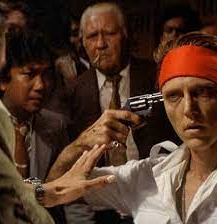
If we can trust that these words hold fast to their true meanings (and as writers all we have are words) then inmost must be inmost and supreme must be supreme: it is the cave where the dragon lives. It is the battlefield where David slays Goliath. It is the gladiator’s final arena. It is the ring where Rocky has his title fight. It is the life or death russian roulette scene in The Deer Hunter.
Inmost must be inmost. Supreme must be supreme. There is no tougher test than the supreme ordeal. Yet Chris Vogler says The Resurrection corresponds to The Final Battle in Act 3.
But the final battle must be the hero’s toughest test. The climax of the movie. The moment where the hero wins or loses, lives or dies (physically or emotionally).
Supreme must be supreme or we disempower the word of its meaning. And if we disempower words before we even start to write our screenplay, what hope do we have?
For this reason, although I pay attention to Vogler’s Hero’s Journey, I cannot reconcile it to correspond to Hague’s 3 act structure in the same way as he teaches. I cannot, in my mind, have a more supreme ordeal than the supreme ordeal.
There is no such word as supremer.
Supreme is supreme.
So, if I stick to my guns and trust my gut, how does the 12 step hero’s journey work?
The 12 steps would look like this:
Act 1:
Ordinary world.
Call to adventure.
Refusal of the call.
Meeting the mentor.
Crossing the threshold.
Act 2:
Tests, Allies, Enemies.
Act 3:
Approach to the Inmost Cave.
Supreme Ordeal.
Reward.
Road Back.
Resurrection.
Sharing the Elixir.
Let’s take 127 Hours as a paradigm. Simon Beaufoy and Danny Boyle adhere to perfect 3 act structure. The movie is exactly 90 minutes and is structured like this:
Act 1: 15 minutes.
Act 2: 60 minutes.
Act 3: 15 minutes.
According to my theory, this would mean the two shortest acts have the majority of the hero’s steps. Act 2 has only Tests, Allies and Enemies. But aren’t these three words enough to fill the 60 minutes of Act 2?
What does that tell us about creator Vince Gilligan?
He’s a rule breaker.
He breaks bad!
In the rest of this series of posts exploring the opening ten we’ll see exactly what Vince and his team decide to reveal about Walt and his world.
After analyzing the opening ten minutes we’ll explore the entire episode, scene by scene, and discover that every line, every image, foreshadows events to come with both humor and subtlety.
In fact, watching episode 1 of Breaking Bad for the second time is like watching Scorsese’s Shutter Island for the second time. The foreshadowing is so clear and obvious. Yet on initial viewing, as we don’t know what’s coming, we don’t see the subtext. Yet every action, every line of dialogue in the opening episode, points to Walt and his future as Kingpin Drugs Lord.
In short, the opening episode is brilliant.
In the next posts we’ll explore the opening ten minutes scene by scene, shot by shot, line by line to discover what makes it brilliant, so we can apply it to our own writing.
It’s easy to see why John Truby calls Breaking Bad –
one of the best dramas in the history of television





 How many scenes are in the opening ten minutes of Breaking Bad?