Category Archives: Dialogue

DEXTER part 10: The Climax

The episode we’re studying is Season 7 Episode 7 – CHEMISTRY  – (by Manny Coto & Karen Campbell).

Read the scene here.

This is the longest scene of the episode (approx. 3 mins) and is the ‘climax’.

First, we see that it breaks into 5 major beats.

We also see a clear ‘to and fro’ of power.

Here’s a summary:

Beat 1.

Dexter enters annoyed at the fact that Hannah’s latest victim died in his apartment. He’s angry with her and asks her how she killed him. Hannah disarms Dexter by answering his question.

We could say the power holder at the start of the beat is Dexter, but at the end of the beat, Hannah.

Beat 2.

Dexter confesses he got rid of some evidence which would have incriminated Hannah. Hannah thanks him.

Power holder:

start of beat – Hannah.

end of beat – Shared.

Beat 3.

Hannah says she could ‘feel’ Dexter watching her when she was being interviewed by the police. She tries to draw him into an awareness of a spiritual, supernatural bond. Dexter refuses to go there.

Power holder:

start of beat – Shared.

end of beat – Dexter.

Beat 4.

Dexter needs to know if the story he heard about Hannah is true. Did she kill her husband because he wanted a family? Hannah again disarms him.

Power holder:

start of beat – Dexter.

end of beat – Hannah.

Beat 5.

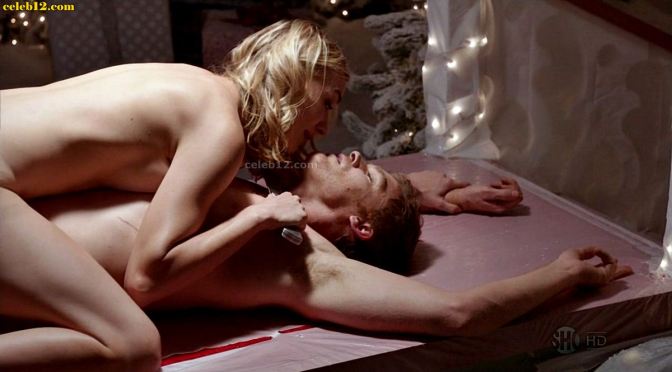
Hannah tries again to draw Dexter in to an awareness of their deep, spiritual connection.  This time she succeeds. Dexter is overwhelmed by her intoxicating power and the sexual ‘chemistry’ between them reaches its inevitable climax.

Power holder:

start of beat – Hannah

end of beat – Shared.

The shared power at the climax of this scene is echoed in Hannah’s line: ‘We were looking out for each other.’

So, the to and fro of power goes like this:

Dexter – Hannah – Shared / Dexter – Hannah – Shared

Two equal halves of the same sequence.

Interesting.

Do you agree? What else do you notice about this scene?

For a scene-by-scene breakdown of the entire, episode click here.

DEXTER part 8a: Dialogue – Angel Batista

Image

Angel Batista is dreaming of retiring and opening a restaurant on the beach. Joey is feeling guilty about the dirty money he took from the Koshka Brotherhood.

NB it’s not pure altruism from Joey; earlier in the episode Batista ‘suggested’ he may be the one who stole the evidence against the Koshkas, which of course he was.

INT. MIAMI METRO POLICE – NIGHT

All is quiet in the office. Joey writes a check for $10,000 and hands it to Batista.

BATISTA

What’s this?

JOEY

It’s for your restaurant.

BATISTA

It’s ten grand.

JOEY

You know I got that inheritance a while back. I’ve been looking for the right place to invest.

BATISTA

I can’t take this. What are you crazy?

JOEY

Come on, are you too good for my fucking money?

BATISTA

No. This is way too generous.

JOEY

Bullshit. It’s family money. You’re family to me.

BATISTA

Quinn…

JOEY

Look, you’re stuck with it. I’m not taking it back. I do expect a few free meals, though.

BATISTA

This is a loan you asshole. I’m gonna pay you back.

So, let’s take the last line of Batista and see what we can glean. What does it tell us about Batista’s character?

First of all, considering the context, that earlier in the scene Batista put his professional relationship before his ‘friendship’ with Joey, Batista falls easily for Joey’s snake-like charm.

For $10,000, Batista is ready to accept Joey as ‘family’ – a man, who, a few scenes ago he was ready to lock away and ruin forever.

With Batista, money talks.

But is he greedy? Or simply so desperate for his restaurant, to retire from the stress of police life, that he is willing to ignore the evidence staring him in the face – that this money is dirty.

Does Batista really believe this 10 grand is from Joey’s inheritance? If he does, does it make him naive, or gullible? Or is he just blind to the truth, unable to see what is in front of him?

John Lennon said, “Living is Easy with Eyes Closed.”

I would say here Batista is living with his eyes closed. Where he showed discernment earlier when he confronted Joey over the missing evidence, here he is either lacking discernment or willing to turn a blind eye. If he is lacking discernment that makes him kind of wavering, easily tricked. Is Batista, this hard-nosed, authoritarian, super-ambitious cop so easily susceptible to Joey’s charm? Is he really that gullible? On a positive note, his refusal to take the money as a gift shows Batista is fiercely proud and independent.

So, for me this dialogue suggests Angel Batista is:

Gullible, independent, and proud.

Would you agree?

DEXTER part 8b: Dialogue – Joey Quinn

Image

In JOEY QUINN the writers of Dexter have created a fascinating, multi-layered and deeply flawed character.

Remember, we’re analyzing Season 7 Episode 7.

Let’s take a look at Joey’s storyline.

Joey has fallen in love with Nadia, a sex-trafficked strip joint dancer under the power of Ukrainian mob the Koshka Brotherhood.

In order to earn Nadia’s freedom, Joey has put his career on the line, by doing a deal.

INT. GEORGE’S OFFICE – NIGHT

Joey enters.

JOEY

I did what you wanted. The evidence is gone. I want Nadia’s passport. She’s done with you and your whole fucking shitty organization… and so am I.

GEORGE

We’ve been working so well together. Why kill a good thing?

JOEY

Who do you think you’re fucking with? You think I’m some fucking asshole? One of your little fucking bad men? You know how badly I could fuck you up?

Calling the Koshka Brotherhood a ‘shitty organization’ isn’t very eloquent or smart. I get the feeling Joey doesn’t think  about what he’s going to say before he says it.  He’s not the type to go through his confrontations in front of the mirror beforehand. He’s rash, impulsive, all-guns-blazing. I would say his words here reveal him to be reckless.

‘You know how badly I could fuck you up?’ comes across as false bravado; he has no power to ‘fuck them up’ – if he did he wouldn’t have stolen evidence for them, risking his career and imprisonment. Therefore I would say that his macho talk here is masking a deep insecurity.

Yet, the fact he is prepared to put his neck on the line to save Nadia from her traffickers endears us to him. It’s a sign of his compassion.

To sum up then, I would say Joey’s dialogue reveals him to be reckless, insecure yet compassionate.

What do you think?

DEXTER part 8c: Dialogue – Debra Morgan

I’m going to choose one line of dialogue from each character which, for me, defines the person.

Debra first.

For me, a character-defining line of dialogue comes when she’s meeting Sal Price, the True Crime writer investigating Hannah McKay, at a restaurant. Although their relationship is professional, and they’re working  a case, this is a date, so Sal throws a perfectly normal ‘date’ question at Deb, who responds with a perfectly abnormal answer.

SAL
What kind of music do you like?

DEB
A jail house door slamming shut, that’s my idea of music.

Brilliant!

What does this tell us about Deb?

That she’s obsessed with her work – she is ALWAYS thinking about catching bad guys and locking them up! And because she’s obsessed with her job we might also say that she’s fiercely ambitious. What else does this line of dialogue say about her? It’s a cool answer, right? It’s a unique, acerbic sense of humor, but still funny.

So, we could say this line of dialogue defines three of Deb’s character traits: she’s work-obsessed, ambitious, and funny.

Do you agree ?

What about your characters? What one-liners define their personality?

Can you think of any more character-defining dialogue from other movie /TV  characters?

127 Hours: what are your characters saying ?

SPOILER ALERT – watch the movie before reading this post.

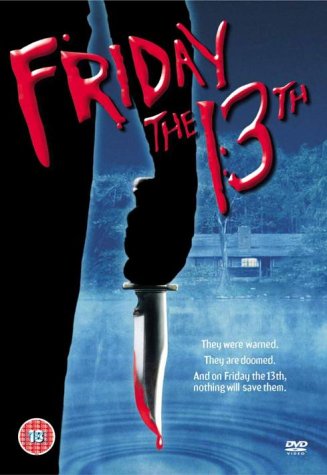
What most impresses me about 127 Hours is, although it’s an intensely visual film, the dialogue is deep with subtext. Take the Friday 13th joke in the opening sequence. Aron is out exploring on the Grand Canyon, and sees two girls, obviously lost. He bounds down the canyon and offers his assistance. We know he’s charming and likeable, but his face is covered by a dust mask, and he’s wearing a cap and shades. He looks scary – like Jason.

“Sorry about the Friday 13th thing,” he wisecracks.

Joke, right? Throw-away line, simple. Actually it’s very cleverly foreshadowing the fact that this family wilderness drama is going to suddenly twist genre in the final act to a gruesome slasher movie as Aron slashes off his own arm to free himself from the rock. It’s horrific to watch, terrifying and extremely bloody. The pain is excruciating. In this throw-away ‘joke’ the film makers are actually apologizing to us, the viewer, for the excruciating horror they’re about to endure.

Genius!

Also, look at the line when Aron makes a joke about the insects crawling beneath him waiting for him to defecate. Although a simple joke, coupled together with the bird circling above, which feeds on insects, this seemingly irrelevant line is pointing to the film’s theme – that all living creatures are interdependent, that our world is interdependent, that no man is an island – that we, as people, as human beings, depend on each other.

This is the lesson Aron must learn, in Truby terms the ‘moral and psychological revelation’ he must have in order to change and become a better human being. This is his character arc: if Aron hadn’t been so selfish, if he’d have answered his mom’s calls, and told her where he was going, he wouldn’t be in this nightmare. He wouldn’t be suffering alone between a rock and a hard place.

Aron goes through an intense furnace of change – a terrifying, horrific experience.

It’s his –  and therefore our – Friday the 13th.

How about your script? Have you foreshadowed the climax with a seemingly throw-away line?

What are your characters saying?

I’ve written a more extensive post here. Also, check out the article on symbolism & motifs.

5 things to include in your opening dialogue.

The opening lines in 127 Hours (screenplay by Danny Boyle and Simon Beaufoy) are an answerphone message from Aron’s sister:

“Hey, Sonia here…again… I know you’re probably gonna be away this weekend, but listen… just think about what we’re gonna play, ‘cause we have to decide if we need to practice, it will be fun, anyway…oh…and, please call Mom, ‘cause, you know, she worries…”

These lines refer to 5 things:

1. Character Arc.

Why doesn’t Aron answer the phone? We see he’s super-busy preparing his trip, grabbing the bits and pieces he needs. And we all know how annoying phone calls are when we’re trying to get stuff done. But this preoccupation with himself shows us he is more focused on his own needs than his sister’s. The fact that Sonia emphasizes again tells us this isn’t the first time she’s called. And so Aron’s character flaw is illuminated – the flaw that will not only cause his extreme suffering but will also cause him to grow and change.

2. Foreshadowing.

‘Think about what we’re gonna play’ foreshadows a line of dialogue at the Act 2 Turning Point paid off when Aron apologizes to his sister for not being able to play the piano at her wedding. This apology tells us something way deeper and more important: that he has lost the battle. He is defeated. Michael Hague calls this the All is Lost moment. Blake Synder the Visit to Death.

3. Theme.

Sonia reminds Aron to call Mom as ‘she worries’. Later Aron realizes that if he hadn’t have been so selfish, if he had returned his mom’s calls, he would’ve told her where he was going and he would’ve been rescued. Major theme: interconnectedness + familial love.

So these opening lines not only foreshadow the Act 2 Turning Point before Aron’s do or die drive to survive, but they immediately point us to both theme and character arc.

SPOILER alert – please watch the movie before reading the rest of this post.

4. Endearing us to the Hero.

One of my favorite lines of dialogue comes where Aron meets the two lost female hikers. Aron rocks down the hill, superhero to the rescue, to help them with their map-reading. Realizing his mask is high on his face and he must look pretty scary, Aron jokes something about looking like Jason from Friday the 13th. Not only is this funny, and, as Michael Hague tells us in Screenwriting for Hollywood, funny always endears us to a hero, but it’s oozing subtext. Which brings us to –

5. Subtext.

Aron’s lines hiding a much deeper and far more sinister meaning. Check out his line:

Sorry about the Friday 13th thing. I’m only a psychopath on weekdays.

We don’t read much into it on first viewing. But actually it’s preparing us for – or foreshadows – the sudden Act 3 genre twist from family adventure drama to slasher/horror.

‘I’m not usually a psychopath,’ he’s saying (my paraphrase) ‘but stick around and later you can watch me hack my own arm off, Saw style.’

Are your opening lines of dialogue:

1. Pointing us to character arc?

2. Foreshadowing the climax?

3. Reflecting the theme?

4. Endearing us to your hero?

5. Harboring hidden meaning?

How deep is your dialogue?