Category Archives: TV

Writing Television

Breaking Bad post 1. Opening Shots.

We’re exploring the opening 10 minutes of Breaking Bad.

John Truby described it as

one of the best dramas in the history of television.

So how do the writers and series creator Vince Gilligan draw us in?

What information does he feed us?

How does he fill his precious, all-important opening 10 minutes?

Let’s take it scene by scene:

Scene 1.

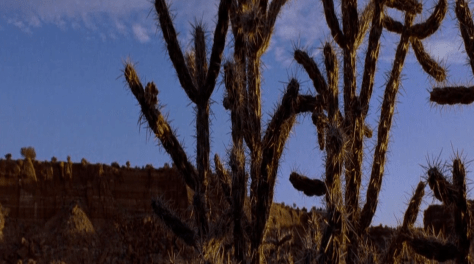
FADE IN to a still shot of a cactus in a desert. Blue sky fills the background. Perfect nature.

Screen Shot 2016-01-21 at 1.42.42 PM

Except, wildlife sounds squeak and squawk. We know that all is not peaceful in the desert.

Animals kill. Predators prey.

But the opening shot is devoid of one thing: mankind.

It also has no movement. We hesitate on this image for 6 seconds.

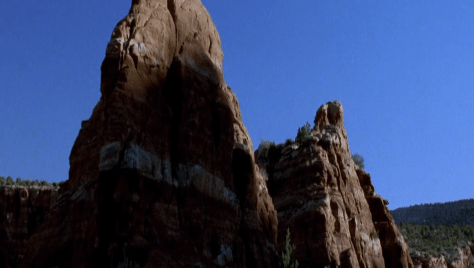
CUT TO: another still image: a rocky mountain cast in shadow. Deep blue sky again fills the background.

Screen Shot 2016-01-21 at 2.41.24 PM

Wildlife squawks louder. We linger here for 3 more seconds.

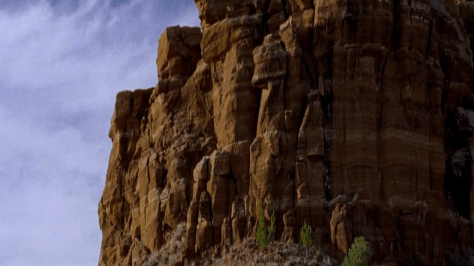
CUT TO: a third image – another rock.

Screen Shot 2016-01-21 at 2.41.50 PM

Americans will probably recognize it as the New Mexico desert.

The scene is natural. Still.

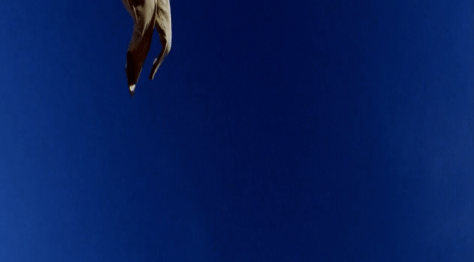
CUT TO: perfect blue sky.

Enter ‘mankind’ in its absurdity as a pair of man’s pants fall through the sky.

Screen Shot 2016-01-21 at 2.53.56 PM

CUT TO:

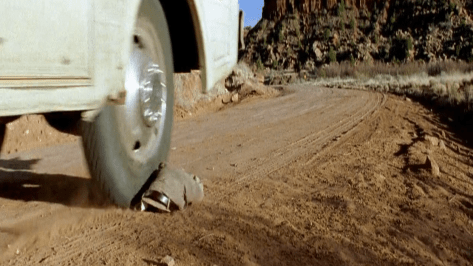
the ROAR of an RV as it explodes through the peaceful desert, running over the pants…kicking up dust… man versus nature… man causing destruction.

Screen Shot 2016-01-21 at 3.06.35 PM

and…

BANG!

We’re into the chaos of Breaking Bad!

That’s the opening 20 seconds.

Compare to the opening scene of Peaky Blinders.


3 important facts about scene length in Peaky Blinders.

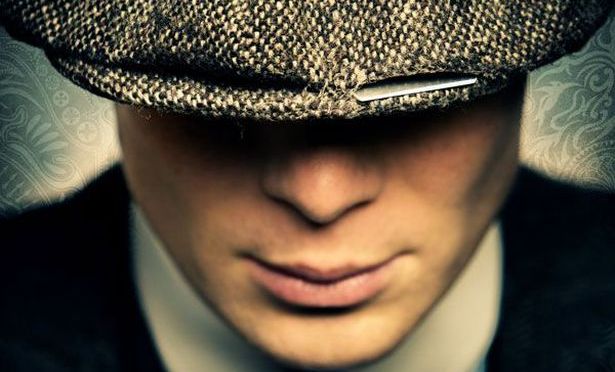
1. The longest scene is the opening credits (1.35) which shows through action both the story world and status of series protagonist Thomas Shelby.

2. Chief Inspector Campbell (the series main antagonist) has 2 scenes  – a total of 1.16 – roughly 10% of screen time.

3. In contrast Thomas (protagonist) dominates the opening 10 minutes with approximately 75% of screen time.

In the next post we’ll study how Steven Knight grabs us and pulls us in with his opening scene.

Click here for the next sneaky peak at Peaky Blinders.

3 Facts about Action & Dialogue in Peaky Blinders.

1. In the opening 10 minutes of Steven Knight’s Peaky Blinders only 2 scenes are driven by dialogue:

i) Scene 8 – Arthur and Thomas’s power struggle. (1.28)

ii) Scene 10 – Freddie’s political battle cry. (1.21)

N.B Not including the Opening Credits, these are the two longest scenes in the opening 10 minutes.

2. C.I Campbell’s scenes (the series antagonist) have NO dialogue. They are visual only.

3. In total there are approximately 3 minutes of dialogue.

So, this means that the opening 10 minutes of Peaky Blinders is:

30% dialogue. 70% action.

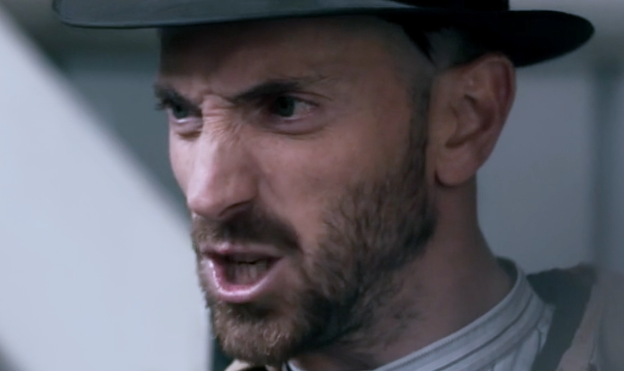
Iddo Goldberg as Freddie Thorne

Peaky Blinders Opening 10: Scene 12 (Final Scene)

We’ve been exploring the opening ten minutes of Steven Knight’s brilliant historical crime drama Peaky Blinders, and we’re onto the final scene.

We’ll look briefly at what happens in this scene.

Then, we’ll examine what elements the writer, director and editor have included to present the most effective opening ten minutes in the grasp of their collective talents.

So, onto the scene.

The scene is 4 shots and lasts 20 seconds.

It starts at 09.40.

SHOT 1.

EXT. INDUSTRIAL BACKSTREET, BIRMINGHAM – DAY

Thomas Shelby, small in the frame of the huge street, walks towards us for 6 seconds.

screen-shot-2015-08-03-at-3-13-02-pm

SHOT 2.

SAME STREET – CONTINUED.

Switch POV as we watch Thomas approach a pub from behind.

Screen Shot 2015-08-03 at 3.13.25 PM

In the top corner of the frame we make out part of the sign: The Garrison Tavern.

Three people stand at the entrance: two WOMEN and an OLD MAN.

Seeing Thomas the Old Man cowers and bows.

Shot length: 6 seconds.

SHOT 3.

INT. THE GARRISON TAVERN – DAY.

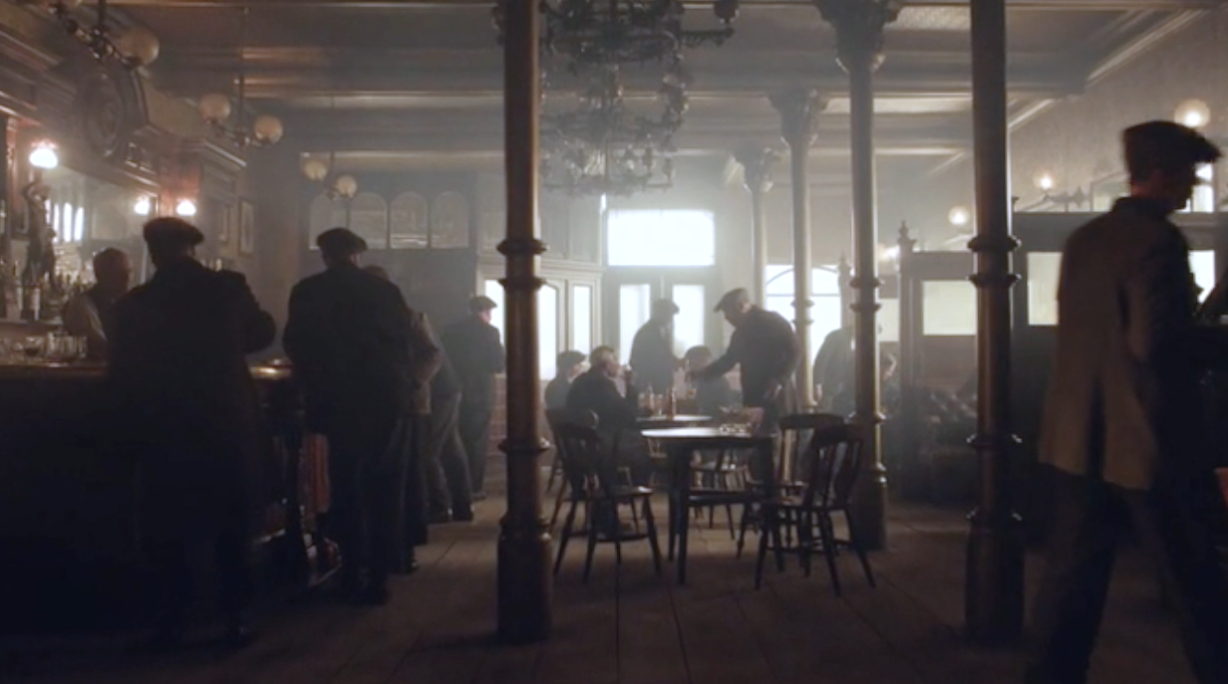
Screen Shot 2015-08-03 at 3.13.43 PMWe watch men being men in a pub.

Shot length: 6 seconds.

CUT TO:

SHOT 4.

INT. THE GARRISON TAVERN – DAY.

The doors open, like an old Western saloon, as –

Thomas enters.

Screen Shot 2015-08-03 at 3.29.04 PM

That’s the final shot – BANG ON 10 minutes Thomas Shelby, center frame.

Shot length: 2 seconds.

Total scene length: 20 seconds.

For extra posts on the opening ten minutes of Peaky Blinders click here.

A Sneaky Peak at Peaky Blinders – Scene 6.

In Scene 6 Thomas enters the Shelby house and has a quick interchange with Finn, his youngest brother.

In the screenplay Steven Knight describes this short, 30 second scene in detail:

Thomas breezes through a hallway decorated with brass and fancy floral crockery. The Shelby home is compact, a typical terrace, but we might notice a surfeit of brass and flowery ornamentation around the place. The Shelbys are cash rich but without conventional good taste. The home is decorated like a gypsy caravan, or a boatman’s barge with lots of roses, elephants and castles.

We might glance a photograph of three brothers in military uniform, smiling (this is Arthur, Tommy, and John – all in Warwickshire Yeomanry uniform, with a freshly dug trench behind them).

Thomas tosses his coat aside and passes through a small kitchen, where a young boy (FINN, 10, Thomas’s youngest brother) is smoking a cigarette into the flames of a coal fire. A rabbit roasts on a spit. Finn hides the cigarette and calls out as Thomas passes…

FINN

Arthur’s mad as hell.

THOMAS

What does a ten year old know about hell?

FINN

I’m eleven Sunday.

Let’s have a quick look at how much of this is realized on screen.

The first paragraph –

Thomas breezes through a hallway decorated with brass and fancy floral crockery.

– is on screen.

However the first thing we notice when Thomas enters is a crucifix on the wall, illuminated by a shaft of sunlight as Thomas opens and closes the front door. This is perhaps a nod to the Shelby’s Irish – Catholic heritage. Aunt Polly is described as “half Romany, half catholic” and the city of Birmingham in the UK in 1919 had “a large Irish Catholic” community. (Sources: Telegraph/Guardian).

From Steven Knight’s description we do notice on screen –

 flowery ornamentation around the place.

– and the home is

decorated like a gypsy caravan.

It’s interesting to note Thomas is referred to several times as being a “gypsy.”

However, the rabbit on the spit, the action of tossing the coat, and specifically the photo of the three brothers in uniform are all absent from the screen.

(Note to self – not everything you write will make it on to the screen – even if you’re at the top of your game!)

So, to answer our two questions:

1. What is revealed in this scene regarding plot?

Nothing per se. However the line of dialogue from Finn prepares us for familial conflict between Thomas and Arthur – itself revealing one of the series’ major themes – the rise of a king – and this theme is itself revealed in plot – the various actions Thomas takes in order to achieve his ambitions.

And why is Arthur ‘mad as hell’ ? Because, as we soon find out, Thomas has been treading on Arthur’s toes. There’s a battle for leadership going on. A battle for kingship. Who is the King of the Shelby clan? Who is The King of Small Heath ? Is it older brother Arthur, or his younger, smarter, brother Thomas?

2. What is revealed in the scene regarding character?

Firstly, through Thomas’s action – a playful bash on Finn’s head with his cap (on screen not in the script – actor’s choice?) – and by his tone of voice – we see that Thomas is friendly to Finn.

He could curse and swear at him for smoking, but he doesn’t.

Thomas is revealed in this scene as friendly, gentle and playful – a stark contrast to the fear and reverence he evokes out on the streets.

Secondly, through dialogue, Knight cleverly and with subtlety reveals that Thomas has experienced ‘hell.’

Thomas asks what Finn, a ten year old, can possibly know about hell.

“Hell” here refers to the horrific war Thomas has just returned from – the blood, the bombs, the death, the injured and dying men screaming – portrayed to us later in his vivid nightmares.

Tommy Shelby is a paradoxical character: ruthless, yet with an almost angelic aura; youthful, but with the air of one who has already seen it all.

– The Guardian.
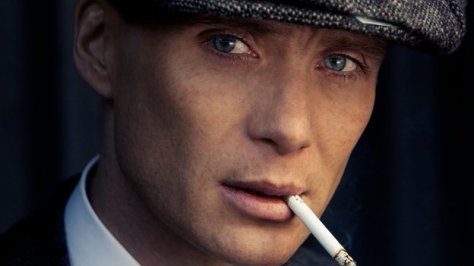
Stay tuned for the next post analyzing the opening ten minutes of Peaky Blinders!
1 thing Dexter & Peaky Blinders have in common: the hero’s screen time.

Out of 50 scenes, Dexter is on screen for 25.

Exactly half.

This adds up to exactly 23.06 minutes of screen time – just less than half of the 50 minute episode.

Approximately 50%.

Out of 42 scenes, Thomas Shelby is on screen for 20 scenes – just less than half.

This is 27.21 minutes of screen time – just less than half of the 56 minute episode.

Approximately 50%.

How long is your hero on screen for?

3 facts about your hero’s screen time.

Here is a list of scenes + scene length for Peaky Blinders opening episode.

It also shows which characters are in each scene.

The hero is Thomas Shelby. His scenes are highlighted in red.

  1. 0.18 Chinese Man and Girl.
  2. 1.00 Thomas + extras.
  3. 1.05 Thomas + Chinese Man + Girl.
  4. 1.35 Thomas + various (opening credits).
  5. 0.17 Thomas.
  6. 0.30 Thomas + Finn.
  7. 0.52 Thomas + John.
  8. 1.28 Thomas + Arthur.
  9. 0.54 C.I Campbell.
  10. 1.21 Freddie Thorne + workers.
  11. 0.22 C.I Campbell.
  12. 0.18 Thomas.
  13. 4.33 Thomas + Freddie Thorne + Danny.
  14. 0.10 C.I Campbell.
  15. 0.57 Aunt Polly + John Shelby.
  16. 1.52 Thomas + Polly + Arthur + The Shelby Family.
  17. 1.02 Jimmy Jesus + C.I Campbell + extras.
  18. 3.11 Polly and Thomas.
  19. 0.38 Thomas + Ada (transition).
  20. 1.35 Ada and Freddie.
  21. 0.24 Grace.
  22. 2.01 Grace + Harry the barman
  23. 3.49 Campbell + police.
  24. 0.46 Arthur + police.
  25. 3.28 Campbell + Arthur.
  26. 1.21 Grace + Thomas + Barman.
  27. 1.43 Aunt Polly + Arthur.
  28. 0.07 Ada.
  29. 1.01 Grace + Thomas.
  30. 1.14 Freddie + Ada.
  31. 2.09 Thomas (war dream sequence.)
  32. 0.45 Danny + Italian butcher.
  33. 0.15 Campbell.
  34. 1.46 Campbell + Winston Churchill.
  35. 2.04 Thomas + Uncle Charlie
  36. 0.17 Campbell.
  37. 1.53 Campbell + Grace
  38. 4.03 Thomas + Danny.
  39. 1.10 Arthur + Thomas.
  40. 1.14 Danny and Uncle Charlie.
  41. 0.18 Aunt Polly + Thomas.
  42. 0.36 Thomas + Grace

3 things to note.

1. Thomas is in 7 of the opening 8 scenes.

2. In total, Thomas is in 20 out of 42 scenes (approximately 50%).

3. Thomas is on screen for 27.21 minutes (the episode runs at 56.12 so again approximately 50%).

How long is your hero on screen for?

5 facts about scene length in your TV drama.

Here is a list of scenes and scene length from Episode 1 of Steven Knight’s Peaky Blinders.

For an in-depth study of the opening ten minutes click here.

The breakdown is color-coded as follows:

Scenes less than 1 minute.

Scenes over 1 minute.

Scenes over 2 minutes.

Scenes over 3 minutes.

Scenes over 4 minutes.

  1. 0.18
  2. 1.00
  3. 1.05
  4. 1.35
  5. 0.17
  6. 0.30
  7. 0.52
  8. 1.28
  9. 0.54
  10. 1.21
  11. 0.22
  12. 0.18
  13. 4.33
  14. 0.10
  15. 0.57
  16. 1.52
  17. 1.02
  18. 3.11
  19. 0.38
  20. 1.35
  21. 0.24
  22. 2.01
  23. 3.49
  24. 0.46
  25. 3.28
  26. 1.21
  27. 1.43
  28. 0.07
  29. 1.01
  30. 1.14
  31. 2.09
  32. 0.45
  33. 0.15
  34. 1.46
  35. 2.04
  36. 0.17
  37. 1.53
  38. 4.03
  39. 1.10
  40. 1.14
  41. 0.18
  42. 0.36

The episode runs at 56 minutes.

Out of 42 scenes it’s interesting to note 5 things.

1. There are 18 scenes less than 1 minute.

2. There are 16 scenes over 1 minute.

3. There are 3 scenes over 2 minutes.

4. There are 3 scenes over 3 minutes.

5. There are 2 scenes over 4 minutes.

Check out the latest sneaky peak at Peaky Blinders, about the opening ten minutes last scene.

A Sneaky Peak at Peaky Blinders Extra: The Rise of a King

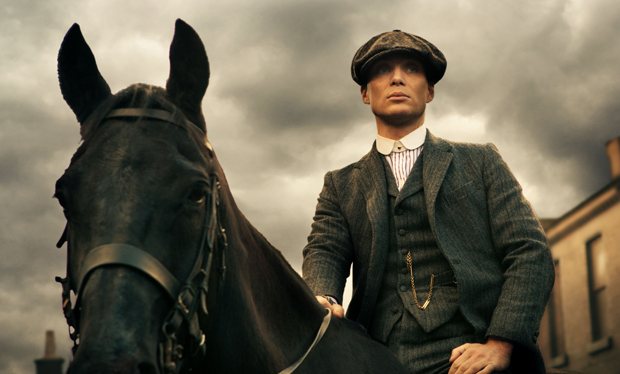
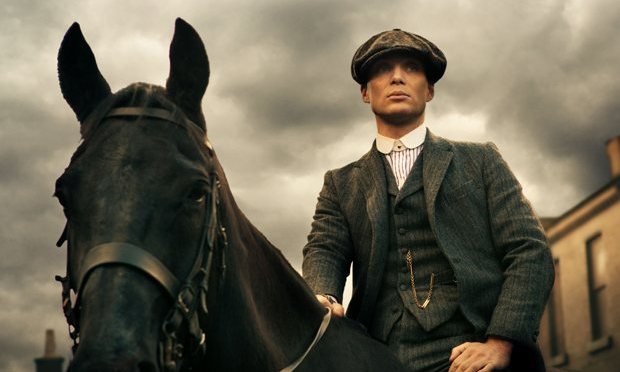
In the opening ten minutes, as Thomas Shelby rides majestically through the backstreets of Birmingham on a beautiful black horse, dressed immaculately in three piece suit, polished black shoes and a gold watch chain – it’s a stark contrast with the dirt and grime of the laborers and beggars around him.

As beggars, the preacher, and even policemen bow and tip their hats we see Thomas is revered by all.

Refusing to tip his hat in return to the police, Thomas is making a strong statement. He doesn’t see himself as subordinate to the police. And if he’s not subordinate, he must be above them. Above the law.

But in the UK only The King or Queen is above the law.

In the United Kingdom the Crown has never been able to be prosecuted or proceeded against in either criminal or civil cases.

– Wikipedia

This theme of Thomas as King runs through the series.

In scene 13, as communist leader Freddie Thorn examines the razor blades sown into Thomas’s cap, he says:

The crown of a prince. Soon to be king, I’d say.

Later, Freddie says to his girlfriend, Ada, Thomas Shelby’s sister:

Oh my Ada. The only princess of the royal family of the Kingdom of Small Heath.

But Freddie isn’t the only one to recognize Thomas as King.

When Thomas’s wealthy, aristocratic horse trainer visits him in the backstreets of Birmingham, she says:

I mentioned your name and it was like being led to a king.

But Thomas, when he leans down to drop a coin into the bowl of a line of begging soldiers, blinded in the war, he shows he shares status with them.

We might say Thomas is both king and beggar – a favorite theme of Shakespeare:

Your fat king and your lean beggar are but variable service – two dishes but to one table.

– Hamlet.

Also, Thomas leaning down to drop a coin in the bowl of the soldiers might be compared to King Henry V when he humbles himself to sit with his ordinary soldiers just before battle.

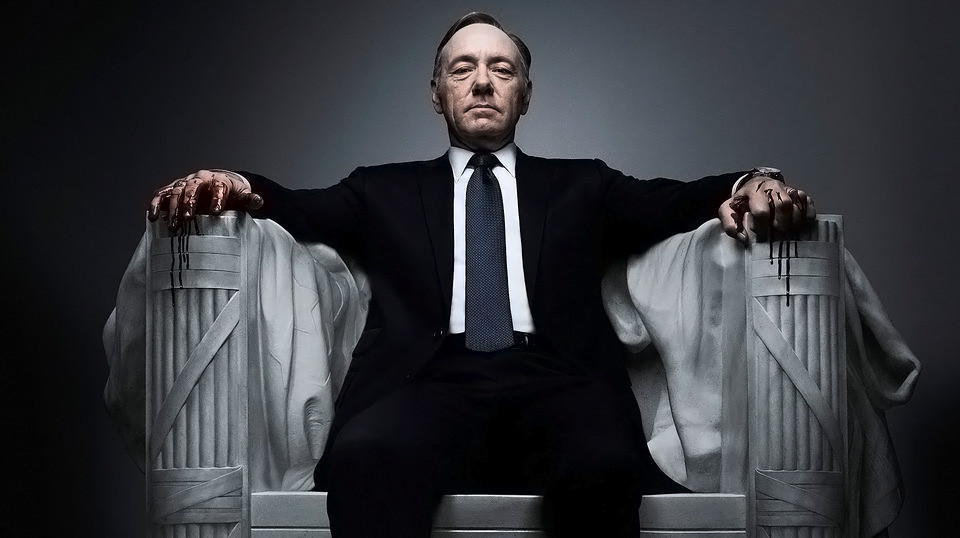
John Truby, in his review of another rise of a king story, House of Cards, says:

The struggle for power is one of the prime human motivations.

3 ways to show character.

As I explore the opening 10 minutes of Peaky Blinders it’s clear that Steven Knight shows Thomas Shelby’ character visually, through action, in 3 ways.

1. How he acts.

2. How he reacts.

3. How others react to him.

By his actions we learn he is generous and humble.

By his reactions we learn he does not bow down to authority.

By others’ reactions to him we learn he is feared and revered, by both the common people and the police.

How are you showing character in your opening ten pages?