“Write down the key choice your hero must make near the end of the story.”
– John Truby, Anatomy of Story

“Write down the key choice your hero must make near the end of the story.”
– John Truby, Anatomy of Story
“List the key values of each of the major characters and explain how those values will come into conflict as each character tries to reach their goal.”
– John Truby, Anatomy of Story
“In the best stories, the values of the opponent come into conflict with the values of the hero. Much of the power of the story rests on the quality of this opposition.”
– John Truby, Anatomy of Story

 Mark Dark: Scriptcat, great to have you here. Your blog posts are brilliant.
Scriptcat: You’re too kind!
Mark Dark: How do you choose what to write about?
Scriptcat: The only plan was to write about every aspect of screenwriting.
Mark Dark: Are you picky about what you post?
Scriptcat: I’m very picky.
Mark Dark: Do you have a set schedule for blogging?
Scriptcat: I’ve no set schedule.
Mark Dark: How long do you spend on Twitter?
Scriptcat: I’m on it daily and multiple times daily. It’s been a great way to share and connect.
Mark Dark: How long did it take you to break into the industry?
Scriptcat: Seven years.
Mark Dark: When did you give up the day job?
Scriptcat: I’ve never really had a “day job” and really only once—and for two years, while I was going through UCLA Film School. I waited tables at night.
Mark Dark: So when did you get your big break?
Scriptcat: I never had one big break into the film industry, it’s been a series of little breaks.
Mark Dark: Did you ever get a ‘proper’ job ?
Scriptcat: Once I took a job at a law firm but during this time I was hired to write a movie. That was the sign I needed. It was the universe telling me it was time to take the leap.
Mark Dark: Maybe some aspiring writers need a more ‘secure’ career as well.
Scriptcat: Dangerous.
Mark Dark: Why?
Scriptcat: Aspiring writers become so busy with their lives and the lives of others, they see their dream of being a working screenwriter slowly slipping away.
Mark Dark: What about writing a little bit every day?
Scriptcat: You can peck away a few pages a day, but there’s nothing like writing full time with the hunger burning in your soul. You’d be surprised how quickly a dream becomes a distant memory unless you stay in the game and live a writer’s life.
Mark Dark: Is image important?
Scriptcat: Hollywood is all about image, and the image you project is the one they will believe.
Mark Dark: You think it’s good to write specs?
Scriptcat: We always need our specs but it’s nice to actually get paid to write.
Mark Dark: Are you disciplined?
Scriptcat: It’s my middle name!
Mark Dark: How do we master it?
Scriptcat: I think my mastery of discipline came from my assignment work with producers and having to write on a deadline. It’s helped me to juggle the various writing I actually do.
Mark Dark: What are you juggling at the moment?
Scriptcat: The screenwriting is ongoing with various projects in various stages of development.
Mark Dark: How do you organize your time?
Scriptcat: Importance.
Mark Dark: What’s your view of the writing process?
Scriptcat: I am a huge believer in doing a detailed outline or better yet, a treatment.
Mark Dark: So you think we should plan?
Scriptcat: No architect of anything would ever just start building without detailed plans. It’s foolish for writers to do the same.
Mark Dark: How soon should a writer pay for feedback ?
Scriptcat: I would suggest a writer get a few drafts completed and when they get to a point where they feel they can’t answer the important questions of, “does this story work?” or “does this suck?” — it’s time to hire a consultant.
Mark Dark: Could we send you a treatment for feedback?
Scriptcat: I’ve actually never consulted on someone’s treatment, usually it’s the finished script.
Mark Dark: Film is often called a visual medium but doesn’t dialogue play a huge role in story telling these days?
Scriptcat: I still believe movies are a visual medium first and foremost. Here’s what David Mamet has to say about this subject:
A good film script should be able to do completely without dialogue.
Mark Dark: What about Tarantino? What would his films be like without dialogue?
Scriptcat: I understand and love the whole Tarantino style, but if you or I turned in a script with ten pages of dialogue at the beginning as in Inglorious Bastards, they’d toss it into the dumpster. He can get away with this because of who he is.
Mark Dark: What about Woody Allen?
Scriptcat: Woody Allen is a huge influence on me but I’d never try and turn in a screenplay with his amount of dialogue.
Mark Dark: But don’t some screenplay’s rely heavily on dialogue?
Scriptcat: It takes a master.
Mark Dark: What are your favorite films ?
Scriptcat: I basically love movies—period.
Mark Dark: What are the most common problems with scripts you analyze?
Scriptcat: A serious lack of knowledge about screenplay format. So many scripts are overwritten. The fewer words the better. Also understanding that screenwriting is rewriting. Many believe their first draft is perfect and they’ll fall out of bed the next morning and stumble ass backwards into a three-picture studio deal. Reality check ahead!
Mark Dark: How can we iron out the mistakes before they get to you?
Scriptcat: Learn the craft. Also become a voracious screenplay reader. So many scripts are available online now, there’s no excuse.
Mark Dark: Is correct formatting important?
Scriptcat: If a screenwriter doesn’t care enough to even know basics of proper format the producer or executive will think: “Why should I waste my precious time on this garbage when the writer didn’t even take the time to get it right?”
Mark Dark: Thanks for taking the time to talk to do this interview, Scriptcat. I know you’re busy!
Seven times produced screenwriter Mark Sanderson (@scriptcat) is a veteran of the filmmaking game with over fifteen years of professional experience and has worked with Academy Award® winning producers, veteran directors, and Academy Award® and Golden Globe® acting nominees. Mark’s indie and TV films have been distributed around the world and have opened and premiered at major festivals. His popular screenwriting blog MY BLANK PAGE was Script Magazine’s pick for website of the week and has over 100,000 readers.
The most important thing an actor learns is to listen. This is the key to great acting. This is the art of acting.
Why?
Because to listen is to be in ‘the moment’ – to be spontaneous. To react as it’s happening. No two takes by any actor worth her salt will be the same. If it is it won’t be in the moment. Which is to say… it won’t be organic.
Organic.
Key word.
So, because actors listen, does that mean characters should?
Well, do you always listen? And I’m not just talking about to the words being said to you, but do you listen between the lines? As @scriptcat says: sometimes we say more by not speaking.
So, are you listening to what’s not being said?
And characters may listen but it doesn’t mean that they always answer. Sometimes characters are so focused on their own goals that they fail to listen to what anyone else wants or needs.
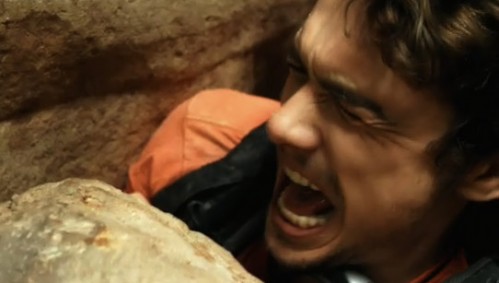
Look at Aron in 127 Hours. If he’d have listened he’d have returned his mum’s calls, told her where he was going and would have escaped his suffering.
Writers – are you listening?
Are your characters?

In 127 Hours, immediately after the midpoint, we’re treated to Aron’s video camera antics and the hilarious spoof radio show self-examination. This is a superb blend of comedy and tragedy. Aron reveals the fact he’s always seen himself as a ‘big fucking hard American superhero’ who can do everything ‘on his own’.
This segment is writing of the highest quality. The hero has a moral and a psychological revelation. John Truby describes a psychological revelation as being a self-realization that affects the hero directly, that is, causes him to see how he is destroying himself.
A moral revelation in Truby terms is our hero’s realization that his actions are hurting the world around him: loved ones, friends, society.
Most heroes will have one revelation but in great movies like 127 Hours the hero will have both. Not only does Aron stop blaming his mother and take responsibility for his own actions, admitting he has been living his life with ‘supreme selfishness’ but he tells his parents directly into the camera how he wishes he’d told them how much he appreciates them.
Not only do we see Aron scream for help from strangers in the resolution of the movie illustrating Aron’s character arc, but Danny Boyle points us back to this theme of family love and connectedness with a little insert during the closing credits:
“Now Aron always leaves a note to say where he’s going.”
This pays off the opening dialogue where his sister leaves a message on the answerphone asking him to call his mom back as ‘she worries’.
So Aron’s moral revelation is realized: he has changed the world around him, outside of himself. Due to his harrowing ordeal he has lost his selfishness and now thinks of others ahead of himself.
But the genius of Danny Boyle’s and Simon Beaufoy’s script here is how Aron’s revelation – that his ‘supreme selfishness’ led him to this place of extreme suffering – is delivered with a ‘spoon full of sugar’ gift-wrapped in scathingly funny self-deprecating dialogue.
So what actually should be a tragic moment has us weeping with laughter. But then, as we’re pulled back to the seriousness of the situation, we’re crying again, our tears of laughter mingling nervously with tears of pain.
Perfect writing.
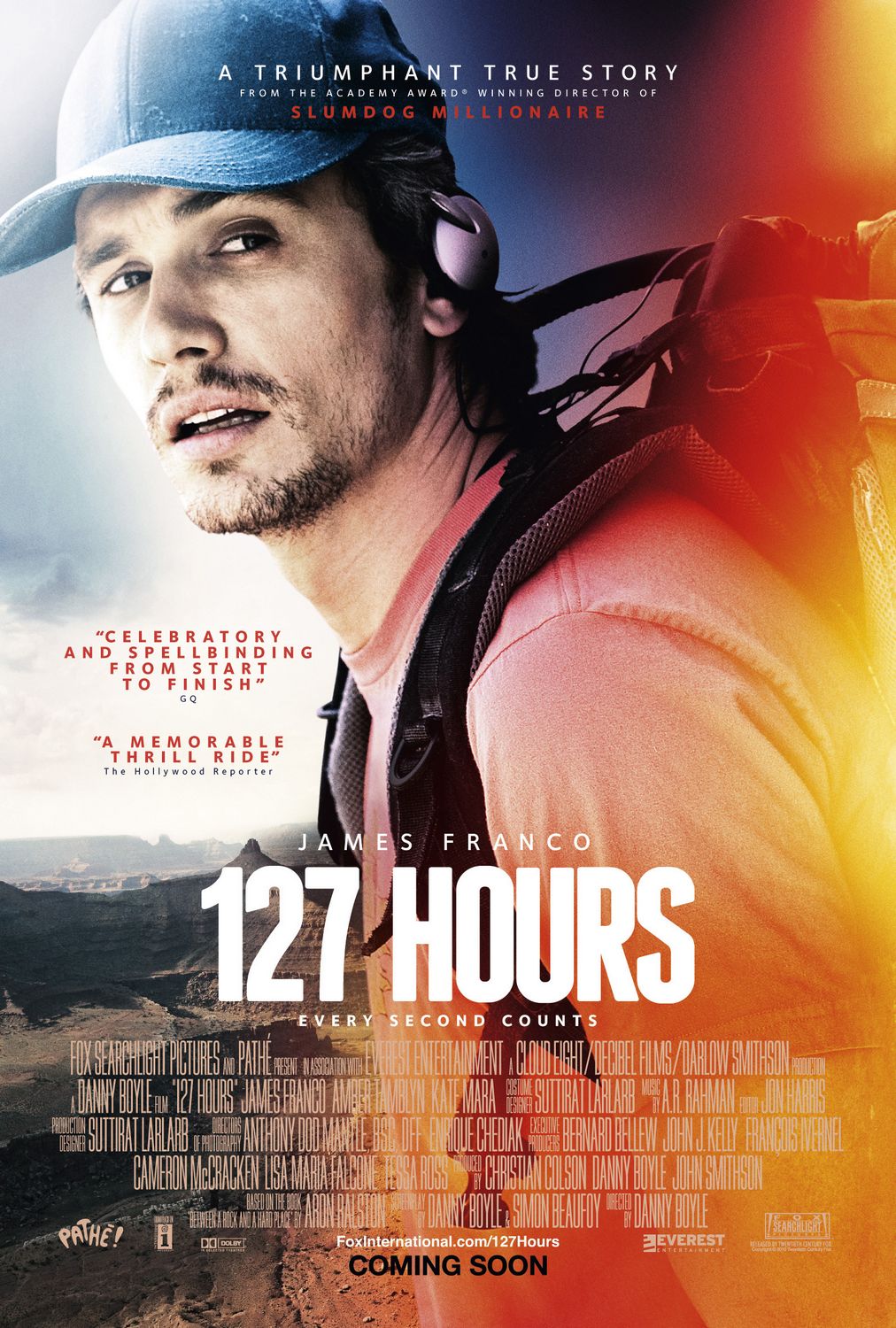 Recommended reading: Anatomy of Story by John Truby
Reading the Industrial Scripts newsletter this week (which is brilliant – you should definitely sign up) there was a link to an article by Lyndsay Doran in the New York Times (read it here) where she had researched the emotional components of successful movies and the qualities audiences most value in a character. One such quality was ‘accomplishment’, but not how we might think:
“The accomplishment the audience values most is not when the heroine saves the day or the hero defeats his opponent. Instead the accomplishment the audience values most is resilience.”
This set me thinking about the hero I’m working with in my feature script. I realized that his problem is he doesn’t know who his enemy is until the end of Act 2.
However, in Training Day and The Recruit the enemy is also revealed late in the story, although having been there all along. This is what John Truby in his Anatomy of Story calls the fake-ally opponent –
‘…the fake-ally opponent is one of the most complex and fascinating characters in a story because he is usually torn by a dilemma.’
But the problem still remains: if our heroes don’t know who their enemies are how do they fight against them and show that all important empathy-inducing resilience?
Take 127 Hours (screenplay by Danny Boyle and Simon Beaufoy). Here is a hero who shows incredible resilience in the harrowing few minutes of the Climax. The story up to this point is the character figuring out how to battle and overcome his enemy whilst analyzing how he managed to get in such a terrible predicament. Gradually, after attempting to blame his mother, his moral revelation comes and he blames himself (character arc). But all the way from the Act 1 Turning Point until the Climax this hero knows his enemy – the rock.
So, back to my story, how does my character show resilience throughout if he doesn’t know who his enemy is until the end of Act 2 ? For this we have to come back to Truby and his theories on threefold opposition. Truby teaches our heroes should be facing opposition from all three corners of the ring (with our hero in the other corner). So, even if the main antagonist is hidden there are two more antagonistic forces in play.
Take the 2005 movie North Country (screenplay by Michael Seitzman) where the female protagonist is fighting against sexual harassment in the work place. Opposition is flying at her from all angles. First and foremost from her male co-workers; secondly from the patriarchal management system; then from her Father (also one of her co-workers) and lastly (perhaps most surprisingly) from her female workmates. The resilience she shows is immense.
How resilient is your hero?
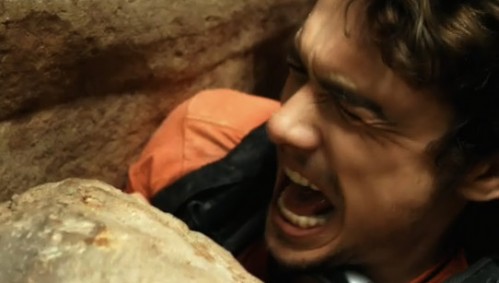
The opening lines in 127 Hours (screenplay by Danny Boyle and Simon Beaufoy) are an answerphone message from Aron’s sister:
“Hey, Sonia here…again… I know you’re probably gonna be away this weekend, but listen… just think about what we’re gonna play, ‘cause we have to decide if we need to practice, it will be fun, anyway…oh…and, please call Mom, ‘cause, you know, she worries…”
These lines refer to 5 things:
1. Character Arc.
Why doesn’t Aron answer the phone? We see he’s super-busy preparing his trip, grabbing the bits and pieces he needs. And we all know how annoying phone calls are when we’re trying to get stuff done. But this preoccupation with himself shows us he is more focused on his own needs than his sister’s. The fact that Sonia emphasizes again tells us this isn’t the first time she’s called. And so Aron’s character flaw is illuminated – the flaw that will not only cause his extreme suffering but will also cause him to grow and change.
2. Foreshadowing.
‘Think about what we’re gonna play’ foreshadows a line of dialogue at the Act 2 Turning Point paid off when Aron apologizes to his sister for not being able to play the piano at her wedding. This apology tells us something way deeper and more important: that he has lost the battle. He is defeated. Michael Hague calls this the All is Lost moment. Blake Synder the Visit to Death.
3. Theme.
Sonia reminds Aron to call Mom as ‘she worries’. Later Aron realizes that if he hadn’t have been so selfish, if he had returned his mom’s calls, he would’ve told her where he was going and he would’ve been rescued. Major theme: interconnectedness + familial love.
So these opening lines not only foreshadow the Act 2 Turning Point before Aron’s do or die drive to survive, but they immediately point us to both theme and character arc.
SPOILER alert – please watch the movie before reading the rest of this post.
4. Endearing us to the Hero.
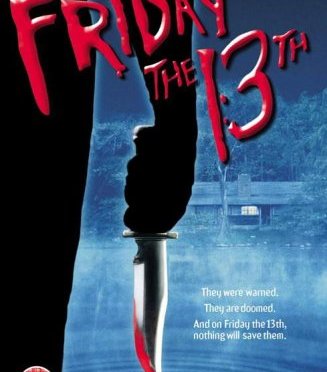
One of my favorite lines of dialogue comes where Aron meets the two lost female hikers. Aron rocks down the hill, superhero to the rescue, to help them with their map-reading. Realizing his mask is high on his face and he must look pretty scary, Aron jokes something about looking like Jason from Friday the 13th. Not only is this funny, and, as Michael Hague tells us in Screenwriting for Hollywood, funny always endears us to a hero, but it’s oozing subtext. Which brings us to –
5. Subtext.
Aron’s lines hiding a much deeper and far more sinister meaning. Check out his line:
Sorry about the Friday 13th thing. I’m only a psychopath on weekdays.
We don’t read much into it on first viewing. But actually it’s preparing us for – or foreshadows – the sudden Act 3 genre twist from family adventure drama to slasher/horror.
‘I’m not usually a psychopath,’ he’s saying (my paraphrase) ‘but stick around and later you can watch me hack my own arm off, Saw style.’
Are your opening lines of dialogue:
1. Pointing us to character arc?
2. Foreshadowing the climax?
3. Reflecting the theme?
4. Endearing us to your hero?
5. Harboring hidden meaning?
How deep is your dialogue?
127 Hours runs at 90 minutes and adheres to perfect 3 Act Structure:
Act 1: 15 minutes.
Act 2a : 30 minutes.
Midpoint
Act 2b: 30 minutes.
Act 3: 15 minutes
NB: The Midpoint or Point of No Return happens at 45 minutes – exactly half way through the movie.
Each act break + plot point is not only marked with a Turning Point but is also marked with the end of a musical sequence.
Watch the film carefully paying attention to what happens at these exact times.
So, what happens at each Turning Point?
SPOILER ALERT – watch the movie before you read this analysis!
Act 1 begins by foreshadowing the moral revelation the hero will have in the climax – Aron’s selfishness – as he refuses to answer his mum’s phone calls or tell his work mate where he’s going. Next we’re shown an excited young man off on an adventure. He’s a daredevil. When he spectacularly falls from his mountain bike he simply smiles, snaps a pic of himself and he’s ‘back on the saddle’ foreshadowing his tenacity and resilience displayed in extremis in the Climax.
After exactly 15 minutes, Aron falls: the film’s inciting incident. He’s trapped by the rock. Danny Boyle inserts the film’s title 127 Hours here, telling us the movie, the real story, starts now. Like any Act 2 this is the new world, the upset Status quo which must be re-balanced.
So Act 2 begins at 15 minutes.
Then, 15 minutes into Act 2 (30 minutes into the movie) we have Plot Point 1 which points us towards the film’s major Theme.
So what happens here? Well, we see Aron as a small boy sitting on the Grand Canyon in his father’s loving embrace as they both stare out at the rising sun. (Theme: interconnectedness + familial love).
Between 30 minutes and the midpoint at 45 minutes we witness Aron beginning to make his video diary. He addresses his mom and dad – we hear his mother’s voice saying ‘call me – lots of love’ (Theme reinstated: connectedness + familial love).
The Midpoint or Point of No Return comes at exactly 45 minutes: Aron takes his pocket knife and tries to cut his arm – foreshadowing the Climax. Why is this the Point of No Return? Because Aron is considering another option, if all else fails.
And we’re into the second part of Act 2 which we’ll call Act 2b.
Immediately after the Midpoint we’re back with the video camera and treated to the hilarious spoof radio show and Aron’s self-examination. This is a superb blend of comedy and tragedy. He reveals the fact he’s always seen himself as a ‘big fucking hard American superhero’ who can do everything ‘on his own’. This is writing of the highest quality; the hero’s moral / psychological revelation that his ‘supreme selfishness’ – his character flaw – has led him to this place of captivity and isolation, later to become a place of extreme suffering, is delivered with a ‘spoon full of sugar’ as this self-revelation is presented to us by the writers gift-wrapped in brilliant dialogue as Aron attacks his own flaws with scathingly funny self-deprecating humor.
Then, 15 minutes after the Midpoint at Plot Point 2 Aron rams the blade into his arm. Danny Boyle takes us visually inside his arm and we see the blade ‘close to the bone.’ An idiom often used when remarks cut close to the truth. And the truth Aron has just revealed to us? He has been living life selfishly. In fact, he apologizes to his mom and dad into the camera for being ‘unappreciative.’
After another 15 minutes, at around the 75th minute of the movie – leading towards the End of Act 2 Turning Point Aron apologizes to his sister that he won’t be able to play piano at her wedding. Another apology. This dialogue tells us he has accepted his fate and that fate is death. Michael Hague calls this the ‘All is Lost’ moment. Blake Snyder the ‘Visit to Death’.
Then, still at the 75th minute mark, we enter ACT 3 as Aron makes one last ‘do or die’ drive to set himself free, and, as a mirror to the Midpoint – BANG! – he rams the blade back into his arm and drags us, screaming and terrified, feeling every nerve of his tortuous pain, into the bloody, horrific Climax.
The next 15 minutes are the Resolution as Aron is rescued. Here Aron’s learning curve – his character arc – is clear as the ‘big hard fucking superhero’ who can do ‘everything on his own’ screams for help from strangers – a changed man.
127 Hours sticks to perfect 3 Act Structure as taught by Michael Hague and also adheres to John Truby’s teachings on Moral and Psychological Revelations in his book Anatomy of Story.
Part of the genius of 127 Hours (screenplay by Danny Boyle + Simon Beaufoy) are the recurring motifs which illuminate the major theme – that every living thing on earth is dependent on each other. We cannot survive without each other. But how do the writers portray this theme visually?
Two major motifs are Light and Water. Watch the movie again and see how prominent these are and how the writers and director uses them. And what are Light and Water ? Sources of Life itself. We can’t survive without either. Our very planet would die and so would we.
Another motif the writers use with subtle but powerful effect are how other creatures we share the earth with (symbolized by birds and insects) are also interdependent: the raven which flies overhead each day; the ants crawling on Aron’s skin. Birds feed on insects. Aron jokes in a seemingly irrelevant line of dialogue that almost escapes us:
‘I’ve peed twice but no number 2’s – which must disappoint my insect friends.’
But far from a throw-away line this is actually a profound statement about how we living creatures depend on each other – feed on each other. Literally.
A third motif used in this multi-layered movie is familial love, especially between child + parent. The memory of his father’s hug juxtaposed with the repeated use of his mother’s voice on the answer phone asking him to call her back, to connect.
We are all connected. We cannot survive alone. The laws of nature confirm this. No living thing can survive without another. We all need Light + Water. Without them we could not survive.
What are your themes, and how are you expressing them visually and through dialogue?