Tag Archives: #screenwriting #scriptchat #writetip

Happy Valley season 1 episode 1 analysis – characters in scenes

The purpose of this post is to analyse the balance of scenes between protagonist and their world i.e friends, family, and subplots that are non-case related (B stories) and antagonist, and as this is a police thriller, victim.

SPOILER ALERT.

Let’s start with Act 1.

The yellow highlight = protagonist. Red = antagonists. Light Blue = victim.
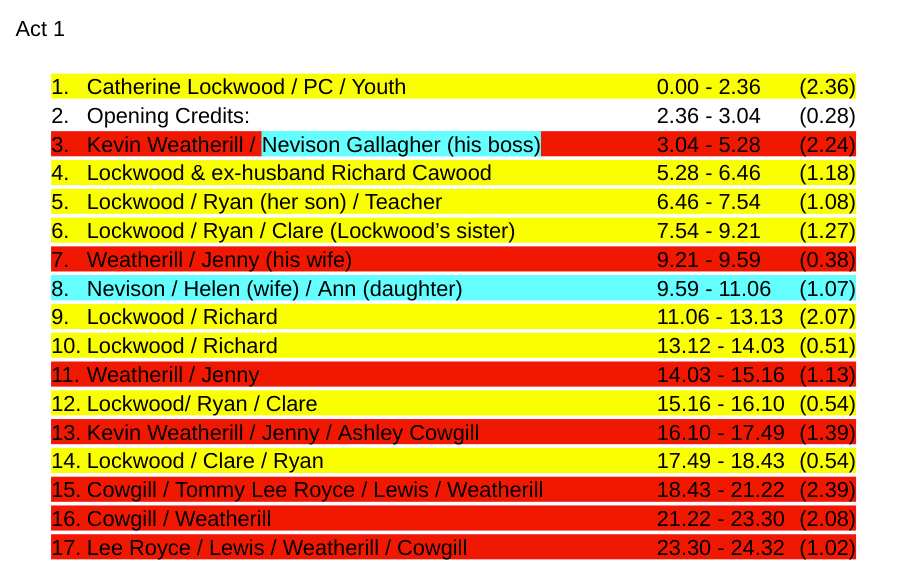
So, what can we notice?

Firstly, there is very little of the victims.

The opening scene we meet the protag, but not in connection with the main case.

After the credits the main case begins.

Immediately we are introduced to this episode’s main antagonist: Kevin Weatherill. NB some may argue that either Tommy Lee Royce or Ashley Cowgill are the main antagonist. However, as the act breaks are all punctuated with Weatherill’s actions (see this post) I believe he is this episode’s main antagonist. He instigated the entire plot. Without him, we wouldn’t have the story.

As you can see, the scenes are quite balanced. After the initial scene with Nevison and Weatherill (scene 3) there are 8 scenes followed by 3 scenes dedicated to the antagonists at the end of the act.

One of the most interesting thing to notice is that the protag and antags have not yet met.

Now let’s look at Act 2 and Act 3.

Act 2 is another well balanced act between protag and antags. Interestingly, at the end of Act 2 we witness the victim with the main antagonist.

Act 3 are 4 scenes dedicated to the protag’s personal life (B story) although in this case the B story cleverly ties in with the main plot, as the child of the protag is also the child of one of the antags (not Weatherill and not related to the main case – this B story will take shape more clearly throughout the rest of the season).

In my opinion the way the writer intertwines the B story with A story is the major strength of the work.

Now, let’s look at Act 4 and Act 5.

As we can see Act 4 begins with the main victim. This is the first time we spend any time with her. The first 5 scenes of this act are dedicated to the victim meeting the antagonists.

However, what is most important to note is the final scene of Act 4 is where the protag meets the antag for the first time (although in this case the protag has no idea she is meeting the antag.)

Act 5 has the second and third longest scenes in the entire episode (scenes 38 and 40) both dedicated to the major crime – the kidnap.

Scene 42 sees Lockwood see (but not meet) Lee Royce, who will become the season’s main antag.

The final scene is Lockwood discovering a major clue to the case and propels us into the next episode.

The three scenes prior to this final scene have victims and antags together for 3 scenes.

To sum up then, overall, protag and antags are kept apart until Act 4 and Act 5.

Act 5 is a glorious blending together of antags and victim.

The protag, however, is still kept separate. In fact, the only time protag meets antag is scene 37, at the end of Act 4.

What else do you notice?

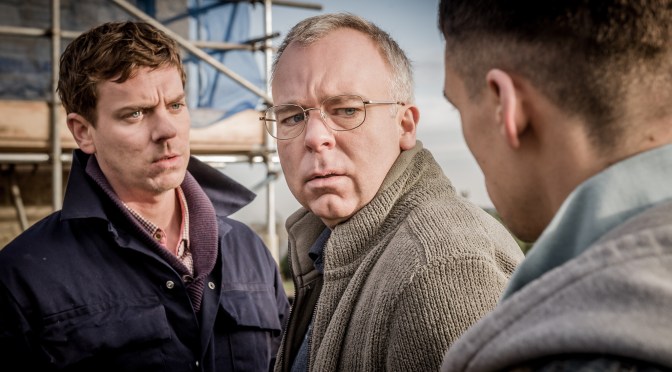
Ashley (JOE ARMSTRONG), Kevin (STEVE PEMBERTON), Lewis (ADAM LONG)

Dialogue – responding to questions in The Serpent: part 1

This article is also available to watch on Youtube

We’ve been looking at techniques for responding to questions.

In the last post we looked at two examples from Mammoth Screen’s The Serpent by Richard Warlow. Let’s look at some more examples from the same script. This is episode 1, available from BBC Writers Room.

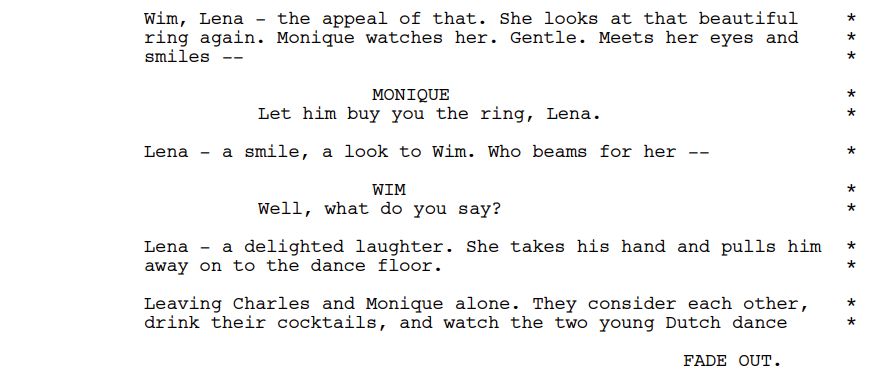
In this scene, Charles and Monique are trying to sell the sapphire / diamond ring to Wim and Lena.

When Monique asks Charles ‘they don’t have to decide now’ it is not a real question. Of course Charles wants them to decide now, but, he’s willing to play the long game. It’s a lot of money.

How does Charles reply? Of course not. But he’s lying. Of course he wants them to decide now. So what technique is this? We might say Charles is responding to Monique’s question by saying what Wim and Lena want to hear.

Let’s look at another question, a bit later in the same scene.


This time Monique pushes for a sale, telling Lena to let Wim buy her the ring. Lena smiles at Wim. Wim ‘beams for her’ and asks Lena: Well, what do you say? Lena responds not with words but with action, laughing and pulling him to the dance floor.

Let’s look at another scenario.

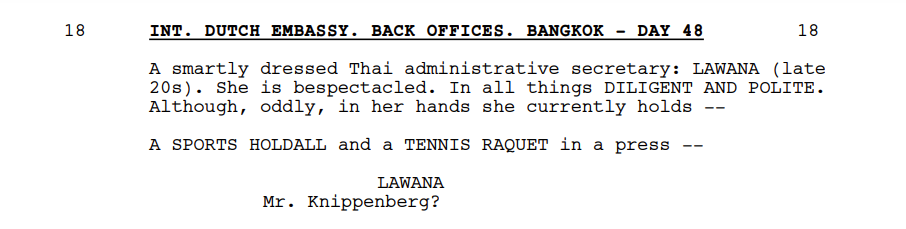
At the Dutch embassy, Lawana, the Thai administrative secretary, asks Herman to clarify that he is who she is expecting: Mr. Kippenberg?

Herman swears in Dutch before responding with a question: how long ago did the others leave?

Lawana – perhaps she doesn’t want to say. So Herman answers his own question.

To conclude, three more techniques writer Robert Marlow uses when responding to questions:

  1. Say what others want to hear.
  2. Respond with action.
  3. Answer your own question.

2 effective ways to step-outline.

When step-outlining, we can use 2 techniques:

1. Put the do-er of the action first.

Skyler threatens to leave Walt.

Subject: Skyler.

Verb: Threaten

Object: Walt

By using this method you can see:

1. Who is driving the scene.

2. Who is driving the main plot.

3. Who is attacking your hero .

If your hero is often the object, coming under attack a lot, this is good! Heroes should be attacked !

2. Put your hero first.

Walt is threatened by Skyler.

Subject: Walt

Verb: Threaten

Object: Skyler

Here the subject and object have switched. Walt is the hero so he always stays the subject – that is – first in the sentence, followed by the verb.

The verb ‘is threatened’ here is passive  which tells us that Walt is passive in this scene, too. He is under attack. Of course, he doesn’t remain passive. He fights back. That’s what heroes do.

This method means we always:

1. See the story from the hero’s viewpoint.

2. See if our hero is active or passive.

3. See who is attacking our hero or who he is attacking.

It’s good to step outline both ways, to get a really clear picture of the to-and-fro of attack, defend, attack, defend, as your hero advances towards his goal.

DEXTER part 6: Titles and Meanings

Hannah KnifeRemember we’re studying Season 7 Episode 7.

The episode is called CHEMISTRY.

In Dexter’s opening lines of dialogue – an internal thought – he tells us:

DEXTER (V.O.)

Chemistry, I've heard some people have it,
an attraction that can't be quantified or explained.
Is that the reason behind this? Loss of control?
Maybe the desire to get Hannah on my table was
just a way to deny the affect she has on me.

But what is the affect Hannah has on him? Why did Dexter choose to fuck her instead of kill her?

Perhaps because Hannah is beautiful, but also deadly, just like the flowers she uses to kill, the flowers she is constantly surrounded by – the symbol of her beauty as well as the source of her evil – the perfect rose and its thorn.

The writer takes great care in selecting Hannah’s toxin of choice – from the plant aconitum also known as aconite (from a Greek word meaning ‘without struggle’). Aconite has been nicknamed ‘the queen of poisons’. Isn’t Hannah Dexter’s queen of poisons ?

The writer not only contrasts chemistry with botany but also compares the healing and destructive potential of both with the healing and destructive potential of Dexter’s relationship with Hannah.

Chemicals and plants can be both medicinal or poisonous – healers or killers.

In Season 7’s main plot which will Dexter and Hannah’s relationship turn out to be – poisonous or medicinal?

And when the entire series’ main plot is tied up in Season 8 which will Dexter eventually be – healed or killed ?

I’ll be looking in greater detail at the dialogue in this opening scene soon.

Read it here: Dexter Season 7 Episode 7: scene 1

The episode scene by scene breakdown can be found here.

Comments welcome.

DEXTER part 5: Screen Time.

In one episode, out of 50 scenes, how many are Dexter in?

  1. 1.51 Hannah + Dexter (1)
  2. 2.06 Deb + Sal Price
  3. 1.24 Hannah + Dexter (2) + 1 extra Biker
  4. 0.44 Dexter (3) + Hannah
  5. 1.37 Dexter (4) + Sal Price
  6. 1.15 LaGuerta + Deb
  7. 1.39 Dexter (5) + Deb
  8. 0.33 Dexter (6), Batista and Masuko
  9. 0.58 LaGuerta, Batista, Masuko, Joey, Deb + Dexter (7)
  10.  0.9  LaGuerta + Deb
  11. 0.12 Batista, Joey, Masuko, Dexter (8) + 1 extra Cop
  12. 0.42 Batista, Joey, Masuko, Dexter (9) + 1 extra Cop
  13. 0.48 Batista + Joey
  14. 0.34 Dexter (10) + Deb
  15. 0.52 Deb + Sal Price
  16. 0.53 Joey + Nadia
  17. 0.24 Isaak Sirco, George + Jurg
  18. 1.14 Deb + Hannah’s dead husband’s sister
  19. 1.20 Hannah + Price
  20. 0.12 Price + Dexter (11)
  21. 0.59 Dexter (12) + his dad.
  22. 0.58 Joey + George
  23. 2.51 Dexter (13) + Hannah (MIDPOINT)
  24. 0.15 Deb + Hannah’s dead husband’s sister
  25. 0.33 Deb + Lab Technician
  26. 0.33 Deb + Hannah’s dead husband’s sister
  27. 1.21 Deb + Price
  28. 0.34 Hannah + Price
  29. 1.30 Dexter (14) + Dad
  30. 2.00 Price + Hannah
  31. 2.38 Isaak + Dexter (15)
  32. 2.11 Dexter (16) + Price
  33. 0.19 Joey + Jamie
  34. 0.36 Dexter (17) + Batista + Joey
  35. 1.16 Deb + Dexter (18)
  36. 0.16 Hannah + Dexter (19)
  37. 0.12 Dexter (20) + Hannah
  38. 0.10 Deb + Hannah
  39. 0.11 Dexter (21) + Hannah
  40. 1.15 Deb + Hannah
  41. 0.02 Dexter (22)
  42. 0.36 Hannah + Deb
  43. 0.08 Hannah
  44. 0.04 Dexter (23)
  45. 3.00 Dexter (24) + Hannah (CLIMAX)
  46. 0.51 Joey + Batista
  47. 0.25 Masuko + Deb
  48. 0.27 Maria LaGuerta
  49. 0.29 Deb + Hannah’s V.O
  50. 1.34 Dexter (25) + Hannah + Deb

Exactly half. 25 out of 50.

Exactly 23.06 minutes of screen time – just less than half of the 50 minutes episode.

Read the full scene breakdown here: DEXTER – Season 7 Episode 7

DEXTER Part 4: Script Facts.

Dexter cut cheek

  1. Out of 50 scenes, 38 have 2 characters (duologues).
  2. 2 further scenes have 3 people, but only 2 people actually talk (duologue).
  3. Scene 49 is 1 character reacting to another character’s Voice on tape (duologue).
  4. So, actually 41 out of 50 scenes are duologues!
  5. 3 scenes have 1 character and are less than 10 seconds.
  6. ONLY 1 full scene has just 1 character & sets up the MAIN PLOT (27 secs).
  7. 2 scenes have 3 talking characters.
  8. 2 scenes have 5 characters.
  9. 1 scene has 6 characters.
  10. The Midpoint scene is a discussion on the nature of murder.

Read the full scene by scene breakdown here:

DEXTER Part 3: Characters in Scenes

Dexter

Here is a list of scenes, their length and which characters are in each scene.

The first character is often the one driving the scene, but not always.

Check out who dominates the sequence of scenes building up to the Climax – the two most important women in Dexter’s life: Deb and Hannah.

Season 7 Episode 7:

  1. 1.51 Hannah + Dexter
  2. 2.06 Deb + Sal Price
  3. 1.24 Hannah + Dexter + 1 extra Biker
  4. 0.44 Dexter + Hannah
  5. 1.37 Dexter + Sal Price
  6. 1.15 LaGuerta + Deb
  7. 1.39 Dexter + Deb
  8. 0.33 Dexter, Batista and Masuko
  9. 0.58 LaGuerta, Batista, Masuko, Joey, Deb + Dexter
  10.  0.9  LaGuerta + Deb
  11. 0.12 Batista, Joey, Masuko, Dexter + 1 extra Cop
  12. 0.42 Batista, Joey, Masuko, Dexter + 1 extra Cop
  13. 0.48 Batista + Joey
  14. 0.34 Dexter + Deb
  15. 0.52 Deb + Sal Price
  16. 0.53 Joey + Nadia
  17. 0.24 Isaak Sirco, George + Jurg
  18. 1.14 Deb + Hannah’s dead husband’s sister
  19. 1.20 Hannah + Price
  20. 0.12 Price + Dexter
  21. 0.59 Dexter + his dad.
  22. 0.58 Joey + George
  23. 2.51 Dexter + Hannah (MIDPOINT)
  24. 0.15 Deb + Hannah’s dead husband’s sister
  25. 0.33 Deb + Lab Technician
  26. 0.33 Deb + Hannah’s dead husband’s sister
  27. 1.21 Deb + Price
  28. 0.34 Hannah + Price
  29. 1.30 Dexter + Dad
  30. 2.00 Price + Hannah
  31. 2.38 Isaak + Dexter
  32. 2.11 Dexter + Price
  33. 0.19 Joey + Jamie
  34. 0.36 Dexter + Batista + Joey
  35. 1.16 Deb + Dexter
  36. 0.16 Hannah + Dexter
  37. 0.12 Dexter + Hannah
  38. 0.10 Deb + Hannah
  39. 0.11 Dexter + Hannah
  40. 1.15 Deb + Hannah
  41. 0.02 Dexter
  42. 0.36 Hannah + Deb
  43. 0.08 Hannah
  44. 0.04 Dexter
  45. 3.00 Dexter + Hannah (CLIMAX)
  46. 0.51 Joey + Batista
  47. 0.25 Masuko + Deb
  48. 0.27 Maria LaGuerta
  49. 0.29 Deb + Hannah’s V.O
  50. 1.34 Dexter + Hannah + Deb

Read the full scene breakdown here: DEXTER – Season 7 Episode 7

DEXTER Part 2: Structure and Scene Length

Dex blood on face

So what can we learn from the scene by scene breakdown of our favorite serial killer?

5 interesting points:

  1. The episode is 52 minutes long.
  2. There are 50 scenes in total.
  3. Only 5 scenes are over 2 minutes long.
  4. These longer scenes pinpoint the major turning points (scene 2: set-up, scene 23: midpoint, scenes 30,31, 32: Act 2 Turning Point + scene 45: Climax.
  5. The longest scene is 3 minutes and is the Climax.

Here is a list of scenes and their length (Season 7 Episode 7). Notice a structure?

  1. 1.51
  2. 2.06
  3. 1.24
  4. 0.44
  5. 1.37
  6. 1.15
  7. 1.39
  8. 0.33
  9. 0.58
  10. 0.9
  11. 0.12
  12. 0.42
  13. 0.48
  14. 0.34
  15. 0.52
  16. 0.53
  17. 0.24
  18. 1.14
  19. 1.20
  20. 0.12
  21. 0.59
  22. 0.58
  23. 2.51 (MIDPOINT)
  24. 0.15
  25. 0.33
  26. 0.33
  27. 1.21
  28. 0.34
  29. 1.30
  30. 2.00
  31. 2.38
  32. 2.11
  33. 0.19
  34. 0.36
  35. 1.16
  36. 0.16
  37. 0.12
  38. 0.10
  39. 0.11
  40. 1.15
  41. 0.02
  42. 0.36
  43. 0.08
  44. 0.04
  45. 3.00 LONGEST SCENE + CLIMAX
  46. 0.51
  47. 0.25
  48. 0.27
  49. 0.28
  50. 1.34

Notice the 3 Act structure ?

Look at the scene lengths from Act 1 through to the Midpoint (scene 23) – quite short right?

Then we’ve got the Midpoint scene – a big important dialogue between Dexter and his lover Hannah on the nature of murder – which lasts almost 3 mins.

Then, from the Midpoint, scenes 24 through 29 are a series of short scenes until –

– the Act 2 Turning Point (comprising of 3 scenes: 30,31 + 32) which are all 2 mins +

Then, look at the length of scenes building up from the opening of Act 3 until the Climax – scenes 33 through 44 –

– eleven short sharp scenes just a few seconds long until BANG – the explosive Climax – 3 minutes – the longest scene in the episode – Dexter V Hannah OR Hero V Antagonist – 3 whole minutes of sheer high-voltage intense emotional drama!

Then, to wind us down, 5 mid-length scenes of the Resolution (between 0.25 and 1.34 in length) to resolve the episode and set up the next.

Brilliant writing, and tightly structured – especially note the short sharp scenes leading us to the explosive Climax.

Read the general scene breakdown here: DEXTER – Season 7 Episode 7