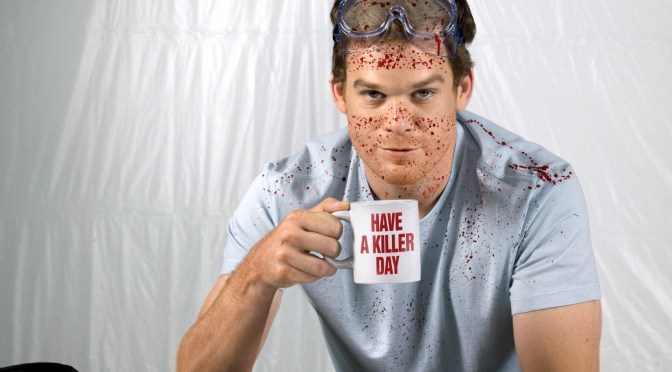
Dissecting Dexter.

For those of you who missed my series of posts on Dexter, here is an easy access list.

The posts dissect one episode to see how theme is represented.

It checks dialogue tricks and techniques.

We see that the Climax is the longest scene, built up to with a series of shorter scenes.

We learn how much screen time Dexter has.

We see how many scenes have 2 characters, 3 characters, how many are ensemble.

We discover a 3 act structure, and much, much more.

Here are the posts. I hope you learn as much from them as I have.

1. Episode Breakdown: Scene by Scene.

2. Structure and Scene Length.

3. Characters in Scenes.

4. Interesting Script Facts.

5. Dexter’s Screen Time.

6. Titles and Meanings.

7. Old Cliches Die Hard.

8.a) Dialogue: Angel Batista.

8.b) Dialogue: Joey Quinn.

8.c) Dialogue: Debra Morgan.

9. Dialogue Technique: Answering Questions with Questions.

10. The Climax


Dave Freeman’s Dialogue Tips.

Quick recap of Dave Freeman’s dialogue techniques:

Types of Dialogue:

1. Someone’s answer reveals their character.

2. Interrupting each other.

3. Answer a question with a question.

4. Different ways of speaking around different people.
eg. how you speak to your boss
eg. how you speak to your child

5. Own track – A ignores B and continues on their own track

6. Tangent – a question or remark sparks a tangential answer.
e.g.
‘Have you read the DaVinci Code?’
‘Damn. I’ve got to go to the library to return those books!’

7. Left-field – a question or remark sparks a totally unrelated reply.

8. Sentence fragment – when you drop more than one word.

9. Underground river – where the topic is raised, left, returned to later.

10. Delayed answer – A asks question, B talks about other stuff before answering A’s question.

11. Starts again – A starts, then stops and starts again differently
e.g. ‘There’s a technique I want to… Let me tell you about a particularly effective technique…’

12. Response implies answer, e.g.
 ‘How was your day, honey?’
‘Is our car insured?’

13. Silence is dialogue.
eg. ignoring question or comment
eg. meaningful silence
eg. action instead of verbal reply

14. External interruptions – doorbell rings, waiter arrives, etc
e.g. In Shrek, every time Shrek and Fiona are going to kiss
Donkey arrives. This is good. Builds suspense.

15. Displacement – you put your anger, affection, passion on someone or something nearby because it’s too scary to do it to the person with you…

16. Subtext – what the character is saying or feeling below surface.

17. Action is a form of dialogue.

eg. slamming doors/driving recklessly/touching someone…

18. Dialogue is about hinting at emotion, not stating it bluntly.

Thanks Dave Freeman.

Mark Dark

Want to write powerful dialogue? Context is all.

Great dialogue doesn’t have to be flighty and fancy. Sure, it’s great to come up with fantastic one-liners, like Lieutenant Colonel Kilgore‘s

I love the smell of napalm in the morning.

or Don Corelone’s

I’m gonna make him an offer he can’t refuse.

But often the most powerful lines come not from brilliant syntax and linguistic gymnastics, but from context.

Take Eli Gold’s words in the the final episode of season 5 of The Good Wife:

Why is everything so difficult?

Because we know Eli, we’ve seen him struggling, we know almost everything he does is self-less and to help other people, so when he says these words we really empathize with him. We feel his angst. We know what he means. It resonates with us and we connect with him.

Not only that, the line is delivered with such gravitas by actor Alan Cumming –  who exerts 100% energy, passion and emotion into every moment – that we really feel the weight of the world on his shoulders as he forces out these simple yet truthful, painful words.

So, when writing your script, don’t think all of your dialogue has to sing with florid extravagance or every line has to equal the genius of Colonel Kilgore or Don Corleone.

I forget which writer said ‘the lines you love the most are the ones you need to cut.’ But this is often true.

Sure, we all want to write the brilliant one-liner that will speak to a generation or a culture and there’s nothing wrong that. I do it myself and hate to let them go. Unfortunately sometimes we have to ‘kill our darlings.’

But rest assured, it’s been proven over and over again that in the greatest drama the simplest lines are often the most powerful.

Context is all.

Image


Writing a Film Script

I’ve been working on this film script for 4 years now. It started as a short story which got optioned. Then, my producer and script consultant thought it would make a good feature, so I started the journey of writing the screenplay.

Writing on your own is great because you’ve got full control. But when you get script consultants involved they’ve got their own ideas which, in the beginning, I felt obligated to incorporate. I tried to please everyone. Which, as we know, is impossible.

Enter story problems.

Story problems are good because they force us to think hard and deep about everything, character, plot twists, need, want, outer journey, inner journeys etc. etc.

Now, after 4 years of thinking (and writing) I’ve finally got a story I think works. What was the process? I think 3 things.

First, I was brutally honest with myself. I asked myself ‘if this script landed on your desk, would you make it? Would you invest six months to a year of your life  finding a budget, casting, working with actors, crew etc and then post-production editing, soundtrack, distributors and sales agents. Does this script warrant that amount of work?’ My answer was No, I wouldn’t make it. Because there was too much plot. It was too wishy-washy. There was too much happening.

Next, I asked myself if I was moved. Did this story affect me emotionally? Again, the answer was No. I was bored. And I knew why. If I changed the script in a way to improve it I would have to ditch an idea from the script consultant, which I was scared to do for fear of losing interest or being accused of not being able to take feedback. But the fact was the script wasn’t working. And I couldn’t write it with the current plot. If I wanted to keep working on the script I had to make major changes.

Thirdly, I asked myself if the concept was original. Had I seen it before? And I answered No, it wasn’t. And yes, I had seen it before.

So, what could I do? Scrap it, put the last 4 years down to experience? A  learning curve? Or attack the script’s issues. I was faced with 3 problems, which, through a glass-half-full lens, was three opportunities:

How could I give the story 1. a strong plot 2. emotional power and 3. an original concept?

I brought out the hatchet. I hacked off all the dead branches from a sprawling, tangled tree and left myself a solid, strong oak.

So my advice to writers just embarking on a story journey is this. Explore every avenue. Write hundreds of drafts of shite. Listen to everyone’s advice. Then forget everything everyone has told you and get back to the reason you write. What makes the story personal to you? Get angry.  Get emotional. Dig deep.

A screenplay seems to be a fusion of research, imagination and experience. So throw these three into the mix. And…

write the story


Is your criminal a hero?

Steve McQueenJohn Truby says the ‘Criminal as Hero’ sub-genre of the major Crime genre asks these 3 questions:

1. What is crime?

2. Is society’s view of crime too strict ?

3. In what way is the individual greater than the mass?

– and if he is greater should he be allowed to do what other people are not allowed to do?

–  should the social rules be applied to somebody who is exceptional?

Download John Truby’s Crime Detective Thriller audio class here.

Moral Vision in Harry Brown

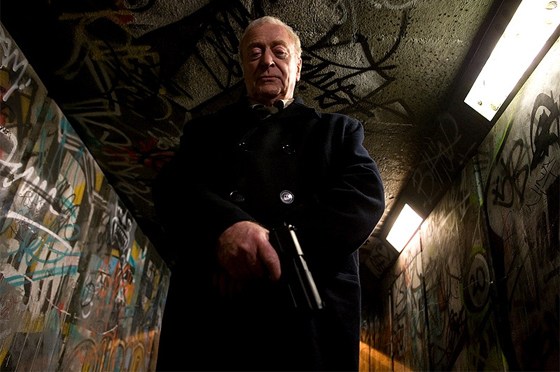
I think the problem with the moral vision in Harry Brown is that the writer – Gary Young – has Harry compare  the Troubles in Northern Ireland with social unrest on the council estates of England.
 
Harry states that those fighting in Northern Ireland were fighting for ‘a cause’, whereas the youth hurling petrol bombs at riot police on London’s council estates were doing it for ‘entertainment.’
 
I don’t believe lower class social unrest is ‘entertainment’ at all, but that this anger comes from deep-seated resentment at the rich, ruling classes and at capitalism. I agree with this statement:
 
“…self-destructive or antisocial behavior is a response to circumstances and not a moral failing.”

– from this article on the Open Democracy website about capitalism and drug legalization.

CHAVS – The Demonization of The Working Classes by Owen Jones looks like a good read on this subject.

Image


THE DEFINITIVE GUIDE: TREATMENTS for series and serials.

Awesome post on treatment writing.

scriptadvice's avatarScriptadvice.co.uk's Blog

Over the last few months, via my work with writers at all levels of experience and development and through teaching writers at my workshops, I have found that for a lot of you, the area of treatment writing is the most tricky.

There is some really good advice out there regarding treatment writing, but much of it covers treatments for the feature film industry, with the occasional nod towards the smaller screen. I felt the need then, to write a blog that focuses entirely on that which the Television Industry expects of a treatment.

Here are the key areas to make sure you get right and get in, when writing.

Your treatment must have:

 * CLARITY

* VISION

* CHARACTER

* STORY

* A MESSAGE

 CLARITY:

The reason why I have seen so many projects fall by the way side over the years I have spent in development…

View original post 1,493 more words

Deconstructing Dialogue in The Town (part 3): exposition & theme

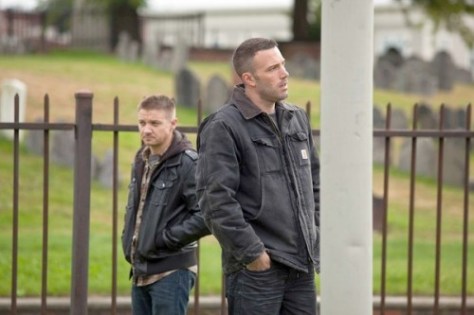
We’re analyzing a scene from The Town.

Read the scene.

Watch the scene.

For part 1 of this study, looking at the beats and power play between Doug and Jem, go here.

For part 2, looking at exposition, go here.

In this post we’ll explore how theme emerges from dialogue, thematic subtext from text.

Into the scene:

JEM
There’s people I can’t let you walk
away from.
DOUG
What? Who?
JEM
Come on!
A beat. Doug realizes.
DOUG
Are you serious, Jimmy?
She’s not my kid….
(beat)
Cut it out. All you give a fuck
about is coke and Xbox and now
you’re trying to play it off you
care about Shyne, come on now!
JEM
You know what your fucking problem
is?
DOUG
What?
JEM
You think you’re better than
people.
DOUG
Uh-huh.
JEM
Mister fucking clean, mister
fucking goddamn high and mighty,
right?
DOUG
Yeh, I’m better than all these
people, you’re right. I’m better
than anybody in this fucking
project.
JEM
Yeah, that’s what you think, but
you grew up right here. Same rules
that I did.
DOUG
OK. What else?
Beat.
JEM
Who the fuck’s the father?
DOUG
I know I’m not the father.
JEM
You were the one fucking her.
DOUG
Yeh, and I wasn’t the only one, brother, OK?
She knew I knew I’m not the father
and I have enough respect for her
not to ask her. OK? Because I don’t
think she knows. Alright? Now I
don’t wanna shatter your illusions
here, partner, but there aren’t
enough free clinics here in
Mattapan to find out who the father
of that kid is…
Beat.
DOUG (cont’d)
And I don’t know who the fuck you
think you are, either. You aren’t
letting me or not letting me do
shit. Alright? Here’s a little
fucking cheat sheet for you. Its
never gonna be me and you and your
sister and Shyne fucking playing
house up there. Alright? You got
it? Get that in your fucking head!
I’m tired of your one way fucking
bullshit. If you wanna see me
again, come down and visit me in

Florida.

So, what’s going on here in the way of exposition? What are we being exposed to thematically?

Later, at the end of the scene, we find out that Jem’s family took Doug in when his dad went to prison. Doug obviously started to fuck Krista, Jem’s sister – who isn’t mentioned by name here. Krista got pregnant, had a daughter, and from this we learn that she doesn’t know who the father is. Next, Doug, in quite an eloquent way, basically tells Jem his sister was a slut:

…there aren’t enough free clinics here in Mattapan to find out who the father of that kid is.

But this section of the scene is working subtextually on two more levels – interconnected by theme.

1. Krista & Shyne.

Krista’s motherly love for her daughter Shyne is the  reason she later sacrifices her brother and Doug, giving them up to the FBI.

2. Doug’s mother.

When Doug asks his dad, on a visit to prison, why he didn’t look for his mother when she walked out on them, Doug’s dad says  ‘because there was ‘nothing to find.’

He infers because Doug’s mother was no different to all the other single parent girls he sees on  the projects ‘fucking around’ – was no different, in fact, to Krista.

So, underlying this section of dialogue, ostensibly conflict between Doug and Jem about the identity of Shyne’s father, is one of The Town’s major themes: parenthood and its absence.


Deconstructing Dialogue: The Town (part 2): exposition.

Read the scene here.

Watch it here.

The Town boasts an incredibly in-depth story world with complex back-stories and subplots. As Doug, the protagonist, says, “There’s a lot going on here.”

As this scene reveals information regarding three separate subplots I’m going to split it into three parts.

First, the back-story & subplot regarding the character The Florist which happens in the first few lines of the scene.

So, let’s study the dialogue from two perspectives:

First, what information is revealed?

Secondly, what information is concealed?

Let’s start at the beginning of the scene.

Doug approaches Jem not knowing what this meeting is about. He thinks it’s about the apartment.

However, Jem tells him he’s bought some information from The Florist about a potential robbery and now he has to do the heist and pay up.

But Doug tells Jem he’s not interested.

Let’s read the dialogue:

DOUG
Something wrong with the apartment?
JEM
No. The Florist.
DOUG
The Florist what?
JEM
Came through.
DOUG
Oh, Jesus Christ.
JEM
It’s large, Dougie. It’s large.
DOUG
We’re smoked. Punt it.
JEM
Who else is gonna buy it?
DOUG
You should have thought about that
before you fucking kept breaking
the guy out for forty dimes after
every job.
JEM
There’s an expectation rate.
DOUG
I’ll correct his expectation.
JEM
Oh, you will?
DOUG

Yeh.

Let’s look at the lines more closely.

From this we can see that Jem is paying The Florist after every job, even though The Florist doesn’t do any of the ‘heavy lifting.’

The heists are done by Doug, Jem and the other two men in the gang.

The Florist, Doug infers, gets a cut of every job they do.

But that’s just the way it is to Jem. But not to Doug. Doug is changing things.

In fact, Doug’s line:

I’ll correct his expectation.

is actually foreshadowing.

But look at Jem’s line:

You will?

When we watch the scene in action, Renner delivers this line with sarcasm.

Jem doesn’t believe Doug has the power, will, or ability to ‘correct his expectation.’

From these two words, from the way the line is delivered, we might think that Jem fears The Florist.

We learn later that Jem would rather die than go back to prison, when he says, in one of the best lines of the movie:

I can’t do any more time, Dougie. So if we get jammed up, we’re holding court on the streets.

(Watch this scene here).

In a previous post we noticed how Jem is actually scared of expressing himself emotionally. We learned how Jem and Doug love each other ‘like brothers’ and actually Jem is terrified of losing ‘Dougie.’ Jem’s a tough cookie with a soft centre; capable of extreme violence and incapable of expressing brotherly love – except perhaps through a play-fight – yet Doug reads between his lines.

Jeremy Renner manages to play this tough guy with immense vulnerability. It’s easy to see why he was nominated for an Academy Award for this role and why he’s become such an in-demand film actor.

OK, so back to our scene.

We’ve learned what the writers have revealed regarding The Florist.

Now, what is being concealed?

Firstly, there is a deep back-story regarding Doug and The Florist, concerning both Doug’s father and his mother.

Although we never meet her, Doug’s absent mother is a vital character in this story.

We learn from Doug’s dad that his mother was ‘no different’ than the other single parent 20 year olds he sees on the streets.

Doug’s father worked for The Florist, and, we learn, was a victim of his brutal violence.

So, these few lines of dialogue are hiding deep layers of back stories and subplots – yet the writers’ touch on them is as light as a feather.

How heavy is your dialogue?

David Mamet says people speak to conceal, not reveal.

How much are your characters revealing and concealing?

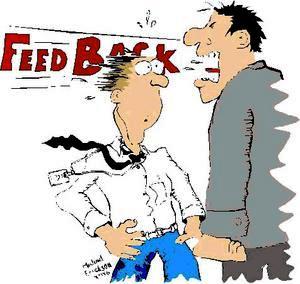
“Feedback is a rite of passage” by Scriptcat

When you finish your precious screenplay you’re eager to receive feedback and this can be a vulnerable time for you and the script. This is why you never want to give out your script for a read before it’s ready—only when you’re confident it’s the best draft you can possibly write and you feel that you’re “written out.”  Feedback is an important part of any screenwriter’s growth on their journey, but make sure you don’t set your expectations too high and then become disappointed when you don’t receive the praise you expected.  I think Hemingway said it best:


All you need to do is write truly and not care what the fate of it is.

I think too many aspiring screenwriters write new scripts and suffer under their self-imposed pressure of having to sell it. What are the odds? Astronomical. The safer bet is writing a new script for the sake of telling a story that you need to tell and making sure it’s the best example of your ability. Many times something does not sell but garners you meetings and eventually screenwriting assignment jobs—the bread and butter of working writers.

Many new screenwriters don’t take feedback well or don’t know how to execute the notes that are given.  As they say, “everyone has an opinion” and that’s true, but you need to be able to filter the good feedback from the bad and be open enough to use the good notes and push your screenplay closer to a better draft.

When you’re finally working at a professional level, you’ll need to be a team player and not a diva when it comes to feedback.  Screenwriting is all about the execution of the script and as you continue to write new material you will need to execute your ideas on a professional level. This is necessary to compete in a very crowded and competitive marketplace.

Be careful when open yourself up to feedback and set your expectations too high. We all have expectations after we complete a script.  You know the creative high that you felt during writing and now you might be coming off that high as you turn in your draft and await feedback.  Did you get notes and they are not exactly what you expected?  Were you disappointed they didn’t appreciate the work enough — or maybe didn’t understand it enough?  Maybe they felt your execution was off?  Perhaps you become down on yourself as the insecure voices scream in your head about your lack of ability?  You may even question what you thought was some of your best work only a week ago.  You are not alone my fellow screenwriters.

We all need a pat on the back or just a “job well done” when we finish a screenplay. Most of the time, the pat on the back will come from you alone.  Writing the script is one thing, turning it into your producer and waiting for feedback is entirely another.  It’s easy to take notes personally because your script is your baby and your writing exposes yourself and your talents to criticism.

If you can’t handle criticism, start to work on acceptance of feedback, as it will make your journey as a working writer a lot less bumpy.  Notes and changes are a given with a screenplay.  Perhaps it will make the process easier to always remember that screenwriting is all about rewriting. Detach from the material and expectation from any outcome.  Do not hang on every word or sentence.  You’re not alone.  A writer’s life is a tough job at best.

As screenwriters we must stay open to constructive criticism because screenwriting is all about collaboration.  We will always receive notes because a script is an ever-changing blueprint for a movie.  Once producers, a director and actors get involved there will be many changes and you should welcome the creative input from your co-creators on a project.  These fellow artisans will bring it to an entirely new level of creativity.

You can become frustrated and feel like throwing in the towel if the process gets dragged down by so many changes. Stay positive, focused and persistent at executing the notes and turning in a better script.   Find the passion you had for the first draft and put that energy into shaping a new draft that will please not only yourself, but also the talent it will eventually attract.

Along with the successes, I’ve had to deal with disappointments and frustration throughout my writing career from feedback, but I continue to love the craft of screenwriting.  I’ve been able to view the entire process from a larger perspective and focus on the task at hand — to get the script into better shape as a team player.

If you are lucky enough to be paid to write, it becomes your job.  You go to work, write all day, go home, come back tomorrow and wash, rinse and repeat.  Screenwriters have pages to write and without filling those blank pages there would be no script.

Take your feedback seriously, but don’t take it to heart.  Trust in your writing abilities and if you allow the disappointments to take you into a bad place, address your feelings but then focus on the task of executing your notes.

Stay out-of-the-way of the story and put your ego aside.  Everyone is here to serve the story to the best of their creative ability.  If you want to play with the big boys, at some point you’re going to be bruised and beat up.  It’s just the rites of passage necessary for the growth of a writer.

Part of the deal is that you want people to read and love your material, right?  If producers or executives agree to a read, give them ample time to get back to you.  A gentle nudge in a few weeks is completely acceptable, but if you contact them before, you’ll seem desperate and no one likes to be hounded.

I remember a producer warned me, “Stay on me about your project, because I tend to get busy.”  That’s fine.  But use common sense and put yourself in their situation for a second.  Your script is the most important thing in the world to you after you finish, but you have to understand that it’s not on their front burner at the moment.  One E-mail or text is fine to check up — four is not.

Be open to the entire process of writing — the feedback, rewrites and all.  No disappointments only triumphs when you complete a project.  There will always be creative highs and lows.

Do your best not to allow your disappointment to be perceived as a failure and then sink into the morass of fear and insecurity in your creative soul. This will lead to the horrible act of chasing screenplay notes. Avoid this at all costs. A good discipline to follow for the long haul of a screenwriter’s survival is Chinese philosopher Lao Tzu’s advice:

Act without expectation.

Also be patient.  A career does not happen overnight and part of your journey is becoming a better writer and finding your unique voice — one that producers will grow to love, trust and hopefully employ!

Keep filling your blank pages and keep the faith.

Scriptcat out!

Mark Sanderson (aka @Scriptcat) is a Los Angeles based veteran of the screenwriting game with over fifteen years of professional experience and has worked with Academy Award® winning producers, veteran directors, and Academy Award®, Emmy® and Golden Globe® acting nominees on his produced films and screenwriting assignments.  Mark’s films have been recognized and distributed around the world and have opened and premiered at major festivals.
His popular screenwriting blog MY BLANK PAGE was Script Magazine’s pick for “Website of the Week” and had over 50,000 reads last year.  He also offers screenplay consultation services and workshops on his website:
Header